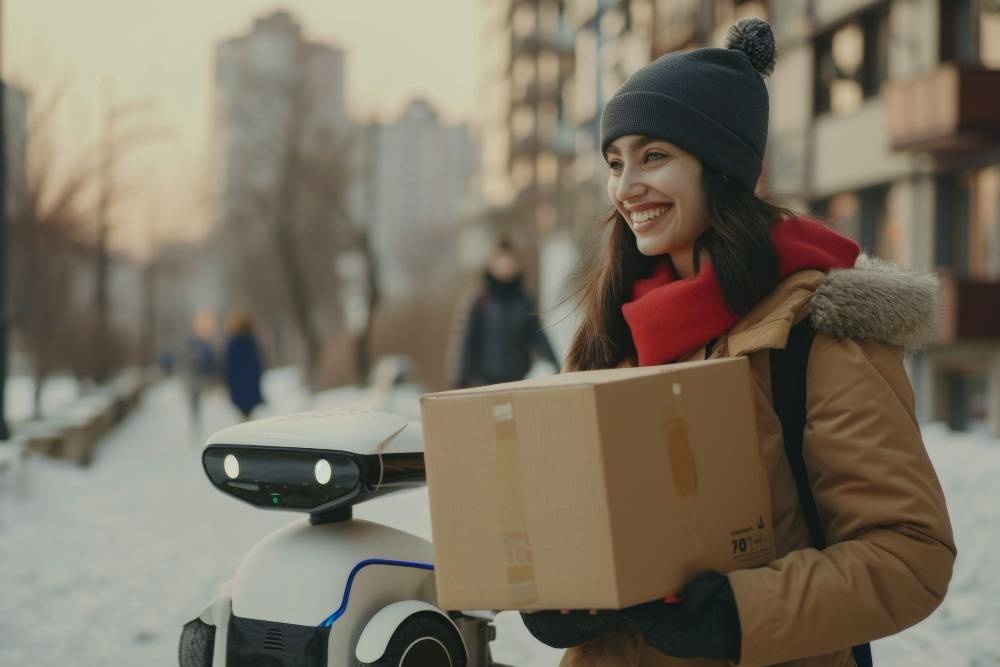
- Final mile delivery moves orders from a local hub or store to the customer's door, the last supply chain leg.
- Q2 2026 US e-commerce hit $340.2 billion, up 12.2% YoY, putting pressure on final mile operations.
- It connects OMS, WMS, and TMS into one execution layer covering order ingestion, routing, dispatch, and tracking.
- Final mile often consumes over half of total shipping spend due to dense stops and narrow windows.
- Failed first attempts, poor visibility, and mixed fleets rank among the toughest operational challenges.
- Right software needs constraint depth, dynamic re-optimization, integrations, and agentic automation.
- FarEye customers report 18% lower cost per delivery and 2X stops per hour.
- Clean data and phased rollout matter more than software alone for successful implementation.
Customers judge your brand by the last stop, not the warehouse shelf. Final mile delivery moves an order from a local hub or store to the buyer's door. It decides if your delivery promise holds, or quietly breaks.
Pressure on final mile operations keeps growing as online purchasing expands. The U.S. Census Bureau reports Q2 2026 retail e-commerce sales hit $340.2 billion, up 12.2% year over year, now 17.1% of total retail sales. For enterprises running e-commerce, retail, grocery, and pharmaceutical networks, this stage now shapes cost, loyalty, and repeat revenue.
It also adds real operational complexity as delivery volumes and service expectations climb together. Rising volumes and tighter delivery windows only raise the stakes further. Understanding how final mile delivery works helps enterprises protect margins and customer trust at once.
What Does Final Mile Delivery Actually Mean?
Final mile delivery is defined as the last leg of the supply chain, moving all types of goods from a nearby facility to the end customer. It sits downstream of line-haul freight and final mile logistics planning across your wider network.
- Origin point: A distribution center, dark store, micro-hub, or partner facility close to demand.
- Movement: A driver, carrier, or gig partner completes the physical handoff to the customer.
- Scope: Parcel, big-and-bulky, scheduled, same-day, and returns all fall under it.
- Systems: It connects your OMS, WMS, and TMS into one execution layer.
How Does Final Mile Delivery Work?
Final mile delivery works as a connected sequence, not a single dispatch event. Each step feeds the next, so one weak link raises cost and lowers reliability across the route.
- Order Ingestion: Your OMS passes validated orders, addresses, and delivery windows into planning.
- Route Creation: The route planning software assigns stops to vehicles using capacity, traffic, and service times.
- Dispatch: Drivers receive sequenced tasks, navigation, and instructions through a mobile driver app.
- Execution and Tracking: Final mile delivery tracking surfaces live ETAs, deviations, and delivery exceptions.
- Proof and Closure: Electronic Proof-of-Delivery, ratings, and returns feed your final mile delivery analytics.
Dynamic routing during execution matters more than perfect morning plans, because conditions shift hourly after dispatch.
Curious how a leading appliances manufacturer pushed its OTIF score up by 56%? Explore the Results Here.
Why is Final Mile Delivery so Difficult to Get Right?
Final mile delivery breaks under complexity that upstream freight rarely faces. Dense stops, narrow windows, and rising expectations compress the room for error across every route you run.
| Challenge | Operational Impact | KPIs at Risk |
|---|---|---|
| Failed First Attempts | Reattempts raise cost, mileage, and customer frustration | FADR, cost per delivery |
| Narrow Delivery Windows | Tight slots reduce routing flexibility and OTIF | OTIF, ETA accuracy |
| Poor Visibility | Teams react late to delays and exceptions | WISMO, response time |
| Mixed Fleets | Owned, gig, and carrier vehicles need one control layer | Utilization, adherence |
| Address and Data Gaps | Weak inputs corrupt every downstream calculation | Deviation, success rate |
Most final mile failures start during planning, so upstream data quality quietly determines downstream delivery success.
See how Blue Dart lifted first-attempt success by 22% and gained full ground visibility with FarEye. Check out the Story.
How do you Choose the Right Final Mile Software?
The right final mile software should solve problems across the full delivery lifecycle. Evaluate each option against your real network, not a generic feature checklist.
| Buying Criterion | Question to Ask |
|---|---|
| Constraint Depth | Can it model capacity, windows, skills, and service times together? |
| Dynamic Re-optimization | Can it reroute after dispatch without breaking nearby stops? |
| Integrations | Does it connect OMS, WMS, TMS, and carrier systems cleanly? |
| Agentic Automation | Can approved agents act while escalating higher-risk exceptions? |
| Visibility | Does final mile delivery tracking cover ETAs, deviations, and exceptions? |
| Analytics and Governance | Are audit trails, approvals, and planned-versus-actual reporting built in? |
Enterprise-grade final mile software should scale across big-and-bulky, parcel, and same-day models without losing planning speed.
Buyer's Note: Choose a platform that adapts during execution, because static routing tools quietly cap your service potential.
Want proof at global scale? Amway reached 100% ETA accuracy across multiple 3PLs with FarEye. Take a Look.
How Does FarEye Power Final Mile Delivery at Enterprise Scale?
FarEye connects planning, routing, execution, tracking, and analytics into one final mile delivery operating model. This removes the handoff gaps that fragment most enterprise delivery networks and inflate cost per delivery.
| FarEye Capability | Role in Final Mile Delivery | Reported Outcome |
|---|---|---|
| PLAN | Forecasts demand, territories, and capacity | 90% less forecasting time |
| Route | Builds constraint-aware, optimized routes | Up to 20% fewer miles |
| Track | Powers final mile carrier tracking and control-tower visibility | 80% less manual status effort |
| Experience | Manages ETAs, notifications, and rescheduling | Higher NPS and CSAT |
| PILOT | Automates agentic dispatch decisions | 22% faster dispatch |
Across deployments, FarEye customers report 90% faster route generation, 2X stops per hour, and an 18% lower cost per delivery. The platform also supports EV routing and multi-carrier coordination for mixed final mile fleets.
FarEye's PILOT runs more than 200 daily decisions across eleven specialized agents, spanning planning to closure. It can compress roughly ten dispatcher hours into sixty minutes of supervised oversight. Recent product enhancements extend this automation into PUDO workflows, cross-border orders, and merchant self-service pickups.
What are the Best Practices for Final Mile Delivery Implementation?
Strong final mile delivery execution depends on disciplined rollout, not software alone. These practices help enterprises protect service levels while scaling volume across regions.
1. Clean Your Data First
Validate addresses, dimensions, and service times before automating routes.
2. Define Real Constraints
Capture vehicle limits, driver skills, and delivery windows with operations teams.
3. Pilot One Region
Prove KPIs on a single hub before scaling across territories.
4. Enable Dynamic Routing
Allow mid-shift re-optimization for traffic, urgent orders, and absences.
5. Close the Loop
Feed completed-route data back into planning through final mile delivery analytics.
KPI Lens: Track cost per delivery, FADR, OTIF, and WISMO together, since improving one in isolation often hides trade-offs.
Turn Your Final Mile Delivery Into a Competitive Edge
Final mile delivery is where operational discipline meets customer experience. When you connect planning, dynamic routing, agentic dispatch, and real-time tracking, you protect both margins and loyalty. Enterprises that treat the final mile as a system, not a cost center, win on reliability as volumes rise.
This stage deserves the same investment as your storefront, and it earns that back through repeat orders. Reliable delivery is what turns first-time buyers into loyal, repeat customers, and FarEye makes that reliability measurable and repeatable at scale.
Book a meeting with FarEye to see how connected final mile software can lower delivery costs and lift service performance across your network.
Book a Meeting With FarEye →Frequently Asked Questions
Why is final mile logistics the make-or-break moment for customer experience?
Final mile logistics covers the movement of goods from a local distribution point to the customer's destination. It directly affects delivery reliability, convenience, visibility, and satisfaction.
For enterprises, this stage also influences operating costs because each shipment requires localized routing, handling, communication, and successful completion.
How does final mile logistics tracking lower WISMO and improve outcomes?
Real-time tracking gives customers accurate shipment status and estimated arrival times while helping operations teams identify delays earlier. Proactive notifications reduce uncertainty and unnecessary support contacts.
FarEye's customers report up to 67% fewer WISMO calls, alongside capabilities for dynamic ETA updates, exception detection, and real-time delivery visibility.
What final mile logistics solutions should enterprises prioritize first?
Enterprises should prioritize dynamic route optimization, real-time tracking, predictive ETAs, automated dispatch, exception management, digital Proof-of-Delivery, and carrier orchestration.
These capabilities connect planning with execution and provide consistent visibility across drivers, vehicles, orders, and delivery partners while supporting faster responses to operational changes.
What is the final mile tracking number?
A final mile tracking number is a unique identifier assigned to a shipment for tracking its movement through the final delivery stage. It can provide status updates, location information, estimated arrival times, and delivery confirmation. Customers typically use this identifier through a retailer, carrier, or logistics provider's tracking interface.
How long does final mile delivery take?
Final mile delivery can take several hours or multiple days depending on distance, delivery density, traffic, service level, customer availability, and promised delivery windows.
Same-day, next-day, scheduled, and standard services follow different timelines. Real-time tracking and predictive ETAs help customers understand expected arrival times as conditions change.
Is final mile delivery the same as last mile delivery?
Final mile delivery and last mile delivery generally describe the same logistics stage, covering movement from a nearby distribution point to the customer's final destination. Organizations may use either term depending on their operating model or industry terminology. Both focus on the final transportation and fulfillment activities before delivery completion.
Why is final mile delivery so expensive?
Final mile delivery involves frequent stops, driver labor, vehicle expenses, traffic, tight delivery windows, and failed delivery attempts. Each shipment requires individual execution rather than consolidated movement.
These factors increase cost per shipment and make route density, vehicle utilization, delivery sequencing, and exception management important levers for controlling final-mile expenses.
What industries rely most on final mile delivery?
E-commerce, retail, grocery, pharmaceuticals, food and beverage, consumer goods, courier services, and big-and-bulky operations rely heavily on final mile delivery. Each industry introduces different requirements involving delivery windows, product handling, vehicle capacity, customer communication, appointment scheduling, and Proof-of-Delivery, making flexible execution important across complex delivery networks.
What technologies are used in final mile delivery?
Final mile operations use AI-powered route optimization, GPS tracking, telematics, predictive ETAs, digital Proof-of-Delivery, control towers, carrier integrations, and automated customer communications.
These technologies connect planning and execution while helping teams monitor route progress, identify exceptions, update customers, and make faster decisions when delivery conditions change.
What is the future of final mile delivery?
Final mile delivery is moving toward AI-powered orchestration, dynamic routing, predictive visibility, autonomous exception management, and flexible fleet coordination. Gartner identifies agentic AI and physical AI among the top supply chain technology trends for 2026, reflecting the industry's shift toward more autonomous and adaptive operational decision-making.
Reference: U.S. Census Bureau. "Quarterly Retail E-Commerce Sales." U.S. Census Bureau, August 18, 2026. Figures are subject to change — verify current numbers before publishing updates.