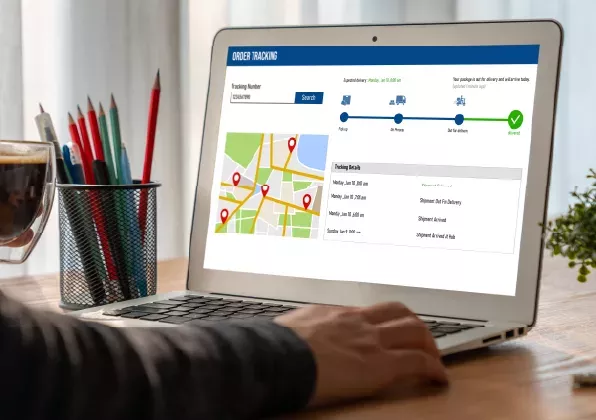
- Time-critical trucking promises depend on more than distance-based route sequencing.
- Advanced truck route optimization helps teams factor delivery windows, load requirements, driver hours, vehicle dimensions, and road restrictions before dispatch.
- FarEye supports FTL, LTL, and home delivery operations with multi-day route planning, secure hub dispatch, adaptive stop grouping, and real-time capacity alerts.
- Predictive risk visibility helps dispatchers identify delayed shipments early and take action before SLAs are missed.
- With FarEye, logistics teams can reduce miles, improve fleet utilization, lower delivery costs, and build more reliable trucking operations.
Time-critical trucking operations leave little room for planning gaps when delivery promises depend on distance, capacity, compliance, and live execution. A route that looks workable during planning can fail once traffic changes, loading takes longer, or driver hours tighten.
For logistics leaders, the challenge is to build routes that protect delivery windows without increasing costs, idle time, or empty miles. This is where truck route optimization becomes central to execution quality. It helps teams factor in load requirements, driver availability, road restrictions, delivery appointments, and fleet capacity before routes reach drivers.
Let's learn how advanced truck route optimization software helps meet narrow delivery promises and how FarEye helps enterprises bring these moving parts together.
Why Time-critical Truck Deliveries Need Smarter Truck Route Optimization
Standard routing often focuses on distance first, but trucking networks require stronger planning logic. Every commitment must account for vehicle type, driver hours, loading time, and customer delivery windows. Truck route optimization gives logistics teams a practical way to protect SLAs before field conditions disrupt active routes. It also helps reduce manual intervention across complex daily operations.
A delayed truck can affect warehouse schedules, store replenishment, customer appointments, and downstream carrier plans. These delays create financial pressure through penalties, fuel waste, and repeated coordination calls. Smarter routing helps teams plan for real-world constraints early, rather than correcting avoidable issues after dispatch.
The Operational Gaps That put Delivery Promises at Risk
Time-critical delivery failures rarely come from one issue. They usually come from several small planning gaps that compound during execution. Understanding these gaps helps logistics teams identify where stronger routing intelligence can protect cost, compliance, and customer commitments.
1. Fixed Plans Cannot Handle Multi-Day Complexity
FTL and regional routes often span multiple dates, delivery windows, and driver schedules. Truck route optimization helps planners account for appointments, driver availability, and longer service commitments.
2. Driver Hours are Often Planned too Late
Driver hours, breaks, rest periods, and labor rules must be built into routes before dispatch. Late compliance checks increase delays, reassignments, and SLA risks.
3. Vehicle and Road Constraints Create Execution Failures
Truck dimensions matter on bridges, in tunnels, on restricted roads, and in tight delivery areas. Strong route logic considers height, width, length, and access limits before dispatch.
4. Poor Load Planning Increases Cost and Empty Miles
Underloaded trucks, weak consolidation, and empty backhaul increase transportation costs. Better load planning combines compatible shipments, reduces duplicate movements, and improves fleet productivity.
Hilti used FarEye's constraint-aware freight routing to lift On-time In-full deliveries by 6% and cut warehouse loading time by 2 to 4 hours. Read the Hilti Freight Story.
What Advanced Truck Route Optimization Software Should Handle
Enterprise trucking operations need routing systems that integrate business rules, physical constraints, and execution realities. Basic sequencing cannot support these requirements at scale.
Advanced routing must connect planning quality with live delivery performance, fleet utilization, customer confidence, and driver compliance. Fleet route optimization software helps teams manage these requirements within a single planning layer.
1. Multi-day Route Planning
Strong truck route optimization software should support multi-day routes with delivery times, driver working hours, and required breaks. This helps dedicated fleets manage high-value goods, scheduled deliveries, and long-haul commitments.
2. LTL and Multi-stop Routing
LTL operations need multiple pickups, stops, and shipment consolidation across routes. Truck route optimization helps combine shipments moving in the same direction, reducing fuel use and improving on-time performance.
3. Load Optimization
Bulk shipping needs careful planning across weight, volume, order priority, and delivery sequence. The right truck route optimization setup helps co-mingle compatible loads, improve utilization, and protect service commitments.
4. Real-time Visibility
Live shipment visibility helps carriers and shippers monitor progress, adjust dispatch decisions, and communicate earlier. This gives teams more control before delays affect delivery commitments.
5. Constraint-based Planning
Routes must reflect constraints on order, vehicle, road, and driver before trucks leave the facility. Fleet route optimization software helps teams account for weight, dimensions, delivery windows, breaks, fuel stops, bridges, tunnels, and access rules.
How FarEye Helps Enterprises Improve Trucking Performance
FarEye's truck route optimization software helps enterprises connect planning, execution, visibility, and analytics across complex truck operations. This makes routing practical for FTL, LTL, and home delivery use cases.
The platform helps teams reduce miles, improve utilization, and protect delivery commitments with intelligent routing and execution visibility.
1. Faster Order Readiness Before Route Creation
FarEye helps planners review consignments before dispatch assignment through Pending for Planning and Consignment Order workflows. Teams can check weight, volume, pallet quantity, ship-by dates, order aging, and service time before routing begins.
Inline edits, rescheduling, smart alerts, bulk actions, and large-consignment splitting help reduce planning errors that can later disrupt truck routes.
2. Multi-day Order Fulfillment for Complex Routes
Multi-day order fulfillment becomes easier when delivery times and driver working-hour compliance are built into route planning. FarEye helps protect long-haul commitments with more accurate planning logic.
The platform's in-app routing validates delivery slots across multiple dates, helping field teams view accurate job statuses during longer trips. This reduces false alerts and improves execution accuracy.
3. Secure Hub Dispatch Before Trucks Leave the Facility
One-scan pallet verification helps hub teams validate consolidated loads before dispatch. With FarEye, a single order scan can retrieve full trip and load manifest details. This helps teams confirm destination, shipment grouping, and route readiness without manual manifest checks. It reduces dispatch errors before they enter active truck route optimization workflows.
4. LTL Consolidation and Adaptive Stop Grouping
FarEye supports multi-stop routing for LTL shipments by consolidating compatible loads moving in the same direction. This reduces repeated movements and empty capacity. Adaptive Multi-part Stop logic groups eligible orders with the same coordinates or group ID into one logical stop. This reduces duplicate visits and improves fleet utilization.
5. Real-time Capacity Alerts to Prevent Overloading
Vehicle weight and volume checks at order and SKU levels help protect execution accuracy during active routes. FarEye helps compare overage orders against vehicle limits before they create capacity risks. Teams can configure advisory alerts or hard stops to help prevent overload risks and protect route feasibility throughout the delivery lifecycle.
6. Predictive Risk Visibility for Faster SLA Protection
FarEye's control tower helps dispatchers identify orders at risk of missing delivery commitments. The Orders at Risk view compares projected arrival time against scheduled delivery slots.
Dispatchers can reassign work, adjust sequences, or escalate support earlier. Downloadable reports also help teams make faster decisions during active truck route optimization cycles.
7. Automated Driver Workflows for Faster Field Execution
Mobile workflows reduce driver screen interactions by auto-selecting the next mandatory status where applicable. With FarEye, drivers can update jobs more quickly while on active routes. Faster status updates give dispatchers accurate execution signals, helping teams respond sooner when routes deviate from plan.
8. Constraint-aware Route Planning for Real-world Trucking
FarEye accounts for order, vehicle, road, and driver parameters within a single planning model. This supports safer and more realistic execution. The platform helps teams manage dimensions, delivery windows, rest stops, fuel stops, and access restrictions through intelligent route optimization software.
9. Measurable FarEye Impact at Scale
FarEye has helped enterprises achieve a 6% increase in On-time In-Full compliant deliveries and save 75M+ kilometers through truck route optimization. The platform has also supported an 18% reduction in average cost per delivery and a reduction of 550K+ metric tonnes of GHG emissions.
These outcomes show how better planning can improve delivery reliability, reduce operating costs, and support more sustainable trucking operations.
With FarEye's capacity-aware routing and three-hour delivery windows, Gordon Food Service grew last-mile sales 8.6% in a year. See how Same-day Delivery Became its Edge.
Implementation Best Practices for Trucking Route Optimization
Successful deployment requires strong operational preparation before the first live route is dispatched. Teams should carefully configure constraints, data, and workflows. These practices help enterprises capture faster value from route optimization software while reducing post-launch corrections.
- Audit FTL, LTL, and home delivery performance before deployment.
- Map driver working hours, breaks, and compliance rules early.
- Validate order weight, height, delivery windows, and shipment priority.
- Configure vehicle dimensions and fleet mix rules inside the route planning software.
- Add bridge, tunnel, and road restriction logic before go-live.
- Start with high-volume or time-critical lanes for faster proof.
- Train dispatchers on exceptions, visibility, and reassignment workflows.
- Track OTIF, empty miles, idle time, and cost per delivery weekly.
Build Time-critical Trucking Performance With FarEye
Time-critical trucking performance depends on planning routes that account for real-world constraints before delays reach the delivery network. Every missed appointment, idle truck, or empty return trip signals a planning gap that can be improved.
FarEye helps enterprises integrate truck route optimization, load consolidation, driver compliance, shipment visibility, and cost control into a single scalable operating model. The result is stronger execution across FTL, LTL, dedicated fleets, and home delivery routes.
With FarEye, logistics teams can protect SLAs, reduce transportation costs, and improve fleet utilization across complex delivery networks.
Schedule a FarEye assessment today to see how smarter truck routing can improve performance across every mile.
Schedule a FarEye Assessment →Frequently Asked Questions
What is the best truck route optimization software for time-critical deliveries?
The best truck route optimization software should manage time windows, live traffic, capacity, driver constraints, and rapid rerouting without disrupting critical deliveries.
Why do time-critical truck deliveries need smarter route optimization?
Time-critical truck deliveries require smarter optimization because traffic, service windows, driver hours, vehicle limits, and disruptions can quickly invalidate static routes.
What operational gaps put time-critical delivery promises at risk?
Poor forecasting, inaccurate capacity data, late dispatch, driver unavailability, traffic disruptions, and weak visibility can all put time-critical delivery promises at risk.
What should advanced truck route optimization software handle?
Advanced truck route optimization software should handle multi-day routing, capacity limits, driver hours, time windows, load planning, live traffic, and dynamic rerouting.
How does truck route optimization handle multi-day routes?
Truck route optimization plans multi-day journeys around delivery windows, driver working hours, rest requirements, vehicle capacity, stop sequences, and route continuity.
How does truck route optimization reduce empty miles through load planning?
Truck route optimization reduces empty miles by matching loads with available capacity, combining compatible shipments, and sequencing pickups and deliveries more efficiently.
How does constraint-based planning prevent truck routing failures?
Constraint-based planning prevents routing failures by testing every route against capacity, driver hours, delivery windows, vehicle restrictions, and service requirements before dispatch.
What measurable results does FarEye's truck route optimization deliver?
FarEye reports up to 20% improvement in capacity utilization or reduction in miles driven, while optimized routes can be created 90% faster.
How do you implement truck route optimization software successfully?
Successful implementation requires clean data, clear routing rules, system integrations, baseline KPIs, pilot testing, planner training, and ongoing performance reviews after rollout.