Table of Contents
- What is a Route Planner?
- Why the Paradigm is Changing: Legacy vs Cloud Routing
- What Cloud-based Online Route Planner Means in Practice
- Core Advantages of Switching to a Cloud-Based Online Route Planner
- FarEye: A Solution Anchored in AI + Practicality
- Future Trends and What’s Next
- Take the Next Step: Pilot a Cloud Route Planner Now
Let Our Experts Optimize Your Deliveries Today
Let's talkDispatchers in North America often start their day in crisis mode. A route planned the night before must now contend with snarled freeway traffic, canceled orders and shifting delivery windows. One routing error can cascade into tens of late deliveries, overtime costs and customer complaints.
According to industry estimates, inefficient routing contributes to as much as 20% extra fuel and labor costs in last-mile logistics. That kind of overhead is unsustainable under today’s margins.
In recent years, many enterprises have been migrating from on-prem, desktop routing tools to cloud-based online route planner platforms. Let’s understand why that shift is happening and how these modern route planners function.
What is a Route Planner?
At its core, a route planner (or in cloud form, a route planner online) is software that ingests many delivery or pickup points plus operational constraints. It considers vehicle capacities, driver shifts, delivery time windows and road restrictions to generate efficient vehicle routes. Going further, route optimization is the process of reordering, reallocating or rerouting those stops to achieve minimal cost (time, distance, fuel) while satisfying all constraints.
In practice, a good route planner solves the Vehicle Routing Problem (VRP) under real constraints. It balances many variables stop sequencing, load constraints, driver availability, traffic predictions and produces a deployable plan for your fleet. A cloud online route planner means that this optimization logic lives centrally, accessible anywhere, continuously updated and tightly integrated with live data sources.
Why the Paradigm is Changing: Legacy vs Cloud Routing
Legacy routing tools were often built for fixed, predictable environments. Here’s what dispatchers and allocators struggle with:
Disconnected Data Silos and Manual Overhead
Orders, driver logs, map data and fleet info live in separate systems or spreadsheets. Merging them manually is error-prone and slow.
No Real-time Updates
Most on-prem planners can’t recalculate mid-route when a traffic jam or order change emerges. You’re forced into manual fixes.
Limited Scalability
As volume grows, desktop planners choke on large problem sizes; computation slows or fails.
High Upfront Capital and IT Burden
You need servers, backups, maintenance and updates. Your internal IT staff must support downtime, patching and redundancy.
Versioning and Regional Fragmentation
Different offices may run different versions, create inconsistent policies and lack unified control.
These constraints make legacy routing brittle in the face of market volatility, tight delivery windows and scale.
What Cloud-based Online Route Planner Means in Practice
Transitioning to a cloud-based online route planner transforms how routing operates. Key differentiators:
- Real-time Connectivity and Updates: The system constantly ingests live traffic, driver location, new orders and delays.
- Multi-user Access and Collaboration: Dispatch, operations and management can see and adjust routes from any browser or branch.
- Continuous Updates and Vendor SaaS Model: The provider can push improvements, fixes or new algorithms centrally.
- API Integration and Modular Connectivity: The route planner links with TMS, OMS, telematics and customer notification systems.
- Scalable Compute and Elastic Response: During peak loads, compute scales automatically.
- Unified Cloud Data Repository: All route history, performance metrics and driver metrics live in one central warehouse.
With this architecture, optimizations are not fixed but fluid. Routes become living plans adaptable to change, not rigid prescriptions.
Core Advantages of Switching to a Cloud-Based Online Route Planner
Here are six key benefit pillars you, as a dispatcher or allocator, will directly feel in your work.
Scalability and Elasticity
Handling seasonal surges or sudden volume spikes becomes possible without buying new servers. Your online route planner scales compute resources in real time. You can route thousands of stops across multiple vehicle types and depots effortlessly. In effect, growth no longer forces you to rearchitect systems.
Hypothetical scenario: At 9 pm, your site receives a flash-sale surge of 2,000 new orders. Within minutes, the planner reallocates vehicle assignments and recalculates routes across your region. You avoid overload in one zone and underuse in another.
Operational Agility and Real-Time Optimization
When delays, accidents, cancellations or new orders emerge mid-route, the system can reroute in seconds. You don’t wait for manual dispatch changes or guesswork. The online route planner becomes a real-time co-pilot, reducing failed deliveries and maintaining schedule integrity.
Cost Efficiency and Lower TCO
Shift from capital-heavy infrastructure to operational expense. You eliminate server maintenance, patching, backups and hardware refresh cycles. More importantly, by better utilizing vehicles and routes, you reduce idle miles, fuel costs and overtime. Many organizations see 10–20 % cost reductions in routing operations.
Enhanced Visibility and Data-driven Insights
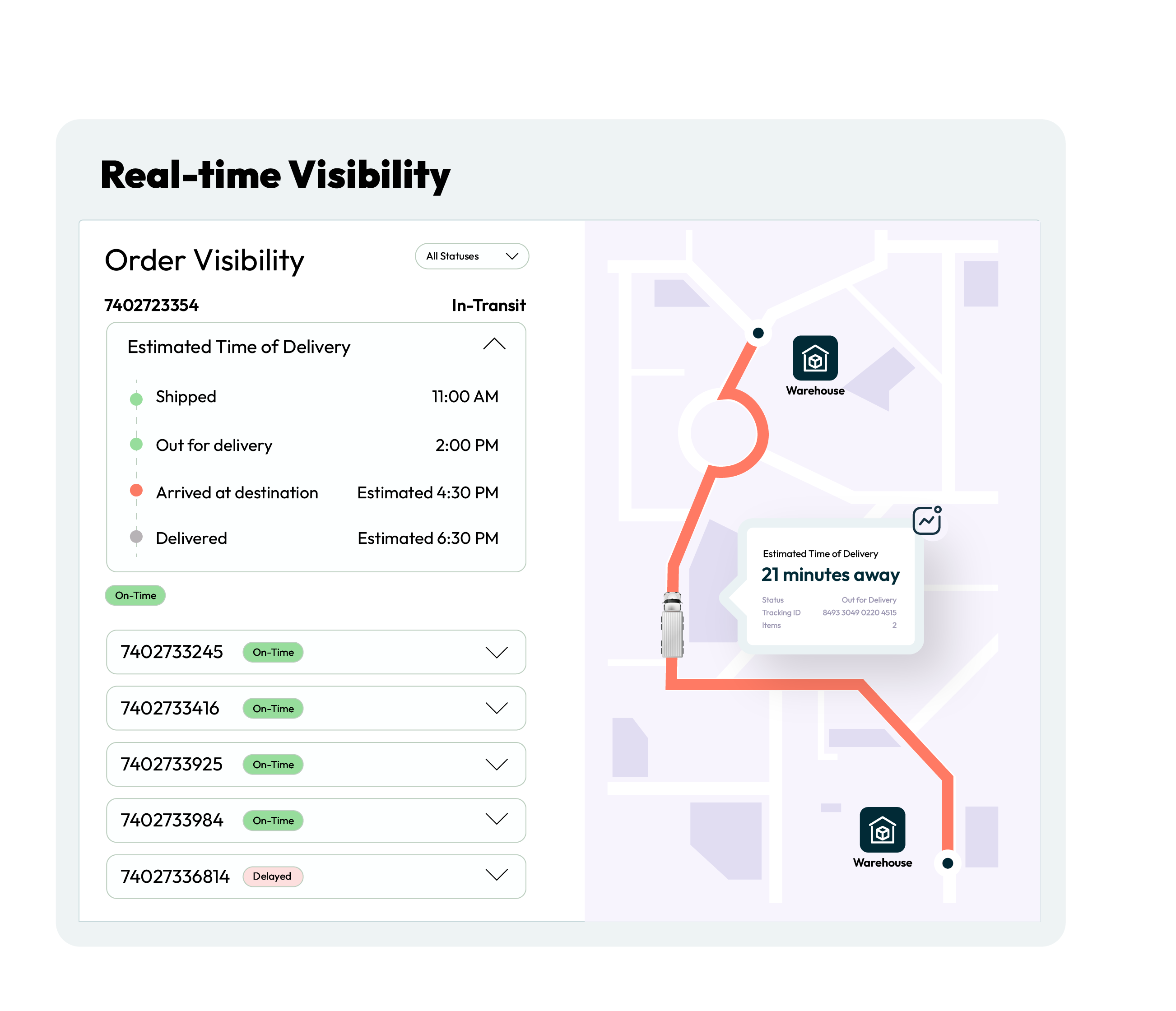
Now all your routes, actual vs planned performance, bottlenecks, underutilized vehicles and driver deviations live in one cockpit. You can slice data by region, route type, driver or time of day. Scenario testing (“what if I add 5 more stops in this zone?”) becomes painless.
Improved Customer Experience and Reliability
You can commit to tighter ETAs, more accurate windows, real-time tracking and dynamic customer notifications. Because the planner adjusts on the fly, fewer late or missed deliveries occur. That reliability builds trust and fewer re-deliveries save cost and reputation.
Resilience, Redundancy and Security
Your route infrastructure becomes more reliable. Cloud vendors offer redundancy, data replication across data centers, automated failovers and DR capabilities. On top of that, encryption, access control, audit logs and managed security harden your operations.
FarEye: A Solution Anchored in AI + Practicality
Let’s ground this in a real, enterprise-grade system: FarEye. This is the kind of online route planner that dispatchers and allocators choose when complexity, scale and reliability matter.
FarEye’s Design Philosophy and Differentiators
FarEye offers online route planning software designed for large fleets and high order volumes. The system uses AI/machine learning to refine predictions of travel time, dwell times and traffic patterns, then applies those learned profiles into route computation.
FarEye supports dynamic rerouting if conditions change mid-route, the system automatically adjusts and communicates new directions to drivers. It also supports over 100 constraints (time windows, vehicle types, driver shifts, priorities) and geocoding to resolve address inaccuracies.
What Success Looks Like with FarEye
From your perspective:
- When a delivery falls behind, FarEye redistributes remaining stops across nearby routes automatically. You don’t scramble manually.
- Over weeks, its ML models learn your recurring traffic patterns and start preemptively routing around slow segments at certain hours.
- Dashboards show you route efficiency, driver deviations, idle time, cost per route and actual vs planned performance all in one pane.
- You gain agility: regions previously thought too volatile to route automatically now get dynamic, resilient planning.
In short, FarEye is an online route planner built for enterprise complexity where AI gives you an edge, not just a gimmick.
Future Trends and What’s Next
As you plan for tomorrow, keep an eye on these emerging vectors in online route optimization software:
- AI/ML Advance: Smarter prediction of delays, dynamic congestion prediction and demand forecasting, driving routing decisions.
- Edge Computing/Hybrid Offline Modes: Some compute shifts to the device edge to handle routing when connectivity is weak.
- Autonomous and Drone Routing: Integration of autonomous vehicles or delivery drones with the same optimization engine.
- IoT and Smart City Integration: Real-time traffic signals, vehicle-to-infrastructure data and city congestion feeds influencing routing.
- Green Routing/Emissions Optimization: Route planners will increasingly consider CO₂ cost or battery range, not just time/distance.
- Collaborative routing networks: Shared fleet pooling or inter-company routing collaborations to reduce empty miles.
Take the Next Step: Pilot a Cloud Route Planner Now
The shift from rigid, manual routing to an adaptive, AI-infused online route planner is no longer optional for serious logistics firms; it’s imperative. As a dispatcher or allocator, you’ll gain responsiveness, better utilization, fewer firefights and more predictable delivery performance.
FarEye stands out as a leading choice, combining enterprise scalability, real-time dynamic rerouting and AI-driven insight. But regardless of vendor, demand stress tests, insist on data portability, require robust integration and fix your migration plan before flipping the switch.
Source: