
Table of Contents
- Defining Territory Routing in Modern Logistics
- Core Principles of Designing Efficient Delivery Zones with a Territory Route Planner
- Why FarEye Stands Out in AI First Parcel Route Planning and Optimization
- How FarEye’s AI Driven Territory Routing Transformed Healthcare Operations
- Navigating Implementation Challenges
- Maximizing Efficiency with Territory Routing
Let Our Experts Optimize Your Deliveries Today
Let's talkThe pressure on delivery operations is escalating. With Service Level Agreements (SLAs) tightening, unpredictable demand patterns and shrinking margins, traditional routing methods are no longer enough.
To stay competitive, logistics teams need more than just efficient routes; they need smart AI powered territory routing. Research shows that AI driven optimization can significantly enhance operational performance. It reduces delivery times by up to 30%, increases delivery accuracy to nearly 98% and cuts fuel consumption while improving vehicle utilization.
By combining AI with strategic zone planning and route optimization software, businesses can enhance reliability, increase fleet efficiency and stay agile in a rapidly changing environment. In this blog, we'll explore how AI driven territory routing can elevate your delivery performance and how FarEye has mastered AI driven territory planning for logistics.
Defining Territory Routing in Modern Logistics
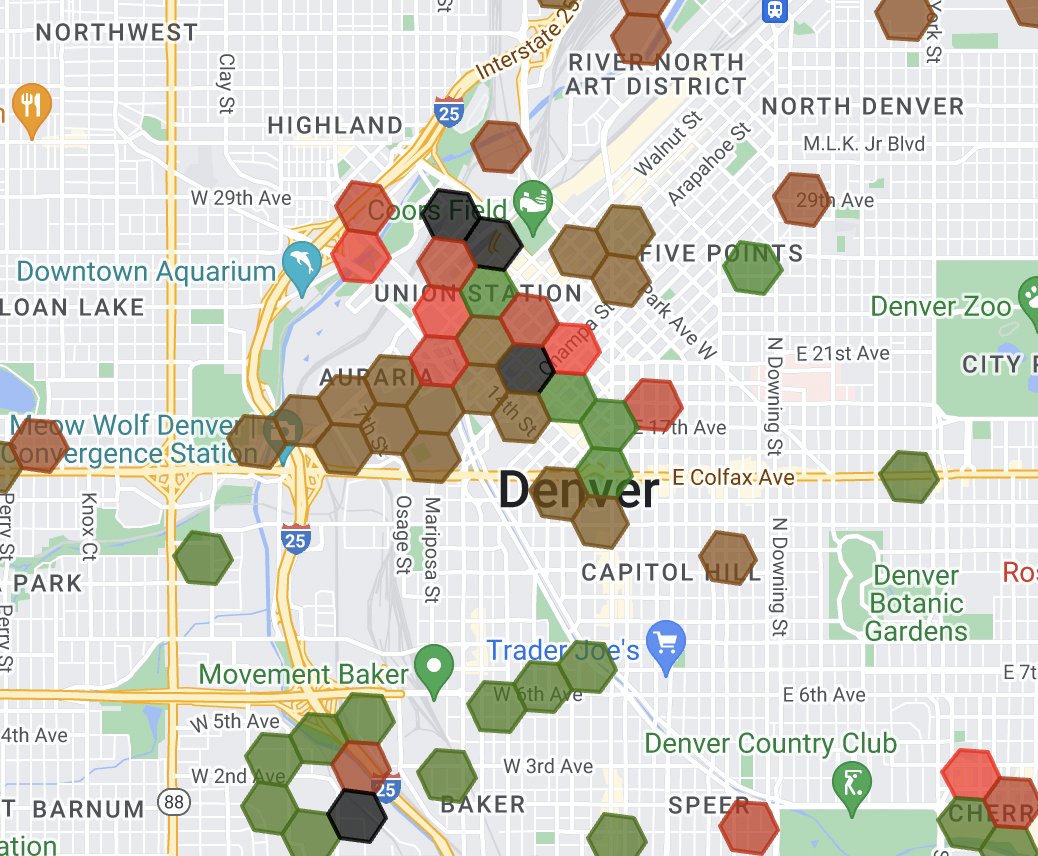
Territory routing goes beyond simply drawing lines on a map. It's a strategic approach that combines the design of delivery zones with dynamic route optimization to create a more responsive and efficient delivery network.
Territory routing, however, is fluid, leveraging real time data to continuously adjust both zone design and route optimization. Structuring delivery territories and delivery decisions at the regional level is recognized in academic logistics research as a fundamental component of last‑mile planning. This helps balance workloads and reduce inefficiencies inherent in static planning models.
This approach has been shown to improve key performance metrics, such as On Time In Full (OTIF), ensuring more reliable deliveries and greater service consistency.
Core Principles of Designing Efficient Delivery Zones with a Territory Route Planner
Here's a breakdown of the core principles that logistics teams should consider when designing delivery territories.
- Balance Demand and Geography
The initial step in creating effective territories requires balancing geographical factors and existing demand patterns. Density smoothing functions as an essential component because it balances workloads across days and operational territories to maximize vehicle utilization and driver efficiency. - Predictable and Compact Routing Areas
The presence of smaller, well defined zones reduces idle time and the risk of inefficient handoffs between different delivery areas. Hub network optimization comes into play, enabling delivery operations to function at optimal efficiency through the establishment of strategically located hubs that serve specific operational areas. - Temporal Demand Distribution
The assignment of higher order volumes to specific time periods enables businesses to achieve better capacity utilization while maintaining their service requirements during peak times. Capacity forecasting enables planners to predict upcoming network capacity needs while optimizing resource distribution to avoid excessive demands on vehicles and drivers. - Rider/Driver and Resource Balance
Effective routing considers the availability of workforce and vehicle capacity. By aligning territories with driver shifts and vehicle loads, businesses can ensure balanced workloads while staying within Hours of Service (HoS) regulations.
Additionally, optimizing routes for stops per hour allows drivers to complete more stops within their shifts, boosting overall productivity and efficiency. - Leveraging ePod for Real Time Visibility
Integrating Electronic Proof of Delivery technology further enhances territory routing efficiency. By providing real time visibility into delivery statuses, ePod ensures that deliveries are accurately tracked and signed for digitally.
FarEye’s AI powered platform brings these principles to life by integrating real time data into the route planning software, while ensuring efficient territory designs. With FarEye, logistics teams can enhance delivery zone management, boost operational efficiency and reduce costs, all while maintaining a high Net Promoter Score (NPS).
Why FarEye Stands Out in AI First Parcel Route Planning and Optimization
FarEye operates as an AI powered platform that transforms logistics operations by leveraging real time data analytics, predictive intelligence and machine learning. Its advanced algorithms are designed to optimize parcel route planning, manage fleets and enhance operational efficiency. This enables logistics providers to make smarter decisions and stay ahead of the competition.
- AI Routing and Constraint Optimization
FarEye’s AI driven route optimization models consider critical factors like time windows, vehicle capacity, driver shifts and service times, ensuring that multi stop routes are feasible within designated territories. This ensures that every delivery zone is designed to maximize efficiency and maintain delivery accuracy.
In fact, FarEye has helped save over 75 million kilometers through route optimization, demonstrating its effectiveness in reducing travel distance and improving operational efficiency. - Unified Visibility Across Owned, Outsourced & EV Fleets
The platform integrates telematics, GPS and partner carrier systems into a unified control tower, offering complete visibility across all fleet types, including owned, outsourced and electric vehicles. This visibility supports better decision making and optimization of territory routes. - Workflow Automation & Exception Handling
Orders are automatically assigned to dispatch with routes optimized according to predefined business rules. FarEye’s exception handling capabilities allow seamless route adjustments for unforeseen disruptions, ensuring that all deliveries remain on track despite unexpected events. - Predictive Intelligence with Machine Learning
Machine learning continuously analyzes historical performance, traffic patterns, zone characteristics and driver behavior. This predictive intelligence refines future delivery routes, ensuring the most efficient and cost effective path is chosen, with each delivery improving the next.
FarEye’s machine learning capabilities have resulted in an 18% reduction in average cost per delivery, demonstrating the significant cost savings achieved through optimized route planning. - Complete Integration Stack
FarEye’s API first design ensures seamless integration with systems like ERP, OMS, WMS, TMS, telematics, CRM and IoT. This real time data flows across all systems provides a holistic view of logistics activities, enabling scalable and efficient territory routing as business needs evolve. - Financial & Carrier Optimization
FarEye tracks key financial metrics, such as cost per mile, rate cards, billing exceptions and carrier performance. These insights support better decision making, ensuring the most cost effective carrier is assigned to each delivery zone, maximizing efficiency across all territories.
FarEye’s solutions have helped reduce the average cost per delivery by 18%, driving significant savings and improving overall cost effectiveness in logistics operations.
How FarEye’s AI Driven Territory Routing Transformed Healthcare Operations
A global healthcare provider implemented FarEye's AI technology to stabilize territory routing, strengthen capacity planning and improve last mile reliability across multiple Southeast Asian markets.
The results were as follows:
- 18% Increase in Vehicle Utilization
Optimized territory planning allowed teams to load and route vehicles more efficiently. Empty miles and idle time were reduced significantly, resulting in sharper utilization across daily operations. - 10% Reduction in Fleet Costs
Higher utilization enabled the organization to optimize fleet size. This helped reduce capital expenditure while lowering recurring operational costs for fuel, maintenance and third party carriers. - 90% Reduction in Planning Time
Automated territory and capacity planning dramatically reduces manual effort, from weeks of spreadsheet heavy work to rapid adjustments within hours. This agility helped the organization respond faster to volume changes and market demands. - 12% Improvement in Service Levels
Balanced territories and improved capacity alignment led to more consistent delivery windows. Customers experienced faster and more predictable service, strengthening satisfaction and trust.
Together, these results demonstrate how AI driven territory routing can move planning from a reactive exercise to a strategic capability.
Navigating Implementation Challenges
When implementing territory routing and optimization, logistics operations often face several practical challenges that can hinder adoption and success.
- Historical Data Silos
A major barrier to successful implementation is the presence of data silos within existing systems. Delivery, fleet and order data are often stored in separate systems, making them difficult to access and use in real time for routing and planning decisions.
Solution: A cross system data integration strategy is essential for breaking down silos. Integrating your TMS, OMS, WMS and other key systems into a unified platform enables seamless data flow and ensures accurate, up to date information for decision making. - Dispatcher Adoption Resistance
Dispatchers, who play a crucial role in executing route plans, may resist new tools or technologies that alter their workflow. A lack of understanding or fear of change can prevent them from embracing automated systems.
Solution: To ease this transition, consider a phased rollout of territory and route planning. Start by implementing the system in a smaller, controlled environment, allowing dispatchers to get familiar with the new tools gradually. Scenario simulations can also help dispatchers see the practical benefits of the new system in action. - Integrating with TMS/OMS
Integrating territory routing with existing TMS and OMS systems can pose technical challenges, especially when working with legacy systems or complex configurations.
Solution: Work with API first solutions that are designed to be flexible and compatible with a wide range of TMS and OMS platforms. By adopting a solution that prioritizes seamless integration, you can minimize disruptions during implementation. - Variability in Demand Patterns
Demand fluctuations can make it challenging to plan territories and routes accurately. Peak seasons or unpredictable demand spikes can lead to inefficiencies in fleet utilization.
Solution: Leverage predictive analytics and machine learning to anticipate demand patterns and adjust territories accordingly. By using historical data to forecast trends, the system can dynamically adjust delivery zones and routes to meet demand more effectively.
Maximizing Efficiency with Territory Routing
FarEye enables businesses to maximize efficiency through an effective territory route planner, which delivers operational improvements by streamlining delivery areas and enhancing fleet efficiency.
With FarEye’s AI powered solutions, refine your territory design and route planning to optimize delivery zones and resource allocation. Don’t let your competitors get ahead. Book a demo with FarEye to implement advanced territory routing capabilities that can help transform your delivery network and keep you at the forefront of operational excellence.