
Table of Contents
- The Dispatcher’s Day: A Narrative of Fragmentation
- Key Concepts in Modern Fleet Management
- Why Integration Elevates Scalability in Logistics
- FarEye as a Strategic Integration Anchor
- Implementation Challenges and Risk Mitigations
- Key Metrics That Signal Effective Scaling
- Drive Growth with Integrated Fleet Management
Let Our Experts Optimize Your Deliveries Today
Let's talkIn the United States, trucks transport roughly 72.7% of the nation’s freight by weight, making road logistics critical to national commerce. For enterprises pushing into new geographies, higher order volumes or tighter delivery windows, the difference between scalable success and operational chaos often lies in system architecture. Specifically, how fleet management software is integrated.
At the heart of that architecture lies routing, orchestration, real-time data and automation. Let’s find out how the proper integration of fleet management software transforms capacity, resilience and margin.
The Dispatcher’s Day: A Narrative of Fragmentation
In a mid-sized logistics operation, a dispatcher’s day begins with a cascade of order releases, driver check-ins and vehicle health dashboards. Some orders demand narrow time windows; others require special handling (fragile, hazardous, cold chain).
Vehicles may report sensor faults; one truck could be delayed by traffic or a minor mechanical issue, while another driver requests an unscheduled break. Without a unified system, dispatchers resort to spreadsheets, phone calls, manual workarounds and hope that nothing crucial drops.
Signs of strain emerge: last-minute route reassignments, SLA slip, hidden dead mileage, limited visibility into which vehicle is best suited for which load and mounting operational cost per delivery. In many such operations, scaling further would require proportional expansion of staff unless the core systems evolve.
Key Concepts in Modern Fleet Management
Before examining integration, certain technical pillars must be understood:
- Telematics and GPS Tracking
This captures live location, speed, route adherence and vehicle sensor diagnostics. - Route Optimization/Constraint Routing
Algorithms consider time windows, vehicle capacity, driver shift limits, service time, traffic forecasts and sequence stops optimally. - Orchestration/Workflow Engine
Automates transitions across modules, order ingestion, dispatch assignment, route execution, exception handling and billing. - Event-based Triggers/Alerts
Deviations (e.g., a vehicle running late, off-route or mechanical alert) raise flags for reassignment or intervention. - Maintenance scheduling (preventive and predictive)
Forecasts or flags when vehicles should be pulled from operations for servicing before failure. - Cost Attribution/Analytics
Distributes fuel, repair, idle and utilization costs across orders, zones or service lines. - Integration/Interface Architecture
APIs, message buses, data streaming and adapters that tie order management, WMS, ERP, CRM, telematics, etc., into a coherent stack.
Each of these is powerful on its own. Their true value unfolds when they operate as an integrated ecosystem.
Why Integration Elevates Scalability in Logistics
Below is an exploration of how integrated systems convert disparate functions into a unified engine that underlies scalable logistics performance.
- From Disconnected Modules to Seamless Flow
In fragmented systems, order capture, dispatch, telematics and maintenance operate in silos. When integrated, order ingestion flows directly to dispatch; unhealthy vehicles are automatically excluded; route engines generate feasible plans; alerts propagate in real time. The result is a unified, responsive operational flow rather than a patchwork of handoffs. - Algorithmic Leverage Enables Dispatchers to Scale
Manual dispatch might handle a hundred orders. Integration allows the routing engine to match hundreds of orders to vehicles, optimize multi-stop routes and reassign on the fly. Dispatchers thus manage far greater volume without linear staff growth. - Proactive Visibility and Real-time Intervention
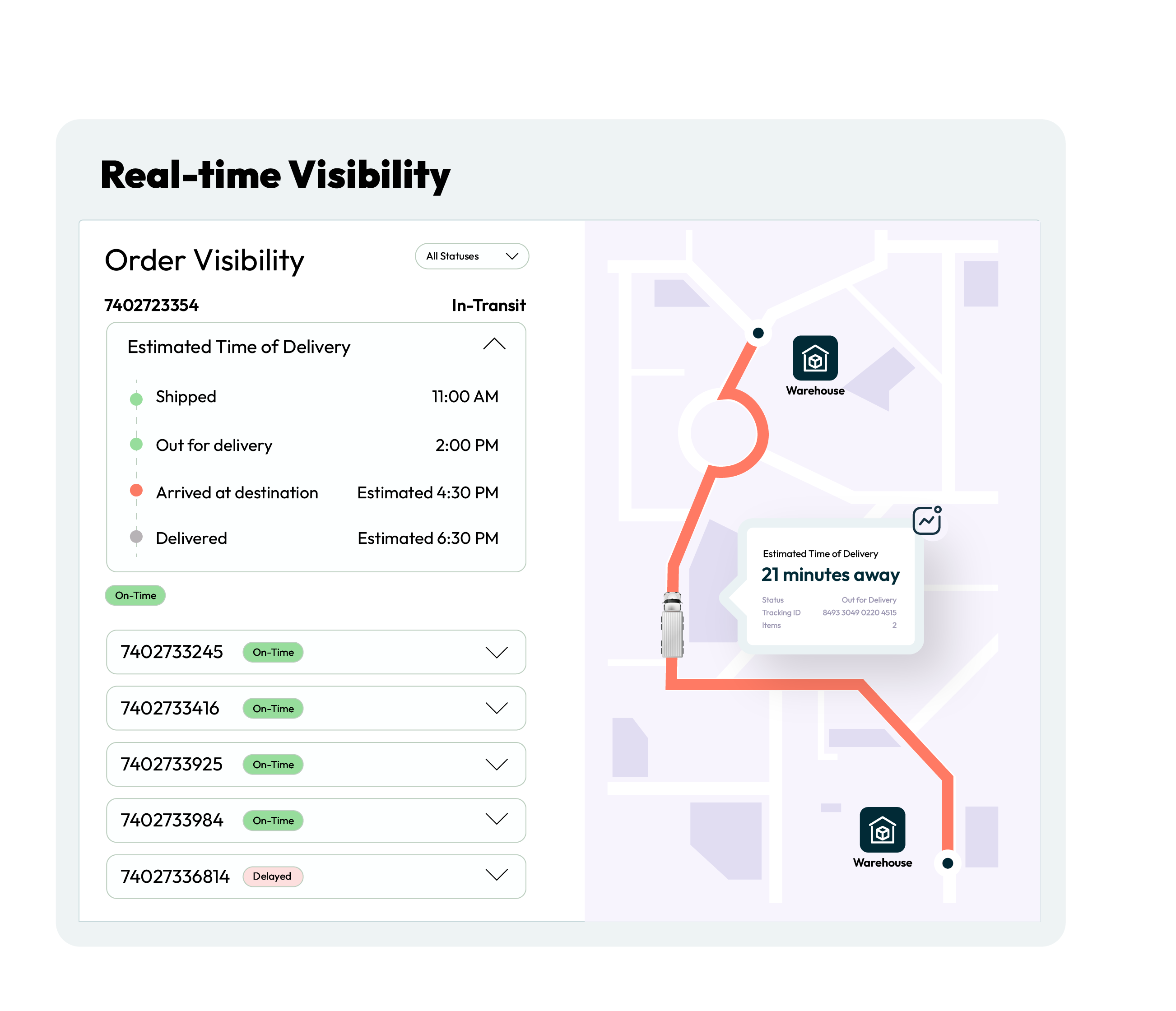
Integrated dashboards reveal live vehicle status, delays or route deviations. When a vehicle reports a fault or delays, the system can propose reassignments to nearby units, minimizing service impact. The shift becomes reactionless operations rather than firefighting. - Learning and Predictive Intelligence via AI/ML
With integrated modules, routing engines can ingest historical patterns, driver behavior data, zone-level delay statistics and external factors (traffic, weather). FMS embeds machine learning to continuously refine routing decisions. Their AI-based routing adapts in real time, anticipating congestion, driver performance or common service delays. - Improved Cost Efficiency and Utilization
Integration makes it possible to identify underutilized capacity, avoid dead runs and schedule maintenance at optimal windows. By weaving cost attribution into operations, enterprises reduce wasted fuel, idle time and repair overhead. - Enhanced Customer Experience and Trust
When dispatch and tracking systems exchange data seamlessly, status, ETAs and disruptions propagate into customer-facing portals or alerts without delay. This transparency builds credibility in B2B or B2C contexts. - Smooth Scaling into New Zones or Fleet Types
As operations scale across multiple metro zones, states or integrating electric or alternative fleets, an integrated architecture enables plugging in new vehicle types, APIs or geographies without fracturing the system.
FarEye as a Strategic Integration Anchor
In the domain of delivery fleet management software, FarEye excels by embedding routing, orchestration and analytics rather than treating them as peripherals.
- AI-based Routing at the Core
FarEye’s transportation management solution blends machine learning models with routing logic. It reoptimizes routes in real time, accounting for traffic, weather, service times and historical performance. This dynamic routing differentiates it from traditional plan tools. - Unified Visibility across Owned and Outsourced Fleets
The FarEye platform aggregates GPS, telematics and external carrier APIs, enabling the operator to choose optimal units regardless of ownership, a key advantage when scaling via outsourced or partner fleets. - Workflow Automation and Exception Handling
FarEye orchestrates the full transport lifecycle: route assignment, cross-dock tasks, triggers, auto-notifications and exception-driven reassignment logic. When a route veers off course, predefined rules activate corrective workflows. - Financial and Carrier Intelligence
By integrating billing, contract logic, rate cards and performance scoring, FarEye surfaces revenue leakage, mismatched invoices or suboptimal carrier choices critical in large-scale operations. - Extensibility and Integration into Core Stacks
FarEye is built to integrate with ERP, WMS, CRM, IoT devices and telematics layers. Its API-first design facilitates modular adoption rather than requiring wholesale replacement of existing systems.
Because growth in logistics often hinges on routing, visibility and exception management, FarEye becomes not just a module but the keystone within a scalable, integrated architecture.
Implementation Challenges and Risk Mitigations
Here is a breakdown of the main technical and organizational impediments encountered in fleet software integration and how they may be addressed
- Legacy System Compatibility
Many logistics operations run on legacy ERPs or order systems with rigid schemas. Adapters or middleware layers often bridge data mismatches, ensuring integration does not demand a system overhaul. - Data Quality and Address Normalization
Inconsistent customer addresses, sensor gaps or telematics noise compromise routing integrity. Rigorous master data management and geocoding normalization must precede integration. - Latency and Real-time Performance
Routing engines and alerts operate under tight latency constraints. Event streaming or real-time message buses should replace polling architectures to avoid stale decisions. - Exception Handling and Fallback Modes
Not every scenario fits automation. The system must allow human override, recover from API or network failures, retry logic and queue-based reconciliation for downstream modules. - Organizational Change and Adoption
Dispatch teams have domain expertise. Their input, training, feedback loops and staged pilot phases are necessary to ensure adoption instead of resistance. - Scalable Infrastructure
As volume grows, APIs, databases, queues and event streams must scale. Horizontal scaling, partitioning, caching and observability tooling are essential investments. - Vendor Lock-in
Choosing flexible solutions with open APIs and modular design helps avoid being stuck in monolithic systems that resist future upgrades.
Key Metrics That Signal Effective Scaling
An integrated deployment can be deemed successful if these KPIs improve:
- Orders managed per dispatcher increase substantially
- On-time delivery (SLA adherence) percentage rises
- Cost per delivery (fuel, maintenance, idle) decreases
- Vehicle utilization (loaded mileage divided by total mileage) improves
- Exception counts and manual intervention fall
- Customer complaints or delay escalations decline
- The payback period of the software investment shortens
- Entry into new zones or fleet types occurs without operational chaos
Tracking these as benchmarks can validate whether integration is driving true scale.
Drive Growth with Integrated Fleet Management
Scaling logistics operations demands more than modular additions; it requires systemic integration. Only when fleet management software is woven tightly with order systems, telematics, route engines, maintenance and analytics does true scale become possible. FarEye’s fleet management software, with AI/ML routing, orchestration and unified visibility, serves as a strong backbone for such scaling.
Operations under strain should begin with a pilot region or fleet slice, progressively integrate modules, monitor KPIs and expand outward. If alignment, adoption and architecture hold, integration becomes the multiplier rather than the bottleneck.
When the next growth wave hits, integrated systems enable control, not chaos.
Source:
Economics and Industry Data | American Trucking Associations