Table of Contents
- What is Dynamic Delivery Scheduling?
- Core Components of Driving Route Planner
- How a Driving Directions Route Planner + Dynamic Scheduling Manages Expectations
- FarEye’s Capabilities: How Driving Directions Route Planner Drives Results
- Driving Route Planner KPIs That Matter: Measuring Success
- Best Practices for Implementing a Driving Route Planner
- Take the Next Step to Elevate Your Delivery Operations
Let Our Experts Optimize Your Deliveries Today
Let's talkCustomer expectations in delivery logistics have changed dramatically. Today’s consumers want predictable delivery windows, accurate ETAs and real‑time updates, not vague morning or afternoon slots. Nearly 66% of shoppers now expect same‑day delivery and 98% say delivery experience directly influences brand loyalty.
In this environment, a modern driving route planner plays a central role in execution. However, without dynamic delivery scheduling, even the best planner becomes outdated once traffic and demand patterns shift. Pairing a driving directions route planner with intelligent scheduling transforms delivery from a fixed promise into a reliable, adaptable experience.
Let’s unpack how the driving route planner manages customer expectations, enhances service reliability and strengthens operational performance.
What is Dynamic Delivery Scheduling?
Dynamic delivery scheduling continuously recalculates delivery plans. It uses live data from vehicle locations, traffic feeds and order updates. This approach is different from traditional fixed schedules. It adapts in real time to changing conditions.
Dynamic scheduling matters because it bridges expectations and execution. A driving route planner helps plan the best routes. But without dynamic scheduling, that plan can become outdated as soon as traffic changes or new orders appear.
At its core, dynamic scheduling recalculates routes, delivery windows and driver assignments as the day unfolds. It considers real‑time variables such as road congestion, delivery priorities and fleet availability. This makes delivery plans more reliable and efficient.
Core Components of Driving Route Planner
The core components of a modern delivery system work together to make a driving route planner truly responsive, reliable and customer‑centric.
- Predictive ETAs
Dynamic scheduling uses real‑time data to forecast arrival times. Predictive ETAs shrink delivery windows and reduce uncertainty for customers. - Real Time Adjustments
Routes change based on new traffic conditions, urgent requests or driver delays. The system reroutes vehicles dynamically to keep deliveries on track. - Integrated Scheduling + Routing
A driving route planner combines routing logic with customer constraints and time windows. This ensures that customer commitments remain realistic and achievable. - Automated Notifications
Customers receive proactive updates about changes to their delivery windows. Early alerts reduce anxiety and support calls.
Dynamic route planning software helps accommodate last‑minute orders without operational chaos. They boost productivity by assigning orders intelligently and rerouting on the fly.
How a Driving Directions Route Planner + Dynamic Scheduling Manages Expectations
Combining a driving directions route planner with dynamic delivery scheduling helps businesses meet customer expectations by:
- Offering Predictive ETAs That Customers Trust
Customers value reliability more than speed alone. Predictive ETAs help deliver that reliability. A narrow, accurate delivery window means customers can plan their day. They wait with confidence instead of uncertainty.
With dynamic scheduling, a driving route planner uses real‑time sensors, traffic data and historical patterns to refine ETAs. This creates predictable delivery experiences. When customers trust the ETA, they stay satisfied. They call support less. They reward service reliability with loyalty. - Communicating With Transparency
Dynamic systems keep customers informed before they ask questions. Alerts about delays, reroutes or driver milestones reassure customers. When a customer sees precise delivery windows and real‑time positions, they feel in control.
This transparency reduces customer service calls. It also enhances brand credibility. In logistics, clear communication turns a delivery update into trust. - Offering Flexibility & Self‑Selection
Customers increasingly want control. They want to choose their delivery windows at checkout. They also want flexibility to change those windows later.
A driving route planner integrated with dynamic scheduling assesses feasibility before booking. It shows available slots with real delivery cost and time implications. This transparency improves perceived control. It turns a rigid routine into a client‑centric experience. - Reducing Failed Deliveries With Smart Rerouting
Last‑minute cancellations and route delays are major efficiency killers. Dynamic scheduling detects changes quickly. It reassigns deliveries and reroutes drivers without manual input.
This reduces failed first attempts and avoids wasted driver effort. It maximizes productivity and boosts customer satisfaction at the same time.
FarEye’s Capabilities: How Driving Directions Route Planner Drives Results
FarEye’s routing and scheduling capabilities go beyond basic map navigation. Its platform blends real‑time data, advanced algorithms and analytics for enterprise fleets.
- Predictive Intelligence
FarEye uses machine learning and historical trends to refine ETA accuracy and route choices. This continuous learning improves operational performance. - Dynamic Response
FarEye pushes real‑time reroutes and updates when conditions change. This keeps deliveries aligned with expectations even under pressure. - Real Time Visibility
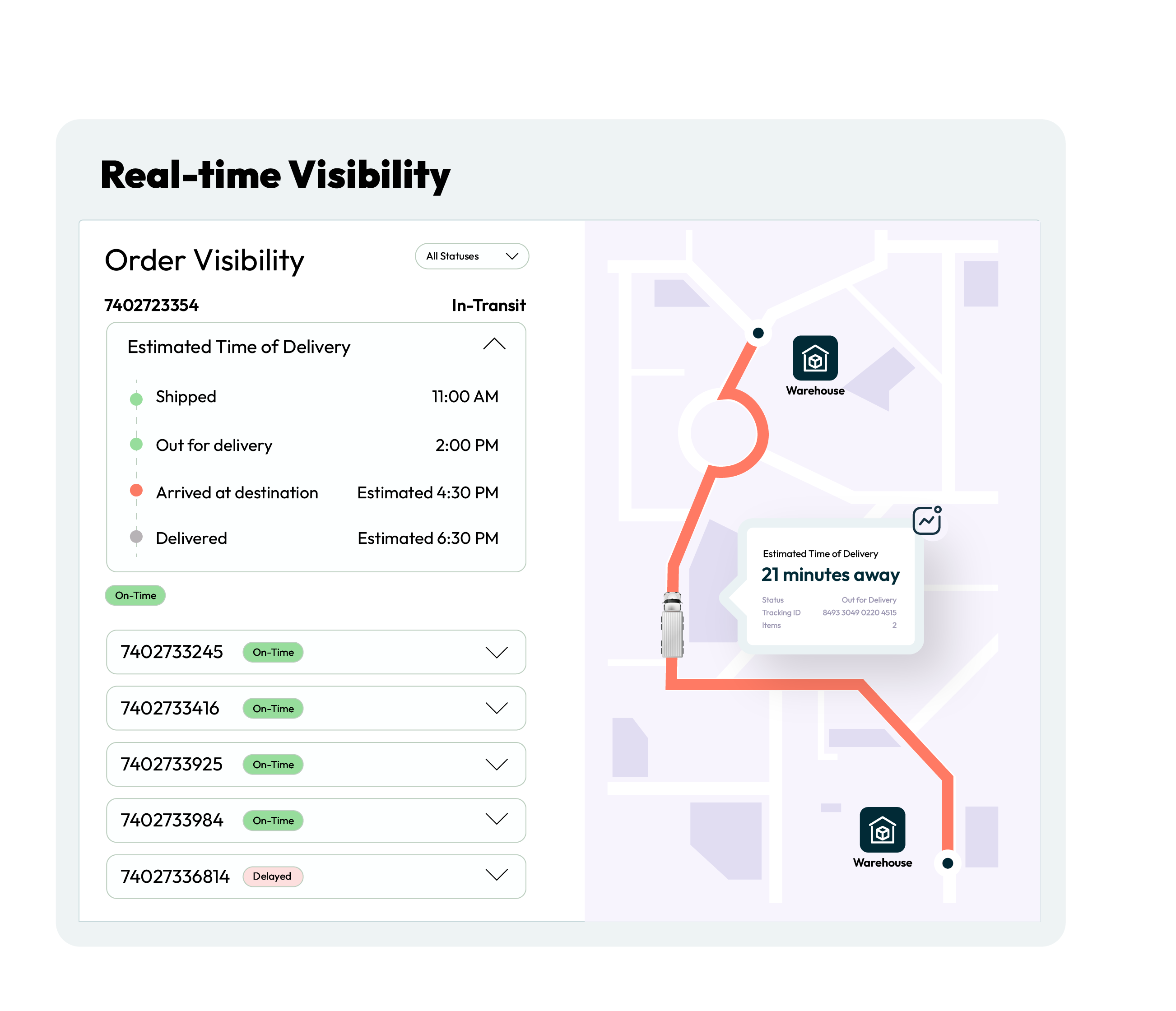
Dispatchers can track orders from the warehouse to delivery. They gain insight into delays and can proactively adjust plans. - Plug‑and‑Play Integration
Routing APIs are embedded into existing systems for fast adoption. This reduces deployment time and keeps data flowing smoothly.
These capabilities help fleets maintain tight delivery windows, enhance on‑time performance and deliver reliable customer experiences.
Driving Route Planner KPIs That Matter: Measuring Success
Measuring the impact of dynamic scheduling and routing is essential. The right KPIs reveal performance gains and areas for improvement. These are practical, actionable metrics you can watch closely.
- First Attempt Delivery Rate
This measures how often deliveries succeed on the first try. Higher rates directly reduce re‑delivery costs and improve customer trust. Dynamic routing and precise planning cut failed attempts by ensuring drivers reach customers within reliable windows. - On Time Delivery %
This metric tracks the share of deliveries that arrive within promised windows. Predictive ETAs built with dynamic routing drive significant improvement in punctuality. Real‑time data and adaptive schedules keep arrival times accurate even when traffic or conditions shift. - Customer Satisfaction (NPS/CSAT)
Clear delivery windows, proactive alerts and transparent updates lead to higher satisfaction. When customers feel informed and confident, satisfaction scores improve. Reduced failed deliveries also boosts brand trust. - Delivered ETAs vs Actuals
This compares expected arrival times with real results. Smaller gaps mean better ETA accuracy and stronger credibility. Dynamic systems that integrate live data shrink these gaps by adjusting in real time. - Route Distance/Fuel Saved
Tracking total miles and fuel consumption reveals operational efficiency. Better planning reduces distance and idle time. FarEye’s pre‑planning capabilities have helped fleets cut route distances significantly, lowering operational overhead. - Support Calls About ETAs or Delivery Status
Fewer support calls mean the delivery process is clearer to customers and requires less intervention. When systems share accurate status updates automatically, support teams can focus on exceptions instead of routine queries.
Each of these KPIs aligns with measurable operational goals. Together, they show how dynamic delivery and routing raise performance and reliability.
Best Practices for Implementing a Driving Route Planner
Deploying a modern driving route planner with dynamic delivery scheduling requires a thoughtful approach. These best practices help you realise value quickly and sustainably.
- Start with Clean & Rich Data
Accurate addresses, delivery constraints and vehicle details are core inputs. Clean data enables the planner to generate dependable routes. - Integrate Real‑Time Feeds
Live traffic, GPS, weather and order status feeds ensure the system responds to real conditions. This empowers dynamic rerouting and ETA refinement. - Balance Predictive and Reactive Logic
Predictive ETAs leverage historical patterns, while reactive scheduling adapts in real time. Combining both gives the most reliable results. - Communicate Clearly with Customers
Automated alerts and precise windows reduce uncertainty. Notifications about delays or reroutes boost trust and cut support inquiries. - Monitor & Refine KPIs Regularly
Track the KPIs discussed earlier. Regular review drives continuous improvement and helps scale your operations effectively. - Train Dispatchers and Drivers
Well‑trained users know how to interpret dynamic assignments and leverage routing suggestions. This improves execution on the ground.
Applied together, these best practices make your routing and scheduling strategy strong, resilient and customer‑centric.
Take the Next Step to Elevate Your Delivery Operations
A modern driving route planner that works with dynamic delivery scheduling bridges the gap between promise and performance. It enables accurate ETAs, adapts to real‑time changes and delivers greater transparency. Such capabilities transform delivery experiences into reliable, predictable journeys.
FarEye’s fleet routing and scheduling capabilities combine real‑time data, predictive intelligence and integrated analytics to drive measurable improvements in service levels. These technologies help businesses deliver reliable, on‑time performance and reduce operational complexity all while delighting customers.
Explore how FarEye’s dynamic scheduling and intelligent routing can transform your delivery operations and elevate customer trust.
Source:
Last Mile Delivery Statistics: Key Trends & Insights for 2025
Frequently Asked Questions
What is dynamic delivery scheduling?
Dynamic delivery scheduling continuously recalculates routes, delivery windows, and driver assignments using live traffic, vehicle location, order updates, and fleet availability.
How does a driving route planner manage customer expectations?
A driving route planner combines predictive ETAs, proactive notifications, flexible delivery windows, and real-time rerouting to create more reliable customer delivery experiences.
Why do accurate delivery ETAs matter to customers?
Accurate ETAs reduce uncertainty, help customers plan around deliveries, lower support inquiries, and strengthen trust through narrower, more dependable delivery windows.
What KPIs measure driving route planner success?
Key KPIs include first-attempt delivery rate, on-time delivery percentage, NPS or CSAT, ETA-versus-actual variance, route distance, fuel savings, and support calls.
How does FarEye improve delivery ETA accuracy?
FarEye combines machine learning, historical trends, live traffic, real-time visibility, and dynamic rerouting to refine ETAs as delivery conditions change.