Table of Contents
- Put to Rack: Precision-Driven Sorting for Mid-Mile Efficiency
- Enhanced SLA Compliance through Promise–Driven Delivery Metrics
- Prevent Unauthorized Edits with Vehicle Configuration Restrictions
- Smarter Coordination for Big & Bulky with 4 Person / 3 Person Delivery
- Flexible Timestamps Configuration for POD Images
- Break Time Visibility for Smarter and Safer Driving
Let Our Experts Optimize Your Deliveries Today
Let's talkPut to Rack: Precision-Driven Sorting for Mid-Mile Efficiency
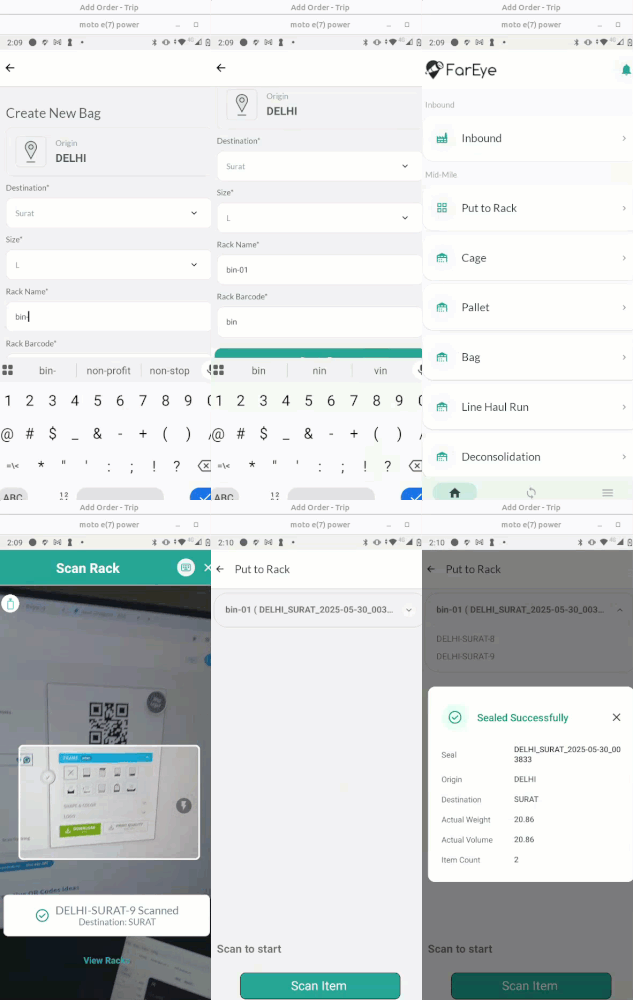
Introducing PUT to Rack, a smart mid-mile sorting module designed to streamline item segregation and enhance sorting efficiency. This feature draws inspiration from the widely adopted "Put to Light" methodology and digitizes the sorting process with real-time system prompts and validations. By scanning each item and validating its rack placement in real-time, the system reduces manual errors, speeds up segregation, and enhances visibility across high-volume operations.
Highlights:
- Guided Item Scanning: Users scan each shipment using a handheld or mobile device. The system immediately identifies and displays the correct rack and delivery destination.
- Real-Time Rack & Destination Suggestion: After scanning the item, the system dynamically displays the correct rack number and the associated delivery destination (e.g., city, branch, route), ensuring precise sorting guidance.
- Built-In Error Controls: Immediate alerts prevent incorrect rack placement, reducing errors and rework.
- Traceable Actions: All scans are logged to support audit trails, compliance tracking, and operational analysis.
- On-Screen Feedback: Visual cues guide users at each step, reducing confusion and training overhead.
Key Benefits:
- Enhanced Accuracy: Minimizes human error by validating each shipment’s assigned rack and destination in real-time
- Accelerated Throughput: Streamlines placement decisions, significantly reducing sorting time per item
- Scalable Performance: Handles high shipment volumes efficiently, ideal for fast-paced mid-mile hubs
- Improved Visibility: Delivers full traceability of sorting actions through detailed system logs and audit trails
Enhanced SLA Compliance through Promise–Driven Delivery Metrics
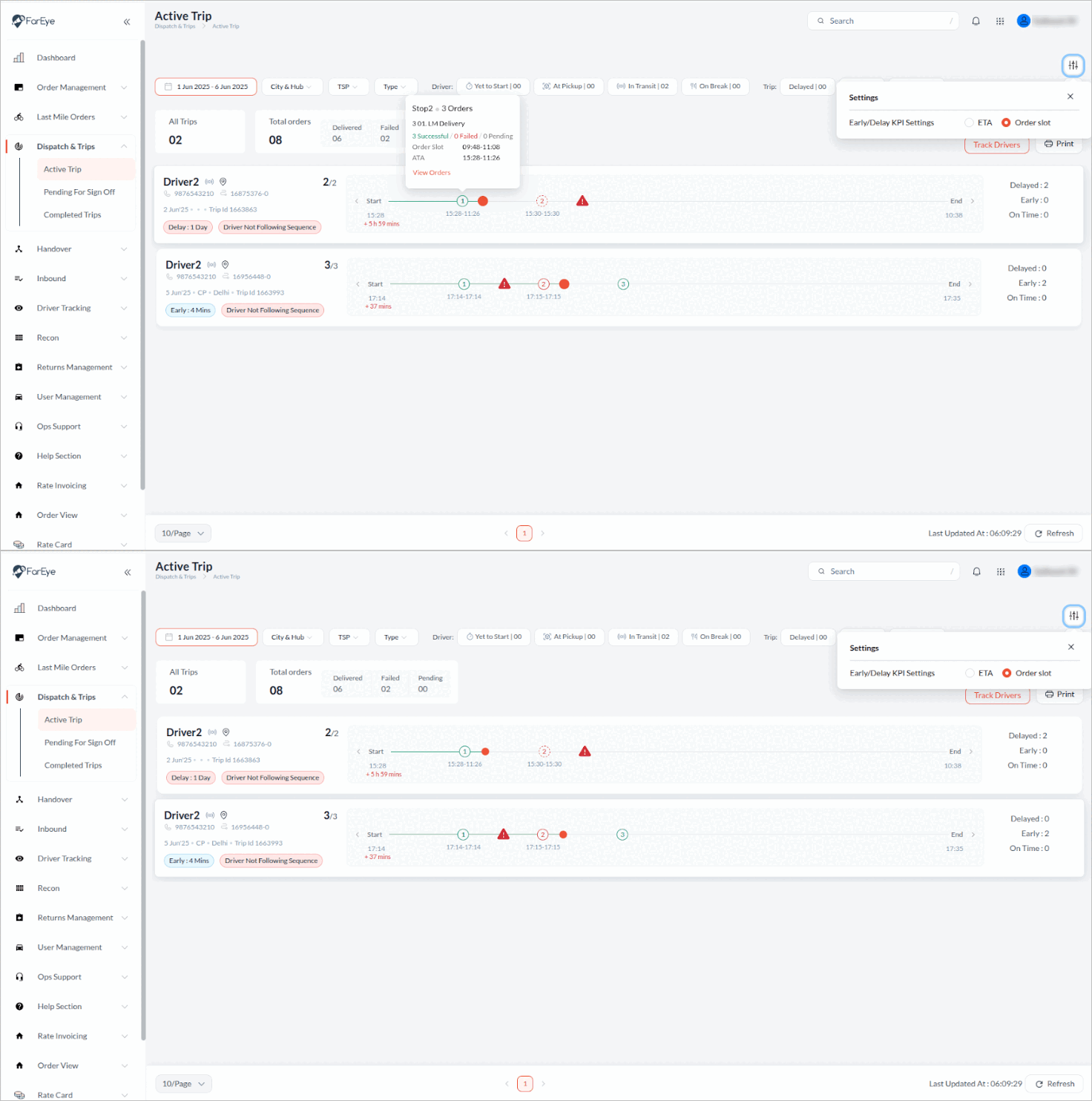
Delivery statuses in the Control Tower can now be determined by comparing actual delivery times against the promised customer slots instead of system-generated ETAs. This shift brings performance metrics closer to what matters most—meeting customer expectations—enabling teams to prioritize service accuracy and reduce false exceptions. This enhancement ensures better visibility across dashboards, KPIs, and reports, supporting more informed operational decisions.
- Customer-Centric Status Calculation: Delivery statuses can now be determined by comparing actual delivery times with the Customer Promise Window, offering a true reflection of customer expectations.
- Unified KPI and Dashboard Updates: All performance indicators, including route-level KPIs, order status badges, trip timelines, and Control Tower dashboards, now reflect the promise-based delivery evaluation.
- Fallback Mechanism for Missing Data: When customer promise windows are unavailable, the system applies a ±30-minute range around the ETA to maintain consistent delivery status reporting.
- Comprehensive Reporting Enhancements: Backend reports, dashboards, and exports have been updated to incorporate promise window logic, ensuring continuity with historical data and enabling accurate trend analysis.
Prevent Unauthorized Edits with Vehicle Configuration Restrictions
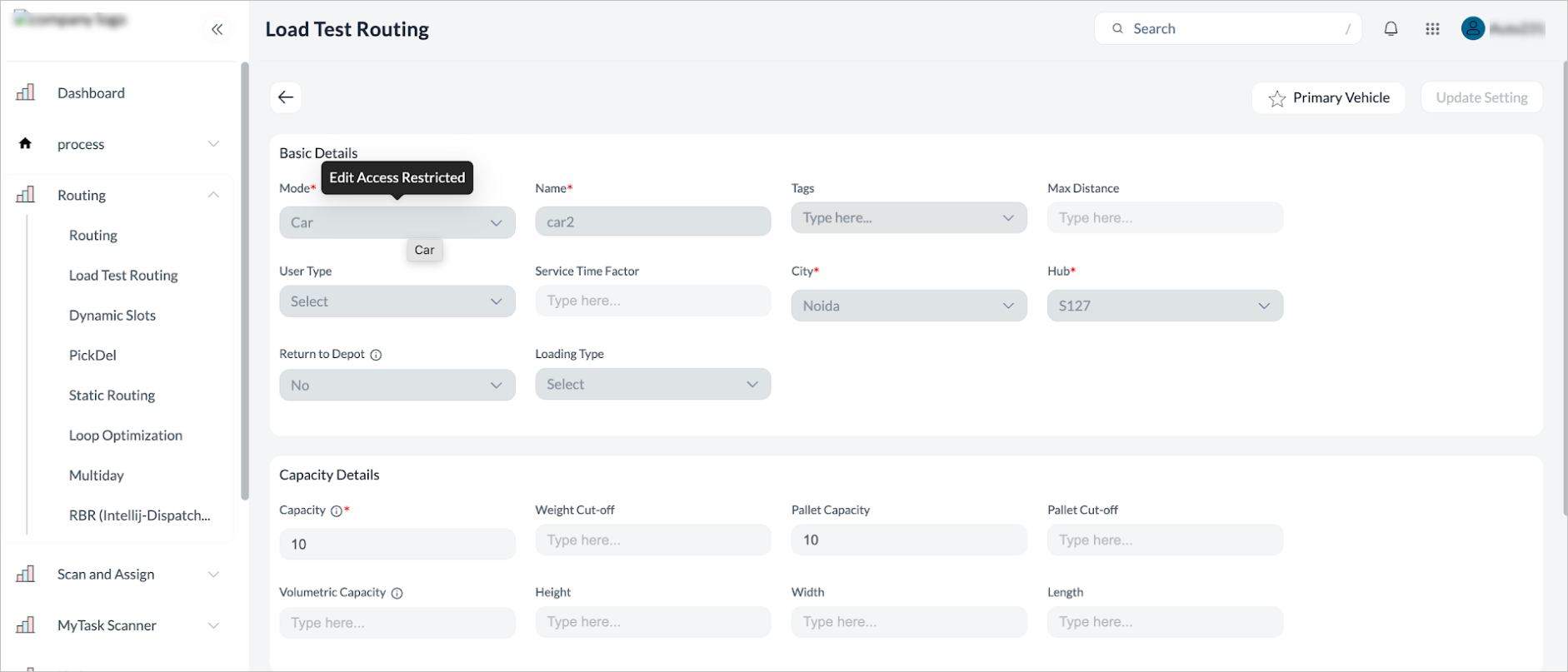
Admins can now enable a new Vehicle Configuration restriction under route-restriction settings for specific roles. Users assigned these roles will be able to view vehicle details but cannot edit or add any information. Disabled fields will show a tooltip on hover explaining the restriction, ensuring clarity and consistency with other restricted settings.
- Prevents unauthorized changes to vehicle settings while maintaining visibility
- Simplifies admin control with a toggle for restricting edits on vehicle configuration
- Edit controls are disabled or hidden for restricted users
- Service provider roles can view only vehicles assigned to their respective service provider.
Smarter Coordination for Big & Bulky with 4 Person / 3 Person Delivery
To better support complex, large-item deliveries, the platform now enables coordinated 4-person delivery teams by pairing two 2-person vehicles (each with a driver and assistant). This enhancement allows for flexible scaling of delivery crews, ensuring all necessary personnel arrive together and are fully equipped to handle very heavy, oversized and/or complex access deliveries safely and efficiently.
- Flexible Crew Scaling: Dynamically assign an additional 2-person vehicle when shipment size or complexity requires more manpower.
- Coordinated Dispatch: Both trucks are scheduled as a unified delivery team, ensuring synchronized arrival and eliminating delays caused by staggered arrivals.
Flexible Timestamps Configuration for POD Images
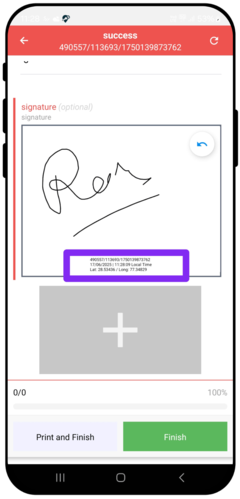
POD image timestamps can now be configured to appear in either UTC or local time, depending on operational requirements. This added flexibility ensures that delivery events are logged in a time format that aligns with regional workflows, improves audit clarity, and simplifies coordination across time zones—especially useful for teams operating in geographies with different time zones.
Break Time Visibility for Smarter and Safer Driving
The mobile app now supports planned break visibility, reminders, and logging to help drivers manage rest during trips. Once the trip begins, a break icon is shown, indicating planned break timings, total duration, and remaining time. Drivers can take breaks either in full or split across intervals, with non-intrusive reminders prompting timely rests. All break activities are tracked in real time and automatically logged, ensuring transparent reporting, accurate trip summaries, and alignment with compliance requirements—all while promoting driver well-being and minimizing disruption to final mile operations.