
Table of Contents
- The Challenges of Traditional Electric Vehicle Route Planning
- Why Electric Vehicle Route Planner Technology is a Strategic Advantage
- Core Business Outcomes of Smart Electric Vehicle Route Planning
- How to Evaluate an Electric Vehicle Route Planner Before You Scale?
- Why FarEye Fits EV Growth With AI-powered Route Planning
- How to Scale EV Operations?
- Turn Electric Vehicle Route Planning Into Scalable Delivery Performance
Let Our Experts Optimize Your Deliveries Today
Let's talkKey Takeaways
- Rapid Market Scale: The electric last mile delivery market is projected to jump to USD 205.1 billion by 2035, making precise EV dispatch critical.
- Complex Constraints: Energy use, charging queues and time windows must be planned together to prevent range anxiety and missed deliveries.
- FarEye's Solution: Explore how FarEye keeps EV routes feasible with energy-aware planning, charging station logic and traffic-smart ETAs that hold up at scale.
Electric last-mile delivery is moving from pilot fleets to day-to-day operations, making the adoption of a scalable electric vehicle route planner essential for success. This rapid growth is underscored by projections showing the market will surge from USD 34.8 billion in 2025 to USD 205.1 billion by 2035. Market data also indicates that the USA alone is set to expand at a CAGR of 16.5% during this period.
This growth makes traditional routing models not sufficient. EV dispatch must now integrate variable energy, charger access and compliance rules into a single, feasible plan. An electric vehicle route planner treats energy and charging as critical constraints, not afterthoughts. Let's learn why such a planner keeps EV routes feasible by balancing energy, time and compliance and how FarEye can help teams scale reliably.
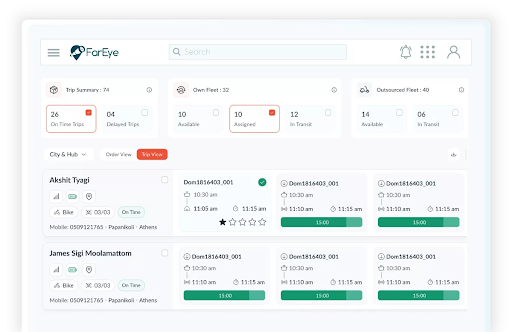
The Challenges of Traditional Electric Vehicle Route Planning
Scaling electric fleets introduces complexities that traditional combustion engines never face. Operations must now account for a limited range that fluctuates based on heavy loads, steep terrain and extreme weather. Success requires precise electric vehicle route planning to prevent dead batteries mid-route.
Dependency on charging infrastructure creates a new layer of logistical pressure, as dwell times for recharging must align with driver breaks and delivery windows. A standard GPS cannot efficiently handle these variables. To manage this, fleets need a specialized electric vehicle route planner that integrates battery health and station availability directly into the daily schedule to ensure reliability at scale.
Why Electric Vehicle Route Planner Technology is a Strategic Advantage
Modern electric vehicle route planner platforms function as sophisticated decision engines rather than simple navigation tools. They utilize advanced energy modeling that factors in payload weight, road gradients, ambient temperature and driver behavior to predict range with precision. Unlike fixed maps, these systems integrate real-time charging infrastructure data to align necessary recharge stops with mandatory driver breaks and tight delivery windows.
By layering these technical variables with business KPIs, the route planning software ensures that electric vehicle route planning optimizes for both operational cost and service reliability. This holistic approach prevents range anxiety and maximizes fleet efficiency without compromising strict Service Level Agreements (SLAs).
Core Business Outcomes of Smart Electric Vehicle Route Planning
Smart electric vehicle route planning optimizes energy consumption to maximize the number of stops per charge. Self learning algorithms ensure real time adjustments protect ETAs while aligning with corporate sustainability goals.
By systematically lowering energy usage, fleets generate verifiable data for Environmental, Social and Governance (ESG) reporting, connecting green logistics directly to business value.
- First-attempt Success and OTIF Performance
A feasible plan improves first-attempt completion by ensuring drivers arrive with sufficient energy and time. That protects On-time In-full (OTIF) performance without adding buffer vehicles. An electric vehicle route planner helps reduce late arrivals caused by avoidable charging detours. - Cost Per Stop and Miles Per Route
Better clustering reduces deadhead, while energy-aware sequences reduce detours. When charging is planned cleanly, drivers stop reacting and start executing. That is how an electric vehicle route planner lowers cost per stop at scale. - Route Adherence and Driver Productivity
Cleaner sequencing reduces mid-shift surprises, boosting route adherence and driver productivity while supporting HoS and DoT compliance. PoD events also improve because drivers follow consistent flows and dispatch can coach using verified timestamps. - Customer Experience and Net Promoter Scores (NPS)
Customers reward accuracy more than speed. Micro-ETAs and realistic windows reduce "Where is My Order?" (WISMO) calls and missed appointments. That improvement shows up in NPS and repeat purchasing over time.
How to Evaluate an Electric Vehicle Route Planner Before You Scale?
Selection should focus on capabilities that withstand real operating pressure. Prioritize these key features to ensure your electric vehicle route planner is enterprise-ready:
- Real Time Charging Integration
Efficient operations require dynamic charger mapping and live availability status to ensure drivers never face unexpected downtime at occupied stations. - Predictive Range Modeling
The system must generate accurate forecasts based on variable payload weights and environmental conditions, rather than relying on static averages. - Dynamic Rerouting Logic
Look for logic that responds instantly to traffic shifts and charger variances, adjusting the route without breaking the entire day's schedule. - Scalability and Integration Support
Verify seamless API connectivity with your existing enterprise systems (ERP, TMS) to ensure consistent data flow as your fleet grows. - AI Driven Decision Support
Effective planning relies on machine learning that improves decision outcomes and precision over time. - Analytics and Reporting
Ensure the platform provides granular insights into operational costs, fleet performance and sustainability metrics to validate ROI.
Why FarEye Fits EV Growth With AI-powered Route Planning
Scaling EV fleets requires a platform that unifies planning, execution and continuous learning. FarEye supports EV scale by unifying planning, charging, execution and learning in one operating workflow in the route optimization software, contributing to 550K+ Metric Tonnes of GHG emissions reduced.
- Plans Routes Around EV Range, Service Areas and Stop Commitments
FarEye plans with EV range, delivery density and customer windows in the same solve. That keeps routes feasible as volume rises across depots and territories. It also helps avoid late-day rescues caused by "range on paper" assumptions that fail in real traffic.
Dispatch gets plans that respect both energy reality and promised service levels. Thereby driving a 12% YoY increase in capacity utilization and a 16% YoY increase in Stops per Route (SPR). - Maps Charging Stations Into Routes to Reduce Range Anxiety
Charging stops are built into the plan based on distance, stop sequence and charger fit. Drivers know where charging sits in the route, not as a last-minute decision. This reduces emergency detours and cuts the need for repeated dispatcher check-ins. It also helps standardise charging behaviour across the fleet, which stabilises performance. - Accounts For Charger Dwell, so Schedules Stay Realistic
FarEye plans idling and charging time based on station type, expected charging speed and battery needs. That protects downstream time windows because charging is treated like a real constraint, not a rough time block.
When queues or slower charging create drift, the plan has built-in buffers that prevent cascading delays. Teams maintain predictable routes even when charging conditions vary. - Improves ETAs Using Traffic and Terrain Awareness
Traffic and road grade affect both battery draw and arrival time. FarEye factors those conditions so ETAs hold up during real shifts, not ideal assumptions. That improves customer communication and reduces missed appointment windows caused by charging detours.
It also helps dispatch choose sequences that keep energy in reserve for the final stops. As a result, it supports an 18% YoY increase in first time delivery and a 6% increase in OTIF compliant deliveries. - Uses Predictive Analytics to Refine Energy and ETA Accuracy
Historical patterns and live inputs sharpen energy estimates over time. The system learns how specific zones behave by hour, day and stop type, then adjusts planning assumptions accordingly.
This reduces late arrivals by planning with service times and consumption models that align with local execution, helping businesses save 600 million miles annually. Over time, fewer routes require manual edits because the model improves the plan quality upstream. - Enables Fast Adjustments Through Live Execution Visibility
Plans stay credible when the first disruption hits. FarEye supports quick adjustments via real-time location and job status updates, enabling dispatch to intervene early. Teams can reassign work or resequence stops without turning the day into manual patchwork.
That keeps drivers moving with fewer interruptions and maintains consistent exception handling across shifts, leading to a 22% YoY decrease in dispatch time. - Supports EV Constraints With Scheduling Rules That Hold Under Pressure
Constraints-based scheduling enforces range limits, time windows and operating rules during planning and reassignment. This prevents last-minute changes that look efficient but create charging risk or missed windows later.
Dispatch stays compliant while maintaining steady productivity during peaks and weather swings. Teams also get clearer trade-offs, since the plan reflects what is feasible rather than what is hoped for. - Integrates Through APIs for Enterprise Scale and Speed
Plug-and-play APIs connect FarEye to existing systems for rapid route generation. EV-specific needs, such as vehicle type, driver preferences and charger constraints, will continue to be supported as the fleet grows.
This reduces rollout friction because the routing layer can slot into current workflows and data flows. It also keeps route updates fast, since inputs and outputs stay synchronized across systems. - Handles Common EV Routing Frictions Before They Become Failures
FarEye reduces the impact of limited charging coverage and variable charging performance. The planner can steer routes toward charging options that align with vehicle compatibility and scheduling realities.
Real-time signals help avoid routes that look feasible on paper but are blocked by access rules, especially in dense areas. The result is fewer stalled routes and an 18% reduction in average cost per delivery, ensuring a smoother day for dispatch and drivers.
How to Scale EV Operations?
Scaling an EV fleet usually fails at the seams between planning, charging and day-of changes. A disciplined scale plan keeps routes feasible, protects promised windows and reduces rescue moves that drain productivity.
- Standardize Vehicle Profiles and Energy Baselines
Lock in usable range by vehicle type, payload bands and duty-cycle patterns. Keep baseline assumptions consistent, then tune them by territory as performance data builds. - Use Route Optimization Software to Keep Plans Feasible at Scale
Move beyond manual clustering once volume grows across depots and service areas. Route optimization software can balance time windows, energy use, driver shifts and charging rules in one solve. This keeps routes executable, reduces dispatch rework and improves on-time in-full performance as density rises. - Build Charging Into Territories, Not as a Rescue Plan
Map chargers by compatibility, access rules and operating hours, then assign them to service areas. Create preferred charging loops per territory so routes stay predictable during peaks. - Treat Charging Time as a First Class Scheduling Constraint
Plan charging as an appointment with buffers, not a simple duration block. This protects downstream windows and reduces cascading delays when bays are busy or charging slows. - Tighten Service Time Standards By Stop Type
Apartments, docks, lockers and curbside stops behave differently and drive different dwell patterns. Calibrate service times by stop class to keep ETAs realistic and plans feasible. - Set Dispatch Guardrails for Mid Shift Changes
Define what can be resequenced, what can be reassigned and what requires approval. Guardrails reduce chaos, keep routes auditable and prevent quick fixes that create charging risk later. - Use Closed Loop Learning to Improve Plans Every Week
Feed PoD events, arrival and departure times and charging dwell back into planning. This turns daily execution into better routing assumptions with fewer manual edits. - Pilot, Measure, Then Expand With a Repeatable Playbook
Start with a focused pilot, confirm kpi movement, then roll the same template to new depots. Scale through repeatable processes, not one-off heroics from dispatch.
Turn Electric Vehicle Route Planning Into Scalable Delivery Performance
Scaling an EV fleet demands more than cleaner vehicles. It requires planning that adapts to energy shifts, charger queues, service windows and real operating constraints. An electric vehicle route planner turns these pressures into predictable execution by using live signals and accurate energy modeling.
It also uses stop-level intelligence, so dispatch stays on track throughout every hour of the day. As daily volume expands, leaders need tools that keep drivers productive, reduce rescue moves and protect customer commitments without risking compliance or profitability.
FarEye helps teams achieve that balance with AI-powered EV routing, charging logic and real-time control in one platform. Contact FarEye for a focused demo to see how scalable EV route planning can support your next stage of growth.
Sources:
https://www.futuremarketinsights.com/reports/electric-last-mile-delivery-vehicle-market