Table of Contents
- What is Dynamic Routing in Modern Logistics
- Key Principles for Optimizing Fleet Flexibility with Dynamic Routing
- Why FarEye Excels as an AI Driven Dynamic Routing and Fleet Management Platform
- Navigating Implementation: Practical Steps to Operationalize Dynamic Routing
- How FarEye Transforms Fleet Operations with Dynamic Routing
Let Our Experts Optimize Your Deliveries Today
Let's talkKey Takeaways
- Dynamic routing optimizes delivery routes in real-time, improving efficiency and enhancing customer satisfaction.
- FarEye’s AI-driven platform empowers logistics teams to respond quickly to operational changes and boost fleet performance.
- By reducing operational waste, FarEye helps businesses streamline operations and increase overall delivery effectiveness.
The logistics industry is experiencing a critical shift as it grapples with unpredictable demand, tightening Service Level Agreements (SLAs) and rising pressure on costs and performance. Traditional route planning methods and static execution models, which once worked for smaller fleets or less demanding times, are no longer viable at scale.
Logistics teams are now expected to balance delivery speed, real time responsiveness, fleet capacity utilization and predictable performance, without compromising on customer satisfaction.
This is where dynamic routing comes into play. It introduces a flexible, continuously adapting operations framework that allows logistics teams to respond to real time changes. Let's explore how dynamic routing, with its real time decision making and smart execution workflows, can enhance logistics operations, powered by FarEye's AI driven solutions.
What is Dynamic Routing in Modern Logistics
Dynamic routing functions as an ongoing system that optimizes delivery assignments through continuous updates whenever conditions undergo transformations. Whether it’s traffic delays, new orders, cancellations or changes in resource availability, dynamic routing integrates all these variables into the decision making process.
Dynamic routing is key to ensuring operational flexibility and higher efficiency in real time logistics operations. The ability to adapt routing decisions in real time minimizes costs, maximizes fleet utilization, increases the First Attempt Delivery Rate (FADR) and enhances customer satisfaction by providing more accurate ETAs and fewer delivery delays.
FarEye's platform supports all types of dynamic routing, ensuring complete flexibility in fleet management:
- Real Time
Adjusts delivery plans in real time based on traffic, weather and other unforeseen events. It ensures that routes are continuously optimized to avoid delays. - Time Based
Optimizes delivery schedules based on time specific patterns, such as peak and off peak hours or delivery windows, to improve route utilization. - Predictive
Uses predictive analytics to forecast delays and optimize routes before disruptions occur, enhancing operational efficiency. - Adaptive
Continuously learns from data inputs to adjust routes over time, improving accuracy and efficiency with each cycle. - EV Focused
Optimizes routes based on the specific constraints of electric vehicles, including battery levels and charging station availability.
With FarEye's platform, businesses benefit from seamless integration of all these dynamic routing types, ensuring optimal fleet performance, reducing inefficiencies and improving customer satisfaction.
Key Principles for Optimizing Fleet Flexibility with Dynamic Routing
To effectively implement dynamic routing, logistics teams must balance operational efficiency, real time adjustments and resource management.
The following principles outline how dynamic routing optimizes fleet flexibility by responding to live data and improving performance across various dimensions.
- Balance Live Demand with Operational Constraints
One of the main advantages of dynamic routing is its ability to reflect live demand density, fleet state and operational constraints, rather than sticking to static geographical zones.
Using real time data, route optimization software can adapt to shifts in order density, resource availability and driver schedules. This ensures fleets are always operating at peak efficiency, without wasting time or resources on unnecessary routes. - Predictable, Cohesive Route Clusters
Dynamic routing excels at creating predictable, cohesive route clusters by grouping deliveries geographically and temporally. These route clusters ensure that vehicles are optimized to minimize travel across far flung zones.
By recalibrating only when significant changes occur, such as new high priority orders or unexpected traffic congestion, dynamic routing minimizes inefficient travel and improves fleet cohesion. - Time Based Demand Patterns
Demand fluctuations throughout the day, week or year also affect delivery operations. Dynamic routing accounts for these variations by recalculating routes based on historical demand patterns.
This ensures that operations teams can anticipate peaks and valleys, optimizing workload distribution and resource utilization without overburdening any single vehicle. - Matching Resources to Demand
With dynamic routing, vehicles and drivers are matched to delivery needs based on factors such as vehicle type, driver skills and shift hours. This ensures that lighter vehicles are not overloaded and routes are assigned based on a vehicle's remaining capacity.
As a result, driver satisfaction improves, vehicle wear and tear is reduced and overall operational predictability is maintained.
FarEye's dynamic routing solution plays a key role in seamlessly integrating these principles, ensuring that your fleet operates at maximum flexibility and efficiency. By leveraging real time data and predictive analytics, FarEye helps logistics teams optimize route planning, reduce costs and maintain fleet reliability across dynamic conditions.
Why FarEye Excels as an AI Driven Dynamic Routing and Fleet Management Platform
FarEye goes beyond simple routing engines by offering an AI driven integrated solution that supports dynamic routing, live execution and continuous performance improvement across fleets. These are:
- Intelligent, Real Time Reassignment Logic
FarEye's system continuously processes operational data, such as traffic order changes and vehicle status and adjusts routes on demand to preserve SLA performance and optimize fleet operations.
Powered by self learning algorithms, the platform refines its decision making over time, adapting to new patterns and improving routing accuracy with each cycle. This ensures that fleet operations remain efficient, responsive and adaptable to real time changes. - Unified Management and Visibility Across Fleet Resources
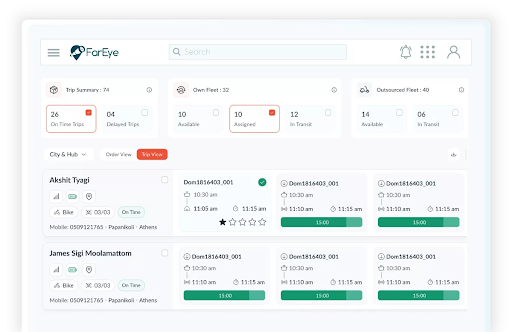
FarEye is designed to handle the complexity of various fleet types, including 3PL, owned fleets and outsourced fleets. The platform aggregates telematics, GPS, carrier systems and live execution data into a unified control tower. This provides real time visibility into available capacity, constraints and operational opportunities across the entire fleet.
FarEye integrates with key systems like TMS and WMS, enabling businesses to manage diverse fleets from a single platform. Our seamless approach has contributed to a 12% year over year (YoY) increase in capacity utilization, enhancing overall operational efficiency. - Territory Planning for Optimized Coverage and Efficiency
FarEye’s dynamic routing capabilities extend to territory planning, helping fleet managers design and adjust delivery zones based on real time demand, capacity and constraints. By integrating data on delivery densities, time sensitive deliveries and regional constraints, FarEye's territory route planner ensures that fleet resources are distributed efficiently.
Optimized territory planning reduces delays, improves customer satisfaction and enhances fleet performance. As a result, FarEye has contributed to a 6% increase in On Time In Full (OTIF) compliant deliveries, showcasing its effectiveness in improving delivery reliability and operational efficiency. - Forecast Led Adjustments and Learning Models
FarEye's system learns from historical performance data and anticipates delays or congestion, enabling more anticipatory decision making and improving routing reliability.
Additionally, FarEye's solution helps network planners save up to 90% of the time spent forecasting fleet size, capacity and cost. This streamlines operations and enables more efficient planning for future delivery demands. - Smart Service Time and Smart Parking for Optimized Fleet Efficiency
FarEye's dynamic routing capabilities enhance service times and parking efficiency while ensuring compliance with Hours of Service (HoS) regulations. By incorporating real world factors such as parking distance and elevator wait times, FarEye’s Smart Service Time feature helps ensure more accurate, adaptive delivery windows.
Additionally, our smart parking recommendations use machine learning algorithms to predict available parking spots near delivery destinations, minimizing stops per hour and reducing driver fatigue.
Navigating Implementation: Practical Steps to Operationalize Dynamic Routing
To implement dynamic routing effectively, logistics companies should:
- Establish Unified Data Pipelines
Ensure that data flows seamlessly from telematics, OMS, WMS and other systems into the optimization engine. FarEye's API first platform facilitates seamless integration, enabling real time data flow from all systems to optimize dynamic routing decisions.
- Support Dispatcher Adoption with Scenario Simulations
Use simulations to showcase the benefits of dynamic routing and build trust with dispatchers. FarEye's adaptive models and real time decisioning tools make these simulations effective, helping dispatchers better understand the value of dynamic updates.
- Leverage Predictive Workload Models to Manage Peaks
Use forecasting to anticipate demand surges and adjust routes accordingly. FarEye's forecasting capabilities, integrated with real time data, allow logistics teams to effectively manage peak demand and optimize fleet usage.
By using these strategies, logistics providers can achieve smoother operations and leverage dynamic routing as a competitive advantage.
How FarEye Transforms Fleet Operations with Dynamic Routing
Dynamic routing enables logistics teams to handle unexpected changes, which enhances their operational flexibility and efficiency. By leveraging AI driven routing, businesses can enhance delivery accuracy, reduce operational waste and elevate customer satisfaction.
FarEye provides AI powered technology solutions that enable businesses to implement dynamic routing systems for their operational needs while maintaining their market position.
Your fleet will benefit from future-proofing opportunities. Book a demo with FarEye today and discover how dynamic routing can streamline your operations, increase efficiency and enhance your bottom line.