
Table of Contents
- The Rise of Data Driven Logistics
- Anatomy of Modern Route Management Software
- How Analytics Transforms Decision Making in Route Management Software
- Why FarEye Stands Out for Data Powered Routing Decisions
- Key Use Cases: Where Analytics Adds Value
- What to Look for in a Route Optimization App
- Implementation Best Practices
- Take the Next Step Toward Predictive Routing Intelligence
Let Our Experts Optimize Your Deliveries Today
Let's talkWhat if your fleet could anticipate disruptions, optimize every kilometer and deliver consistently on time? Today’s logistics landscape is unforgiving. Customer expectations for speed and accuracy are rising, costs are squeezing margins and complexity is increasing by the day.
The reality is clear: modern route optimization software isn’t enough on its own. Without deep data analytics woven into the planning, execution and feedback loop, even the best routing tool can fall short.
You need route management software that not only plans routes but also turns operational data into strategic decisions that boost capacity, elevate service levels and reduce costs.
The Rise of Data Driven Logistics
Logistics and delivery operations are under pressure like never before. Customers expect same day or next day service, accurate delivery windows and real time visibility. At the same time, fuel prices, labor costs and regulatory constraints continue to rise, making inefficiencies more costly.
In response, route management software has evolved. What was once a simple map based planning tool has transformed into an analytics led decision engine that drives performance at scale. Today’s solutions leverage real time data streams, historical patterns and predictive insights to balance complexity with performance.
A modern route optimization app must be rooted in data not just deliver the shortest distance but provide actionable insights that help you work smarter. Routes change. Traffic fluctuates. Vehicle capacity constraints matter. The difference between a static plan and an adaptive, data informed strategy can be the difference between meeting your SLAs or breaking them.
Anatomy of Modern Route Management Software
At its core, top tier route management software consists of three interlinked components:
- Planning and Optimization Engine
This is where the system ingests orders, constraints and fleet details. It generates the most effective routes based on the data available; factors such as traffic, delivery time windows, vehicle capacity and driver constraints are all considered.
- Real Time Execution Layer
Once routes are planned, the software tracks execution in real time. Dispatchers and drivers receive updates. If conditions change mid day, say traffic congestion arises, the system can adapt instantly.
- Analytics and Feedback Loop
This is where raw operational data becomes business intelligence. Performance metrics, trend indicators and predictive signals are surfaced so you can improve outcomes continuously.
Modern analytics is built into these systems. Telematics, driver behavior, load and capacity utilization, geographic congestion patterns and real time events all feed into dashboards and decision engines. These insights make it possible to understand performance, diagnose problems and anticipate disruptions before they impact deliveries.
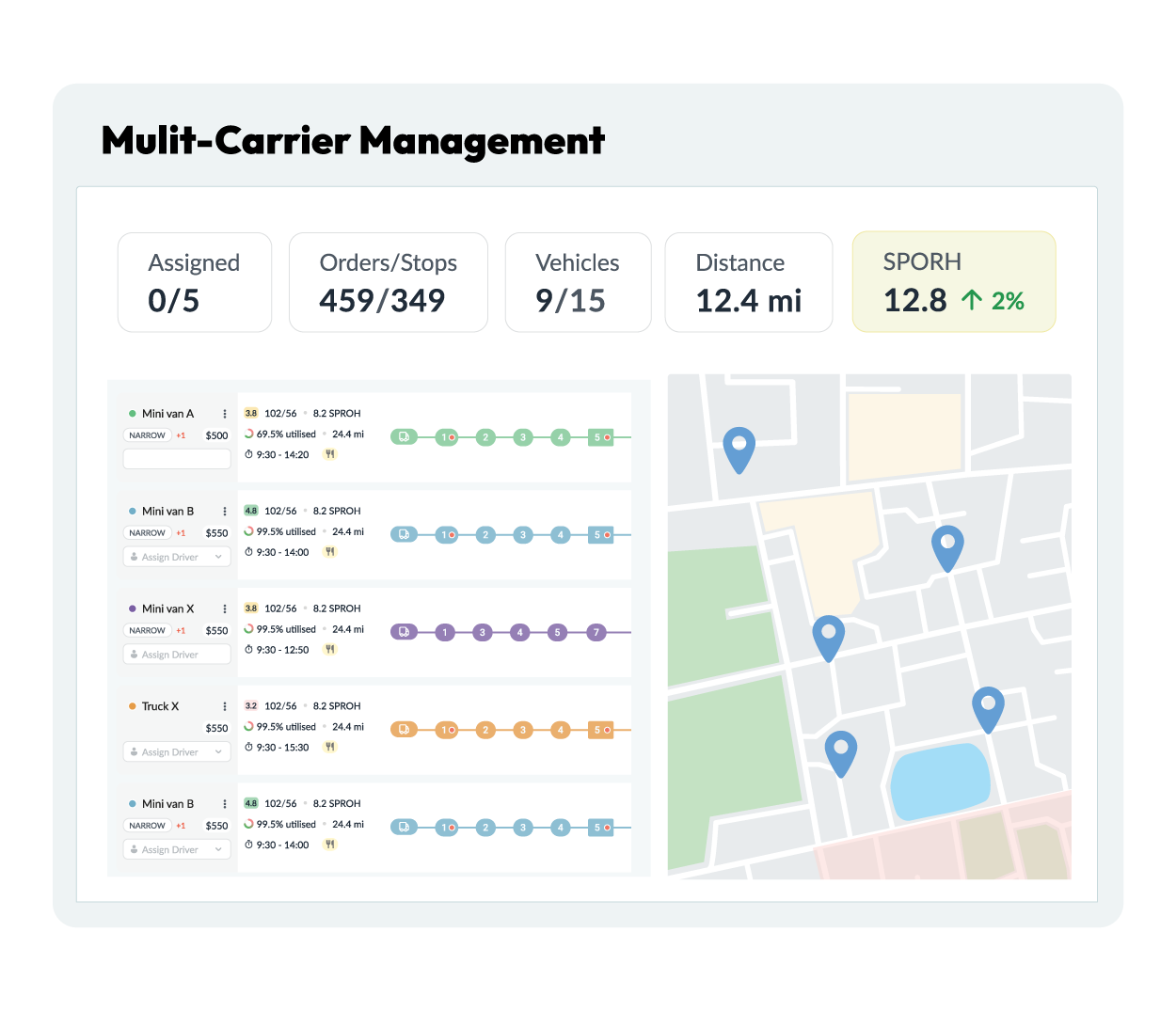
For example, FarEye’s platform includes analysis dashboards that visualize metrics such as on time performance and vehicle utilization, giving leaders clarity on operational health. When evaluating a route optimization app, make sure it does more than routing. Look for analytics, actionable insights and decision support because that’s what delivers real strategic value.
How Analytics Transforms Decision Making in Route Management Software
Analytics unlocks intelligence at every stage of route planning and execution:
- Descriptive Analytics: What Happened?
This is your baseline reporting. It lets you see actual versus planned routes, idle time, stops per vehicle, delivery outcomes and travel patterns. It turns data into insight. - Diagnostic Analytics: Why Did it Happen?
Descriptive data tells you the “what”. Diagnostic analytics explains the “why”. For example, longer dwell times at certain stops may indicate inefficient sequencing or unmet service constraints. - Predictive Analytics: What May Happen?
Using machine learning, predictive models forecast future conditions, traffic patterns, peak delivery volumes, potential maintenance needs or capacity bottlenecks. This moves you from reactive to proactive operations. - Prescriptive Analytics: What Should You Do?
This is where the software recommends specific actions: suggest reallocation of vehicles, reroute drivers when delays occur or adjust capacity to meet forecasted spikes.
Together, these analytics types help you make smarter decisions, better utilization of capacity, fewer late deliveries, lower costs per stop and more consistent performance across your network.
Why FarEye Stands Out for Data Powered Routing Decisions
FarEye’s analytics and predictive capabilities are built into its route planning software, transforming data into measurable routing outcomes that elevate operational performance.
Here’s how:
- Predictive Intelligence That Learns from Patterns
FarEye uses advanced machine learning to continuously learn from delivery history, traffic trends and real world constraints like time windows or driver availability. Over time, its models become more accurate in forecasting optimal routes and avoiding bottlenecks. - Real Time Data Ingestion for Dynamic Decisions
Live data from traffic, weather or delivery status feeds directly into the analytics engine. Dispatchers and drivers receive updated ETAs and rerouting suggestions when conditions change, ensuring decisions remain relevant and adaptive. - Deep Constraint Handling + Capacity Insights
FarEye’s system evaluates load capacity, driver hours, vehicle capabilities, regulatory constraints and more. This ensures that routes are not only efficient but also feasible, compliant and aligned with business goals. - Integration Backed Analytics Visibility
By unifying data from ERP, OMS, WMS, TMS, IoT sensors and telematics, FarEye provides a single source of truth. Control tower dashboards allow leaders to spot trends, exceptions and performance gaps instantly. - Strategic Decision Signals Beyond Tactical Routing
Analytics doesn’t just support operational planning. FarEye enables advanced simulations and “what if” analyses from capacity planning to peak demand forecasting and fleet mix optimization. These insights help shift route management from tactical adjustments to strategic planning.
Key Use Cases: Where Analytics Adds Value
Analytics in route management software delivers measurable impact across core logistics challenges:
- Capacity Utilization
Maximize load per vehicle, minimize empty runs and identify backhaul opportunities. - On‑time/Dead‑on‑Window Performance
Combine time‑window constraints with traffic and historical trends to boost reliability. - Cost and Sustainability
Analyze fuel usage, idle time and emissions and align routing with green fleet goals. - Strategic Planning
Use analytics for depot location optimization, fleet size decisions and vehicle type mix. - Real Time Disruption Response
Intelligent systems reroute dynamically, adapt to new orders, cancellations or unexpected barriers.
What to Look for in a Route Optimization App
When you evaluate a route optimization app or routing solution, ensure it supports:
- Data Integration
Ability to ingest telematics, OMS/TMS, driver logs and traffic feeds without silos. - Robust Analytics Engine
Support for a full analytics lifecycle, descriptive, diagnostic, predictive and prescriptive. - Real Time vs Batch Capabilities
Live adaptation is critical for on‑the‑fly rerouting and disruption management. - Dashboard and Visualization
Clear KPIs such as vehicle utilization, on time rate and cost per stop with intuitive visuals. - Scalability and Flexibility
Must handle large fleets, hybrid or outsourced vehicles and diverse operational constraints. - User Experience and Workflow
Analytics should trigger action, not just reports. Dispatchers and drivers should see and use insights in real workflow moments. - Business Fit
Solution must align with your specific operational constraints, time‑windows, vehicle types, EV integration and multimodal carriers. - Continuous Learning
The app should improve over time as new data flows in, refining predictions and recommendations.
Implementation Best Practices
To unlock the full power of analytics in route management:
- Start with a Pilot
Test analytics enabled routing on a controlled segment first. - Clean and Map Your Data
Data quality matters in telematics, stops, driver behavior and constraints must be accurate. - Establish Key Metrics
Define what success looks like: on time %, stops per vehicle per day, cost per delivery and idle time. - Align Stakeholders
Ensure dispatchers, drivers and ops teams understand and trust analytics signals. - Monitor and Iterate
Use dashboards to monitor results and feed insights back into optimization logic. - Scale Up
Once the pilot delivers value, roll it out enterprise wide with complex constraints accounted for. - Avoid Common Pitfalls
Watch out for data silos, lack of integration, resistance to workflow change and ignoring real time exceptions. - Use Analytics to Inform Strategy
Don’t just fix issues; let data guide long term planning and investment decisions.
Take the Next Step Toward Predictive Routing Intelligence
Bringing together analytics and route management software transforms logistics from intuition based planning to intelligence driven execution. When data powers both strategic foresight and real time responsiveness, you gain better utilization, lower costs and stronger service outcomes.
If you are evaluating your next route optimization app or upgrading existing systems, prioritize deep analytics and actionable insights that help you make confident decisions every day. FarEye’s platform demonstrates how data driven routing decisions can elevate performance across your entire delivery ecosystem.
Ready to move from reactive to predictive and prescriptive route decisions? Explore analytics powered route management capabilities with FarEye.
Frequently Asked Questions
What is route management software?
Route management software plans, optimizes, and monitors delivery routes using orders, traffic, vehicle capacity, driver constraints, and real-time operational data.
What are the four types of analytics in route management software?
The four types are descriptive, diagnostic, predictive, and prescriptive analytics, covering past performance, root causes, future outcomes, and recommended operational actions.
How does predictive analytics improve routing decisions?
Predictive analytics uses machine learning to forecast traffic, delivery volumes, maintenance needs, and capacity bottlenecks, helping teams address routing risks before disruptions occur.
What should you look for in a route optimization app?
Look for data integration, advanced analytics, real-time adaptation, clear dashboards, scalability, intuitive workflows, operational flexibility, and continuous learning from new routing data.
How does FarEye use analytics for smarter routing decisions?
FarEye combines machine learning, real-time data, constraint handling, integrated analytics, and simulations to improve routing decisions, capacity planning, forecasting, and fleet optimization.