Table of Contents
- Why Compliance and Efficiency Often Pull in Different Directions
- How Different Industries Stress-test Commercial Vehicle Routes
- What Modern Planning Must Consider for Commercial Routes
- From Fixed Plans to Adaptive Execution
- How AI and Machine Learning Raise Both Sides
- Architecture That Supports Commercial Vehicle Routes at Scale
- Day-to-day wins that Dispatchers Feel Immediately
- Choosing a Platform for Commercial Vehicle Routes
- How FarEye's AI Route Optimization Platform Unifies Planning to Proof for Commercial Vehicle Routes
- Turn Live Compliance into Efficient Commercial Vehicle Routes With FarEye
Let Our Experts Optimize Your Deliveries Today
Let's talkMorning plans can unravel by lunch when a driver meets a low clearance bridge, a late dock, or a tightened city window. Behind every on-time arrival sits a complex web of legal limits, local truck rules, and shifting site conditions that stress planning. At the same time, volumes and service expectations continue climbing across urban, suburban, and regional lanes.
The United States commercial vehicle market is valued at USD 174.3 billion in 2025 and will reach USD 222.1 billion by 2029. That growth raises the stakes for dispatch, where missed restrictions can drive overtime, inflate costs, and disappoint customers across commercial vehicle routes.
Teams require commercial vehicle routes that adhere to regulations yet still navigate efficiently through busy urban corridors and sprawling suburban areas. Let's learn how to keep commercial routes compliant and efficient, and how FarEye's AI-powered route optimization software makes that balance repeatable.
Why Compliance and Efficiency Often Pull in Different Directions
Compliance protects people, assets, and enterprises, while efficiency protects margins and promised delivery windows. Both matter on every commercial stop. Dispatchers must consider bridge heights, truck restrictions, hazardous segments, residential curfews, and municipal access hours before wheels turn.
They must also minimize deadhead miles, cluster stops tightly, and keep service time assumptions honest during the shift. Without help, these goals collide during peaks, when commercial vehicle routes face surges, driver shortages, and tighter customer expectations.
How Different Industries Stress-test Commercial Vehicle Routes
Commercial routes share the same goal, yet each sector adds unique constraints that strain plans and expose weak assumptions. Use these examples to anchor decisions in the work your teams run daily.
Parcel and E-commerce
Dense stop clusters, tight time windows, and dock queues punish traditional planning. Missed access codes or loading rules erase hard-won efficiency on commercial vehicle routes.
Big and Bulky Home Delivery
Two-person crews, extended service times, and narrow streets demand precise sequencing and parking logic. Break those rules and costly revisits follow quickly.
Food and Grocery
Temperature control, strict receiving windows, and back-of-house protocols make timing the differentiator. Late arrivals ripple through shelves, promotions, and labor schedules.
LTL and FTL Trucking
Appointment freight, yard congestion, and gate procedures create dwell that erodes linehaul efficiency. Missed cutoffs trigger penalties and rework across downstream nodes.
Field Service and Exchanges
Skill matching, parts availability, and customer presence all contribute to determining the first-time completion rate. Routing mismatches multiply repeat visits and rapidly inflate over time.
Across these categories, the winning approach combines regulatory awareness with business priorities, producing adaptive commercial routes that stay compliant and fast throughout the day.
What Modern Planning Must Consider for Commercial Routes
Effective planning begins with accurate data, but it ultimately wins through the depth of analysis and understanding of constraints. A strong route optimization software respects low bridges, weight limits, truck-restricted streets, and seasonal roads. It accounts for dock hours, elevator rules, building security, and campus geofences that slow access.
Also, it maps driver shifts, breaks, pay models, and skills to the appropriate jobs and vehicles. It factors trailer length, turning radius, liftgate needs, temperature zones, and electric vehicle charging requirements when assigning assets. The result is a set of commercial routes that are lawful on paper and practical on the pavement.
From Fixed Plans to Adaptive Execution
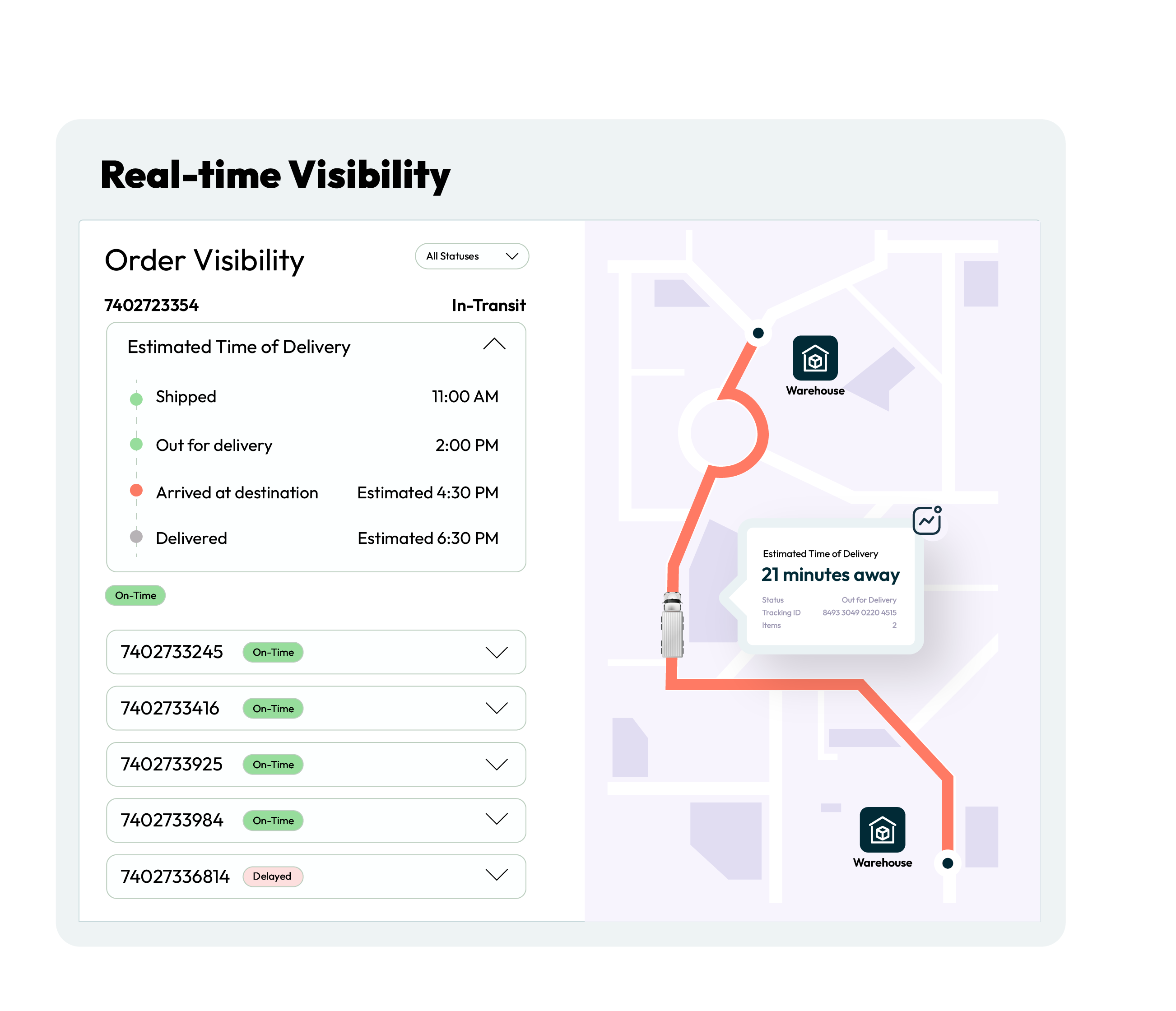
Even the best morning plan degrades when traffic spikes, weather shifts, or a receiver holds a dock unexpectedly. A live control tower closes this gap by converting streaming signals into prioritized actions. Dispatchers require predictive ETAs that continuously refresh against promised windows.
They need geofenced arrival and departure events that reveal true dwell times and expose idle pockets for immediate correction. They need exception playbooks that assign an owner, a deadline, and a clear outcome for each alert type. With these capabilities, commercial vehicle routes stay compliant and productive through mid-day turbulence.
How AI and Machine Learning Raise Both Sides
AI shifts routing from rule sets to learning systems that continually improve. Models update travel time, dwell, and service time by corridor, zone, and job class. That makes ETAs more honest and time slots more realistic for commercial routes that share tight urban space.
Skill and equipment mapping automatically ties certifications, languages, and tools to jobs, eliminating unworkable visits. Probability-based parts allocation ensures that the right spares are placed on the right vehicles, thereby reducing the need for repeat trips. Policy rules ensure every replan still respects access restrictions, shift limits, vehicle classes, and customer preferences.
Architecture That Supports Commercial Vehicle Routes at Scale
Strong outcomes depend on fresh data and clean system connections. Your platform should stream Global Navigation Satellite System pings, mobile app events, barcode scans, and sensor data into a single stop timeline. A control tower must filter by route, zone, carrier, or SLA risk, so attention is directed where it can impact outcomes.
Tight integrations with TMS, WMS, OMS, and carrier APIs keep orders and statuses synchronized during surges. Role-based permissions, standardized geofence libraries, and clear data ownership reduce false alerts and raise confidence. High availability, queued event processing, and regional failover ensure continuity when networks are strained.
Day-to-day wins that Dispatchers Feel Immediately
Operations succeed by preventing exceptions and keeping commitments so that customers can feel at the door or dock. The right platform reduces noise and increases certainty exactly where decisions are made. After implementation, the impact should appear quickly in the control tower and on the road across your busiest zones.
Less noise, faster adjustments, and cleaner accountability translate into steadier crews, reliable ETAs, and fewer escalations for operations leaders. Use the following day-to-day wins as a checklist to confirm that the system is delivering value where it matters most.
One Live Map of Record
Position, ETA variance, dwell, and proof sit on a single, synchronized timeline that replaces conflicting spreadsheets and scattered calls. Teams align faster because everyone sees the same facts in context.
Fewer Phone Checks and Faster Reassignment
Accurate feeds eliminate radio calls and manual check-ins, allowing dispatchers to redirect nearby capacity within minutes. This keeps commercial routes productive during traffic spikes and site delays, and prevents commercial routes from drifting off plan when volumes surge.
Protected Time Windows and Faster Deliveries
Predictive ETAs refresh continuously and flag variance early enough to resequence before a miss is certain. That helps dense commercial vehicle routes hold promised windows through midday turbulence, and keeps commercial vehicle routes credible with customers and store teams.
Cleaner Proof and Faster Billing
Photos, signatures, barcodes, and timestamps close the loop at the stop. Finance moves from guesswork to defensible events that accelerate cash flow and reduce disputes.
Better Collaboration With Partners
Owned fleets, dedicated carriers, and gig providers share one board under the same rules. Exceptions are escalated earlier, resolved to a common SLA, and documented for clean handoffs.
Compliance and Safety Embedded in Every Adjustment
Replanning honors Hours of Service and local access restrictions at plan time and during reassignments. ELD synced timelines create clean, auditable records, reduce driver stress, and speed roadside inspections without slowing operations.
How Truck Routing Software Complements Planning
Before wheels move, the engine clusters orders by territory, applies dock and receiver constraints, and sequences loads with realistic service times. During the shift, live constraints enable partial rebuilds that raise stops per hour, reduce miles, and protect delivery windows without overloading dispatch.
Choosing a Platform for Commercial Vehicle Routes
Selection should focus on three questions that cut through marketing noise. Does the engine handle your actual constraints, at your volume, with your geography? Can planners adjust plans in minutes when conditions change, rather than having to rebuild from scratch?
Will operators trust alerts enough to act quickly, given that false positives are rare? A yes across those questions usually predicts success for commercial routes in real operations, not just in demos.
FarEye checks these boxes with AI-first routing, live control tower, and plan-to-proof workflows proven across complex, enterprise-scale networks. Now, let's look at how FarEye can help optimize commercial vehicle routes.
How FarEye's AI Route Optimization Platform Unifies Planning to Proof for Commercial Vehicle Routes
Commercial shippers need a single platform where planning strength and day-of agility reinforce each other. FarEye provides that foundation by unifying route optimization, efficient route planning, live execution, and proof on one screen in a single route optimization software.
AI-first Routing and Reliable ETAs
FarEye sequences stop under deep constraints using machine learning that refines service time and ETA accuracy as data accumulates. Planners create high-volume batches quickly, while dispatch can adjust mid-route without rebuilding the entire day.
Plan to Proof in one Place
Route planning, live tracking, exception playbooks, branded notifications, and electronic proof of delivery work together natively. Leaders gain a single view of progress across commercial routes, and frontline teams avoid switching between tools or entering duplicate data.
Deep Constraint Coverage
The routing engine respects driver rosters, breaks, vehicle classes, low bridges, weight limits, dock hours, and campus geofences. It includes delivery sequence rules, territory policies, and EV charging stops, keeping commercial vehicle routes lawful and realistic.
Rate-based Decisions and Elastic Capacity
When private fleet space is tight, FarEye's route planning software evaluates partners by performance and cost, placing each job with the best provider while protecting SLAs and margins.
EV Aware Planning
The route optimization software can prioritize electric vehicles, plan charging within legal windows, and keep schedules dependable while lowering fuel spend and emissions.
Control Tower with Action
FarEye surfaces ETA variance, dwell, and hotspot zones, then drives playbooks that convert alerts into routed tasks. Teams resolve issues quickly, rather than relying on dashboards that merely display them.
Skill Mapping and Resource Matching
The system matches jobs to technicians and vehicles that meet required skills, certifications, and equipment. Labor rules and break policies remain enforced automatically during assignments and reassignments.
Together, these capabilities ensure that commercial vehicle routes are compliant, fast, and transparent for shippers, carriers, and consignees.
Turn Live Compliance into Efficient Commercial Vehicle Routes With FarEye
Customers expect accuracy, clear updates, and dependable handoffs on every order, regardless of volume or network mix. FarEye unifies route optimization, live tracking, and proof of delivery in a single route planning software, so dispatchers act sooner and drivers arrive prepared.
Request a focused demo to see how plan-to-proof workflows, control tower playbooks, and optimization models work together. Pilot in a targeted territory, measure on-time delivery and cost per stop, and expand with confidence as commercial vehicle routes become both compliant and fast at scale.
Sources:
https://www.giiresearch.com/report/moi1693617-united-states-commercial-vehicles-market-share.html