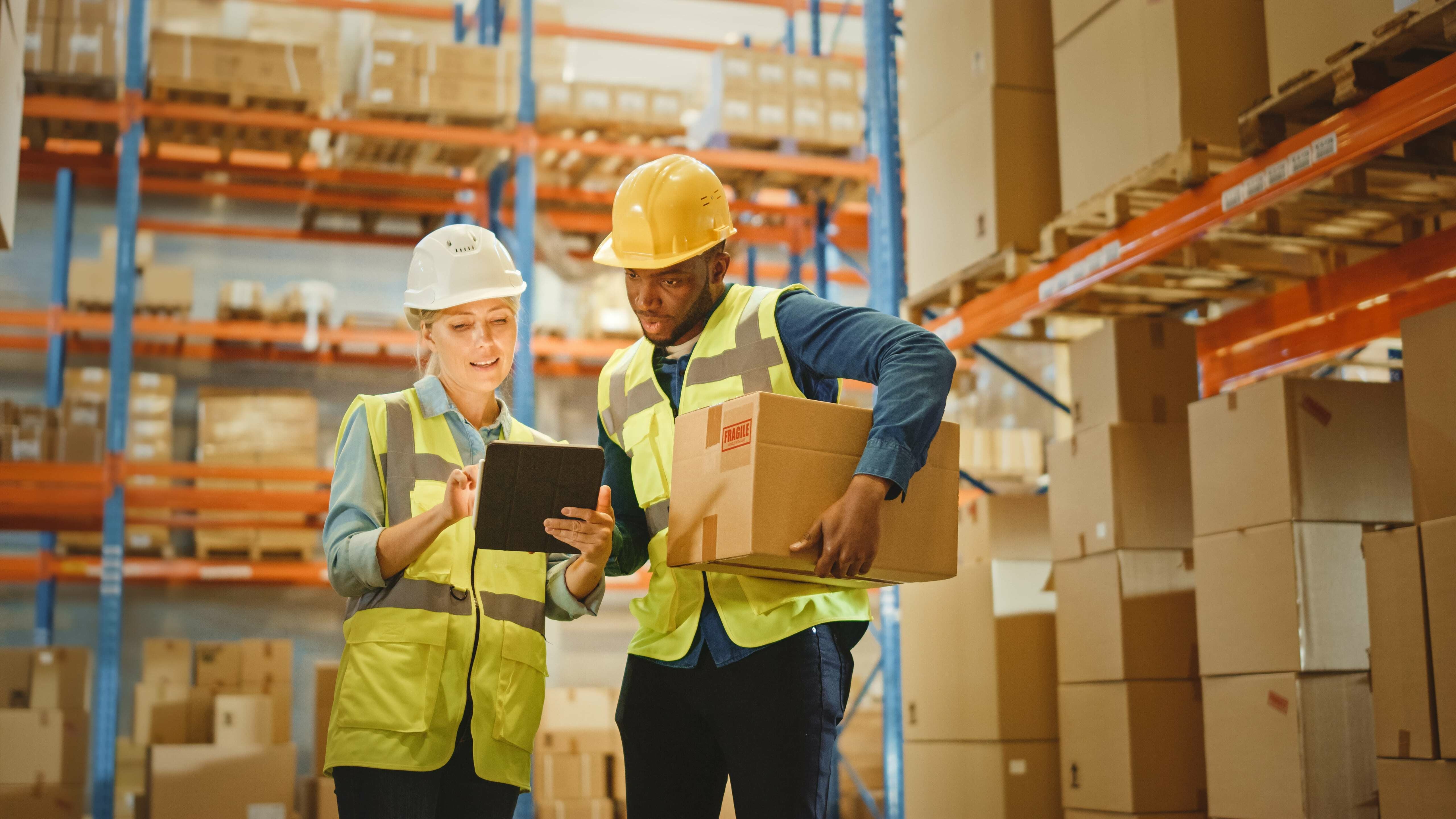
- An app for routes assigns orders to drivers, sequences stops, and adjusts routes when traffic, cancellations, or urgent orders disrupt delivery schedules.
- Route optimization and planning represent roughly 30% of the last mile delivery software market. Spreadsheets lose accuracy once vehicles leave the hub.
- FarEye, Onfleet, Route4Me, Bringg, and Routific are the top apps for routes, each built for a different fleet size and model.
- FarEye fits enterprise networks with dynamic routing, PILOT automation across eleven agents, and a 4.7 G2 rating from 355 reviews.
- Onfleet suits mid-market teams with automated proof of delivery, live tracking, and a 4.6 G2 score.
- Route4Me and Routific work best for small fleets, offering fast setup and dependable multi-stop planning.
- Bringg handles multi-carrier orchestration, though its G2 and Capterra review counts stay comparatively low.
- Final choice should follow network volume, fleet mix, and integration depth with your TMS, OMS, and WMS.
Choosing the right app for routes now shapes delivery cost, service reliability, and customer loyalty across your network. Supply chain managers face rising order volumes, tighter delivery windows, driver shortages, and volatile fuel costs. Route optimization and planning now represent roughly 30% of the fast-growing last mile delivery software market.
A capable route planner app turns that complexity into executable plans your drivers can follow. It also adjusts stops when traffic, cancellations, or urgent orders disrupt the delivery day. FarEye, Onfleet, Route4Me, Bringg, and Routific each serve different fleet sizes and operating models.
Your final choice should follow network volume, fleet mix, and integration depth. Explore how each compares on verified G2, Capterra, and Gartner ratings, and how FarEye helps.
Why Does Your Supply Chain Need a Dedicated App For Routes?
Manual dispatch and spreadsheets lose accuracy soon after vehicles leave the hub. A dedicated tool keeps decisions current across planning, execution, and review. Enterprise teams gain the most from four capabilities:
- Dynamic routing that recalculates affected stops when conditions change mid-shift.
- AI and machine learning that predict delivery risk, refine ETAs, and automate routine dispatch decisions.
- Service-time intelligence that learns real stop durations from parking, building access, unloading, and handoff patterns.
- Last mile delivery optimization that balances vehicle capacity, delivery windows, and driver skills.
- Last mile carrier tracking with live visibility across owned and outsourced fleets.
- Capacity forecasting that models fleet, driver, and territory needs before peak volumes strain your network.
- Delivery analytics that connect route decisions to cost, NPS, and CSAT.
Strong route optimization software links these functions to your TMS, OMS, and WMS. That integration keeps order data, inventory, and transportation decisions aligned across the network.
See how Blue Dart lifted first-attempt deliveries by 22% with FarEye. Check out the Full Story.
What Should you Look for in the Best Route Planner App?
Use these criteria to judge the best route planner app for a large, complex operation.
| Buying Criteria | Why it Matters for Enterprises |
|---|---|
| Constraint Depth | Routes must honor capacity, time windows, driver hours, skills, and product rules. |
| Dynamic Re-optimization | The app should reassign stops fast when disruptions hit active routes. |
| Fleet Flexibility | One platform should coordinate owned, outsourced, gig, and hybrid fleets. |
| Integrations | Native links to TMS, OMS, WMS, telematics, and carrier systems prevent data silos. |
| Visibility and Tracking | Control-tower views expose delays, deviations, and delivery exceptions early. |
| Delivery Analytics | Planned-versus-actual reporting ties routing to cost, FADR, and customer metrics. |
| Scalability | Planning must stay fast across thousands of stops and multiple hubs. |
For a deeper checklist, review this guide to the best route planner app for delivery drivers.
Which are the Top 5 Apps for Routes That Supply Chain Managers Need to Know?
Analysis: Fit depends on network scale, since enterprise depth and SMB simplicity solve very different problems.
1. FarEye
FarEye suits enterprise networks that run high volumes across e-commerce, grocery, retail, and healthcare. The route planning software covers planning, dynamic routing, driver execution, tracking, and analytics in one system.
PILOT, the agentic dispatcher, handles more than 200 daily decisions across eleven specialized agents. Recent 2026 product enhancements extended predictive risk visibility and stop-level automation. Customers report routes generated 90% faster and up to 20% fewer miles driven.
FarEye holds a G2 rating of 4.7 (355 reviews), Capterra 4.6, and recognition in the Gartner Market Guide for Multicarrier Parcel Management Solutions, with a 4.4 Gartner Peer Insights score for last-mile delivery technology. The driver-facing app for delivery drivers adds navigation, proof of delivery, and customer updates.
2. Onfleet
Onfleet fits mid-market delivery teams that want a clean, fast dispatch experience. Automated proof of delivery captures signatures, photos, and barcode scans at every stop. Its API and webhook layer connects dispatch data to e-commerce and order management systems.
Real-time driver tracking and automated ETA alerts reduce inbound WISMO calls from customers. Built-in delivery analytics report on delivery times, driver performance, and service-level trends across your fleet.
The platform earns a G2 rating of 4.6 (142 reviews) and Capterra 4.6 (96 reviews). Enterprise buyers may find its constraint modeling lighter than heavier logistics suites.
3. Route4Me
Route4Me is a widely adopted route planner app for small and mid-sized fleets. Territory management lets you carve service areas and assign them to specific drivers. Its commercial vehicle routing accounts for weight limits, height clearances, and road restrictions.
Dynamic route insertion lets dispatchers add urgent stops without rebuilding the full schedule. Telematics and GPS integrations track driver progress against the planned stop sequence.
The tool holds a G2 rating of 4.7 (132 reviews) and Capterra 4.5 (413 reviews). Larger networks should test its performance against dense, multi-hub route scenarios.
4. Bringg
Bringg targets enterprise delivery orchestration across carriers, fleets, and fulfillment models. Its carrier network connects you to regional and national delivery partners in one workflow. Capacity management tools balance demand against available delivery slots during peak periods.
The orchestration layer supports curbside pickup, same-day delivery, and returns within one connected platform. Integration with your TMS, OMS, and WMS remains essential to unlock that breadth.
Bringg carries a G2 rating of 4.6 (14 reviews) and Capterra 4.8 (8 reviews). Both review counts stay small, so weigh them against your own reference calls.
5. Routific
Routific is a highly rated app for routes built mainly for small delivery businesses. Workload balancing spreads stops evenly so no driver finishes hours after the rest. A built-in driver app delivers turn-by-turn navigation and automated customer arrival notifications.
Setup takes less time, so that smaller teams can plan routes without a long implementation cycle. Delivery analytics stay basic, covering route history and simple performance summaries rather than deep reporting.
The tool posts a strong G2 rating of 4.8 (46 reviews) and Capterra 4.9 (144 reviews). Complex, high-volume networks will likely outgrow its lighter constraint set.
Curious how a major grocer ran 100,000+ routes and saved 10,000 hours? Explore the Super Indo Case Study and Give it a Read.
Which App for Routes Fits Your Delivery Operation Best?
Match your operation to the closest profile below.
- High-volume Enterprise Networks: Prioritize FarEye for constraint depth, dynamic routing, and unified last mile tracking.
- Mid-market Delivery Teams: Onfleet balances usability with solid dispatch and notification features.
- Small and Growing Fleets: Route4Me and Routific offer fast setup and dependable multi-stop planning.
- Multi-carrier Orchestration: Bringg connects varied carriers and fulfillment models across regions.
Deep integration with your transportation management solution should guide any enterprise decision. For planning specifics, this walkthrough on how to plan a route with multiple stops helps your dispatchers get started.
How do you Shortlist the Right App for Routes?
Shortlist against the constraints that break your network most often rather than the longest feature list.
Run every app for routes through one peak day order file from your busiest hub. Measure planning time, unassigned orders, stops per route, and projected cost per delivery. Then disrupt the plan mid-test by adding urgent orders and removing two drivers.
A capable route planner app resequences affected stops without rebuilding routes already in motion. Confirm that revised ETAs write back into your TMS, OMS, and WMS automatically. Ask every vendor for FADR, OTIF, and NPS movement from a customer with your fleet profile. Scores above 4.5 signal quality, though review counts under 50 warrant direct reference calls.
Want proof at enterprise scale? See how a leading furniture retailer reached 97% ETA accuracy with FarEye. Take a Look.
Choose an App for Routes That Scales With Your Network
The distance between a capable tool and the right one appears when volumes spike. Networks that plan, dispatch, track, and analyze in one system absorb disruption with fewer manual interventions. That connected approach separates enterprise platforms from tools built for simple stop sequencing.
The right platform proves itself during peak weeks, not during a controlled product demo. Fleets running FarEye report that routes are generated 90% faster, with up to 20% fewer miles driven. Average cost per delivery falls by 18% across supported deployments, alongside measurable OTIF and CSAT gains.
Those improvements compound as order volumes rise across your e-commerce, retail, and grocery channels.
Map your constraints, run a real pilot, then measure the results against FADR and NPS. Book a meeting with FarEye to see how connected routing performs on your network.
Book a Meeting With FarEye →Frequently Asked Questions
Why do supply chain managers need a dedicated app for routes?
A dedicated app automates routing, adapts to disruptions, tracks drivers, improves ETAs, and connects route decisions with capacity, delivery cost, and customer experience.
What should you look for in the best route planner app?
Look for constraint-aware planning, dynamic re-optimization, mixed-fleet support, integrations, real-time visibility, delivery analytics, and scalability across high-volume, multi-hub operations.
Which app for routes is best for enterprise delivery networks?
For enterprise networks, FarEye supports high-volume routing, multiple fleet types, dynamic optimization, real-time execution, analytics, and integrations with TMS and WMS systems.
Which route planner app is best for small delivery businesses?
Routific is suited to smaller delivery businesses needing workload balancing, driver navigation, customer notifications, straightforward route planning, and relatively simple operational workflows.
How should you test an app for routes before choosing one?
Test it with peak-day order data, measure planning time and unassigned stops, then introduce urgent orders and driver changes to assess re-optimization.
What is the best app to plan a route?
The best route-planning app should account for delivery windows, capacity, driver constraints, traffic, and changing conditions rather than simply sequencing stops. FarEye supports AI-powered, enterprise-scale route planning with dynamic re-optimization and system integrations.
What is the best app for navigating traffic routes?
For delivery operations, the best app for routes should use live traffic and operational data to adjust routes as conditions change. FarEye factors traffic, weather, service times, parking, and delivery history into real-time route optimization.
Is there a free route planner available?
Yes. Free route planners and trials are available, but stop limits, optimization depth, dispatch tools, and analytics often make them better suited to simpler routes.
What's the difference between a navigation app and a route optimization tool?
Navigation apps guide drivers between destinations; route optimization tools determine the most efficient stop sequence across vehicles while considering capacity, windows, drivers, and constraints.
What's the best route planning app for a small delivery business with multiple drivers?
Routific is designed for smaller delivery teams, offering multi-driver route planning, workload balancing, mobile driver workflows, live location tracking, and delivery progress visibility.
Mali, Sayali. "Last-Mile Delivery Software Market Size, Share, and Growth Forecast 2026–2033." Persistence Market Research, May 2026.
Capterra. "Routific." Capterra. Accessed September 25, 2026.
Capterra. "Bringg." Capterra. Accessed September 25, 2026.
Capterra. "Route4Me." Capterra. Accessed September 25, 2026.
Capterra. "Onfleet Reviews." Capterra. Accessed September 25, 2026.
Capterra. "FarEye Reviews, Pricing, Features & Ratings." Capterra. Accessed September 25, 2026.
G2. "Bringg Reviews." G2. Accessed September 25, 2026.
G2. "Routific Reviews." G2. Accessed September 25, 2026.
G2. "Route4Me Reviews." G2. Accessed September 25, 2026.
G2. "FarEye vs. Onfleet." G2. Accessed September 25, 2026.
Figures are subject to change — verify current numbers before publishing updates.