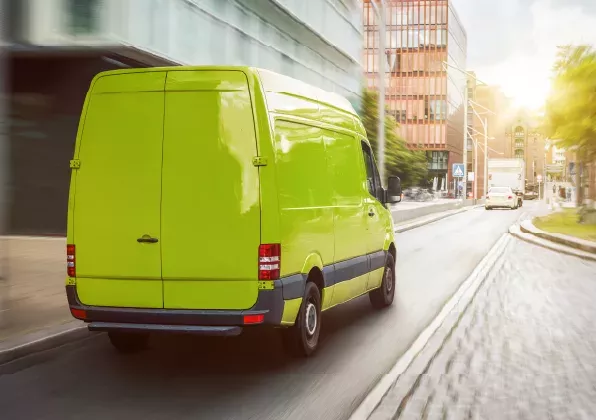
- EV fleets need routing tools that account for charging availability, range limits, terrain, traffic, weather, and delivery windows.
- An EV route planner maps charging stops into delivery sequences, reducing unplanned detours, missed commitments, and range-related delays.
- FarEye supports EV route planning with battery-aware routing, traffic-sensitive ETAs, real-time rerouting, charging visibility, and mixed-fleet coordination.
- The platform helps dispatchers manage charging exceptions, protect delivery windows, and reduce manual route sequencing across electric routes.
- With FarEye, fleet teams can simplify EV delivery execution and improve service reliability at scale, while improving cost control, driver confidence, and operational visibility across high-volume delivery networks daily.
The global EV industry is projected to grow to USD 3,338.87 billion by 2035, increasing pressure on fleet routing accuracy across every delivery region. Dispatchers must sequence stops around charging availability, battery range, and delivery windows simultaneously every single day across every electric vehicle route.
For growing electric fleets, an EV route planner solves this by mapping charging stations directly into delivery sequences instead of separate manual planning steps. This keeps drivers within battery range while still meeting every scheduled delivery commitment across the day without unplanned charging delays or missed delivery windows.
Let's explore what separates dependable EV route planning software from gas-fleet tools, and how FarEye improves range, charging, delivery windows, and execution at fleet scale.
Why Fleets Struggle to Align Charging Stops With Delivery Commitments
Electric fleets face constraints that gas-powered routing never had to consider previously.
1. Charging Infrastructure Gaps Create Unpredictable Detours
Public charging stations remain unevenly distributed across most delivery regions and metro areas today, especially outside major urban centers and along long-haul corridors. Drivers without a dependable EV route planner often reroute manually, adding unplanned miles and delivery delays that ripple across the rest of the route.
2. Battery Range Limits Shrink the Delivery Window Available Each Shift
Battery range varies by vehicle load, weather, and terrain, unlike predictable fuel tank consumption rates found in traditional combustion engine fleets. Standard route optimization software ignores these variables entirely, since it was built for combustion vehicles rather than electric fleet operations at scale.
Fleets without a capable EV route planner default to conservative estimates that waste usable range better used for additional delivery stops each shift.
What the Best EV Route Planner Must Solve That Standard Tools Cannot
Fleet managers evaluating options need capabilities built specifically for electric vehicle operations, not adapted afterward from legacy gas fleet routing systems.
- Charging station integration that maps public and private charging points directly into the EV route planner.
- Battery range prediction that accounts for load, weather, and terrain before finalizing any EV route planning sequence.
- Dynamic re-routing that adjusts stops automatically when a charging station is occupied or offline.
- Delivery window compliance that keeps charging stops from conflicting with committed customer time windows.
- Fleet mix support for fleets running electric and combustion vehicles through one EV route planning software system.
- Driver app integration that surfaces EV route planner guidance directly on the driver's mobile device.
- Energy cost modeling that compares charging cost against delivery value across every planned route.
Range-aware sequencing matters most when every vehicle carries a high capital cost. A leading logistics company in Thailand used FarEye Route to serve the same workload with 130 vehicles instead of 300, while cutting dispatch-process time by 66%. Check out the Full Case Study to see how the Fleet Reduction was Planned.
How EV Route Planning Software Compares to Traditional Route Optimization Software
Both categories claim similar benefits, yet only one accounts for charging infrastructure and battery constraints across every delivery route planned each day.
Fleets doing manual EV route planning today typically underestimate charging time by wide margins, which compounds across an entire delivery week. An EV route planner built into this software layer prevents these blind spots without manual review at any point in the route.
| Capability | Standard Route Optimization Software | EV Route Optimization Software |
|---|---|---|
| Charging Station mapping | Not included | Built into every route |
| Battery Range Modeling | Not supported | Calculated per stop |
| Vehicle Fuel Type Support | Combustion only | Electric and mixed fleets |
| Delivery Window Protection | Distance-based only | Charging and distance-based |
The difference is measurable. A 2026 study published in Sustainability found that EV-aware route optimization reduced modeled driving time by 17.71% and energy consumption by 7.23% compared with distance-focused routing.
Interestingly, the optimized routes covered 3.21% more distance but remained battery-feasible, unlike the original distance-minimizing plan.
This demonstrates why EV route planning software must optimize energy consumption, charging requirements, and route feasibility alongside travel distance.
How FarEye's EV Route Planner Helps Fleets Meet Delivery Commitments
FarEye's platform was extended to support electric fleet operations without replacing core routing logic already trusted by enterprise delivery teams worldwide.
1. Plan Routes for Electric Vehicles With Precise Range Prediction
FarEye accounts for route distance, charging station availability, vehicle range, and delivery area before finalizing any electric vehicle route plan across the fleet. This produces near-perfect ETAs and prevents range-related delivery failures common in manually planned electric fleet operations lacking dedicated EV routing intelligence.
2. Delivery Commitment Protection Across Mixed Electric and Combustion Fleets
Fleet managers running mixed fleets get one dashboard instead of separate systems for each vehicle type across the entire delivery network daily.
3. ETAs With Traffic Awareness That Account for Battery Impact
FarEye factors in traffic, terrain, and weather conditions that affect vehicle battery consumption during route planning for every scheduled electric delivery route. This predicts accurate ETAs across every delivery, reducing missed windows caused by unexpected traffic delays or terrain-related battery drain across the assigned route.
4. Real Time Rerouting When Charging Stations are Unavailable
Drivers get automatic rerouting the moment a planned charging station shows as occupied or offline anywhere along the assigned delivery route.
5. Map Routes With Charging Stations to Reduce Range Anxiety
FarEye maps charging station locations directly against pickup and delivery distances before a route gets assigned to any driver on the fleet. This also plans idling time at charging stations to keep fleet utilization high without leaving vehicles idle unnecessarily between scheduled stops.
6. Measurable Impact Across FarEye's Delivery Network
FarEye's platform now supports 550 million annual deliveries and has saved 600 million miles across client fleets, reducing GHG emissions by 550,000 metric tonnes. These figures reflect platform-wide performance rather than EV-specific charging outcomes.
Every metric ties back to routes built inside FarEye's EV route planner across live client fleets operating across multiple countries and industries today.
Fleets searching for the best EV route planner want charging intelligence built in, not bolted on as an afterthought after initial deployment.
Wondering what traffic-aware ETA modeling delivers in live operations? A leading furniture retailer connected customer-selected delivery slots with vehicle allocation and routing on FarEye. The deployment recorded high ETA accuracy, more on-time deliveries, and higher supported order volumes. Read the Full Story Here.
Implementation Best Practices for Rolling out an EV Route Planner
Moving from manual electric vehicle scheduling to automated routing requires a structured deployment sequence across every fleet location and route type in operation.
- Validate charging station data and coverage maps before assigning any electric vehicle route to a driver.
- Configure battery range thresholds and charging buffer time during platform onboarding, not after go-live.
- Run parallel planning against existing combustion fleet routes before shifting to full electric fleet cutover.
- Train dispatchers on charging exception handling instead of manually constructing and sequencing electric vehicle routes.
- Set adoption baselines at 30, 60, and 90 days to track range accuracy and delivery performance.
- Integrate the EV route planner with existing fleet telematics and battery monitoring systems already in use.
Ready to Simplify EV Route Planning? Book a Demo With FarEye
Charging stops, and delivery commitments do not have to compete for the same route capacity across a single electric fleet shift. The right EV route planner treats charging as a scheduled stop, not an unplanned interruption in the middle of a committed delivery run.
FarEye delivers EV route optimization software built directly into its existing enterprise routing platform, already used across global delivery networks today. Fleet managers get charging stop visibility, battery-aware sequencing, and delivery commitment protection in one system built specifically for electric fleet operations at scale.
Book a demo with FarEye and see how an EV route planner keeps every delivery commitment intact along the route every single day.
Book a Demo With FarEye →Frequently Asked Questions
How is an EV route planner different from standard route optimization software?
An EV route planner adds battery range, charging availability, charging duration, energy consumption, and vehicle constraints to traditional route optimization decisions.
Why do electric fleets struggle to align charging stops with delivery commitments?
Electric fleets must balance delivery windows with battery range, charging station availability, charging time, and route feasibility, making planning more complex.
Can an EV route planner support fleets with both electric and combustion vehicles?
Yes, modern EV route planners support mixed fleets by optimizing electric and combustion vehicles based on range, capacity, cost, and operational requirements.
What happens if a planned charging station is occupied or offline?
An intelligent EV route planner can identify disruptions, recalculate routes, suggest alternatives, and adjust delivery schedules to maintain operational continuity.
What factors affect battery range predictions in EV route planning?
Battery range depends on vehicle load, weather conditions, driving patterns, terrain, traffic, battery health, and charging behaviour during operations.
What results has FarEye's platform delivered across client fleets?
FarEye's platform supports large-scale delivery operations with 550 million annual deliveries, 600 million miles saved across client fleets, and 550,000 metric tonnes of GHG emissions reduced through smarter logistics execution and sustainability-focused optimization.
What is the best way to roll out an EV route planner?
Start by analyzing fleet data, charging infrastructure, delivery patterns, and operational constraints before integrating, testing, and scaling the platform.
How large is the EV industry expected to grow?
The global EV fleet is projected to expand significantly, with the IEA estimating EVs across vehicle types could exceed 450 million vehicles by 2035 under current policies. This growth increases demand for smarter charging-aware route planning.
Bhoyar, Triveni, and Swapnil Palwe. "Electric Vehicle Market Size, Share & Growth Analysis Report." Market Research Future. Last updated April 24, 2026. Accessed July 7, 2026.
Heng, Si Yong, Anurag Sharma, and Jianfang Xiao. "Optimizing Electric Delivery Vehicle Route Planning: A Hybrid Approach Integrating Clustering and Ant Colony Algorithm for Sustainable Transportation." Sustainability 18, no. 13 (July 1, 2026):
Figures are subject to change — verify current numbers before publishing updates.