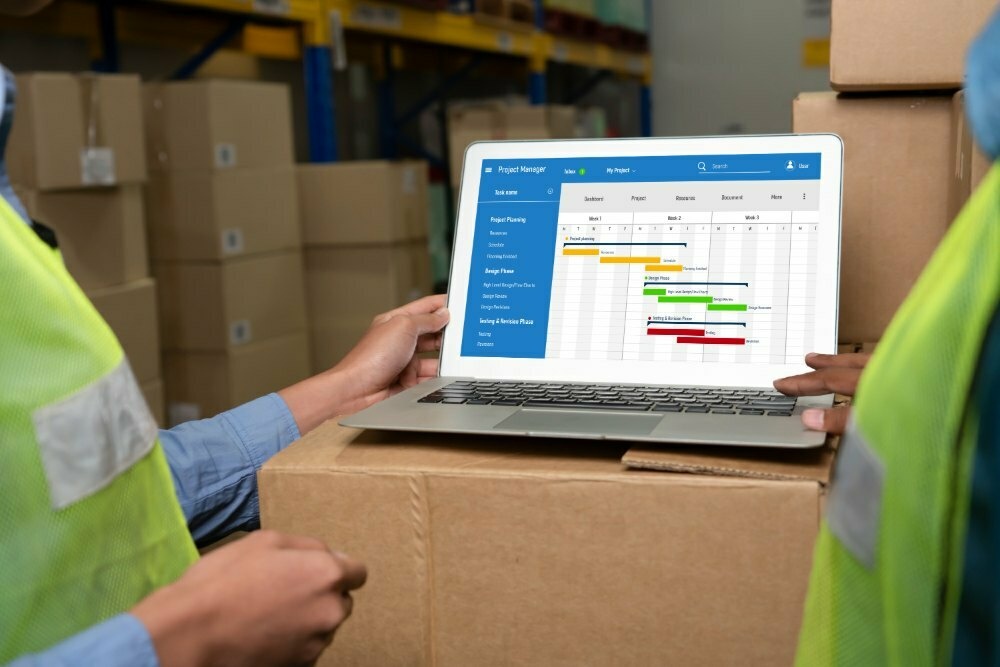
- Route planning for logistics now requires more than distance-based sequencing, especially across high-volume, multi-carrier delivery networks.
- Intelligent platforms connect capacity, driver skills, SLA tiers, customer time windows, traffic and carrier performance in one planning model.
- FarEye helps enterprises improve route planning through AI-powered routing, dynamic dispatch, predictive risk visibility and real-time capacity controls.
- The platform supports better order readiness, skill-based driver assignment, secure hub dispatch, driver workflows and customer communication.
- With FarEye, logistics teams can reduce miles, improve capacity utilization, protect service levels and build end-to-end logistics optimization at scale.
The U.S. freight network moves more than 54 million tons of goods worth over $68 billion every day, according to the U.S. Department of Transportation's 2026 National Freight Strategic Plan. That same plan flags congestion, travel-time reliability, and infrastructure bottlenecks as persistent freight challenges.
Routing decisions depend on far more than distance. A 2026 study of 1,743 Interstate highway segments weighed truck travel times against traffic, roadway conditions, crashes, incidents, and weather to predict freight reliability.
For enterprise networks, every planning gap eventually surfaces in dispatch, delivery cost, carrier performance, or customer experience. Route planning for logistics connects capacity, routing, driver assignment, SLA protection, and last-mile execution.
Let's examine what the right tools deliver and how FarEye powers end-to-end logistics optimization at scale.
Why Route Planning for Logistics Demands More Than Basic Optimization
Route planning for logistics at enterprise scale involves far more variables than distance and stop count. Vehicle capacity, driver certifications, SLA tiers, customer time windows, carrier performance history, and real-time traffic conditions must all factor into every dispatch decision simultaneously.
Logistics route planning software that cannot model this complexity generates plans that break down before midday, creating the reactive firefighting cycle that costs operations teams time, margin, and customer trust daily.
The True Cost of Poor Route Planning in Logistics
Every routing inefficiency compounds across the delivery network in measurable ways. Empty miles add up to fuel expenditure that no single route justifies. Underloaded vehicles represent a capital investment that generates suboptimal returns on every shift.
Failed delivery attempts generate redelivery costs, WISMO calls, and customer churn that erode lifetime value faster than most operations quantify. Route planning for logistics that systematically eliminates these leaks converts recurring costs into a recoverable competitive advantage across the entire fleet.
A leading express company in Thailand rebuilt its route planning for logistics with FarEye and served the same delivery workload with 130 vehicles instead of 300, while cutting dispatch-process time by 66%. Read the Thailand Routing Case Study.
What End-to-End Logistics Optimization Actually Requires
True end-to-end optimization connects planning, dispatch, execution, and customer experience into a single intelligent operating layer. Logistics route planning software that addresses only the route generation stage leaves significant value on the table.
Visibility into carrier performance, exception management, capacity forecasting, and post-delivery analytics must integrate seamlessly with route planning decisions to deliver compounding returns across the network.
Core Capabilities of Enterprise Route Planning for Logistics
Not all platforms deliver genuine end-to-end optimization. These capabilities distinguish basic route planning from enterprise-grade logistics route planning software.
1. AI-powered Multi-stop Route Planning for Logistics
Route optimization software using AI sequencing factors traffic, SLAs, vehicle capacity, driver skills, and load weight to create feasible plans quickly. At this level, platforms recover latent capacity from existing assets before expanding the fleet, reducing costs without additional resource investment.
2. Dynamic Dispatch and Real-time Re-routing
Fixed plans break down quickly when field conditions shift during active delivery execution across dense and distributed logistics networks. Route planning logistics platforms use traffic data, driver availability, and automated re-sequencing to respond within minutes, not hours.
3. HoS Compliance and Skill-based Driver Assignment
Route planning software should embed HoS rules, rest periods, and driver certifications directly into the planning engine before dispatch. This ensures every plan is compliant and correctly assigned before reaching drivers, reducing mismatches and preventable compliance gaps.
4. Capacity Forecasting and Territory Planning
Logistics route planning software with 12-month capacity modeling helps planners test fleet needs before peak pressure begins. Territory optimization and density smoothing balance workloads across zones and operating days, protecting margins during seasonal demand cycles.
5. Carrier Performance Analytics and Governance
End-to-end logistics optimization needs visibility beyond owned fleets, especially across 3PLs, regional carriers, and gig delivery networks. Route planning for logistics platforms standardizes carrier metrics, supporting data-driven selection, accountability governance, and cost optimization across shipment types.
Africa's second-largest retailer used FarEye's multi-carrier parcel management to double shipment volumes while cutting time to deliver by 15% and lifting customer NPS by 15 points. Explore the Multi-carrier Case Study.
How FarEye Powers Route Planning for Logistics at Scale
FarEye provides enterprise-grade logistics route planning software purpose-built for high-volume, multi-carrier delivery environments. Here is how the platform enhances route planning for logistics:
1. AI-powered Routing That Cuts Miles and Dispatch Time
Optimized routes can be generated 90% faster and can handle 1Mn+ stops in under 15 minutes, thereby improving route planning for logistics operations. With FarEye, enterprises can achieve up to 20% improvement in capacity utilization or reduction in miles driven across large delivery networks.
2. Dynamic Scheduling That Keeps On-time Performance Above 95%
Real-time slot availability helps teams fit urgent orders into existing routes with minimal disruption. FarEye supports live, fleet-aware scheduling, helping fleet managers increase stops per hour by 2X while maintaining on-time delivery above 95%.
3. Faster Order Readiness Before Routing Begins
Planning accuracy improves when teams can review order aging, weight, volume, pallet quantity, SKU details, dispatch readiness, and exceptions before routing. FarEye's Pending for Planning and Consignment Order modules support inline edits, bulk actions, smart alerts, and flexible rescheduling.
4. Adaptive Stop Grouping for Better Fleet Utilization
Compatible orders can be grouped into a single logical stop if they share the same coordinates or group ID. FarEye's Adaptive Multi-part Stop logic reduces duplicate visits, protects pickup and delivery continuity, and improves capacity utilization.
5. Skill-based Driver Assignment for Cleaner Dispatch
Driver capabilities, vehicle tags, and order requirements should align before dispatch. FarEye supports skill-based route planning for logistics across same-day, next-day, and scheduled routing to prevent mismatched assignments and reduce manual changes.
6. Seamless Execution and Control Tower Intelligence
Load-out efficiency improves through pre-sort and pre-load logic sequenced by SLA, vehicle, and zone. FarEye helps reduce load-out time by 25% or more, while AI-powered control tower intelligence supports 15% more stops per driver per day and 60% less firefighting.
7. Predictive Risk Visibility for Faster Interventions
Orders at risk need to be identified before service commitments are missed. FarEye compares projected arrival times against scheduled delivery slots, helping dispatchers use predictive alerts, downloadable reports, and live risk views to take earlier action.
8. Real-time Capacity Controls During Execution
Capacity control becomes critical when drivers handle overage orders or route changes during execution. FarEye provides real-time weight and volume checks at order and SKU levels, with configurable advisory alerts or hard stops.
9. Secure Hub Dispatch and Delivery Verification
Hub teams need reliable validation before consolidated loads leave the facility. FarEye supports one-scan pallet verification for dispatch accuracy and email OTP verification for stronger delivery authentication when mobile numbers are unavailable.
10. Automated Driver Workflows That Improve Productivity
Field productivity improves when drivers spend less time on repetitive status updates. FarEye's mobile workflows auto-select the next mandatory status where applicable, helping improve field accuracy and reduce dispatcher dependency.
11. Customer Experience That Drives Loyalty
Customer communication strengthens when route planning integrates directly with branded tracking, proactive alerts, and self-service options. FarEye helps reduce WISMO calls by up to 67%, missed deliveries by up to 25%, and customer service tickets by 50%.
12. Analytics Governance Across 61+ Business Metrics
Performance improvement needs visibility beyond route completion. FarEye provides analytics across 61+ business metrics, helping leaders monitor SLA performance, carrier quality, month-on-month growth, and continuous improvement across routes, shifts, and carrier types.
Implementation Best Practices to Enhance Route Planning for Logistics
Deploying logistics route planning software successfully requires structured rollout discipline from day one:
- Document current OTIF rates, cost per delivery, and miles driven before deployment to establish measurable baselines.
- Connect the highest-volume carrier lanes first for maximum immediate impact across the network.
- Embed HoS compliance and driver skill matching into routing parameters before go-live.
- Configure exception thresholds and automated reassignment logic during implementation, not after.
- Train dispatchers and planners on unified interfaces before the first live route is dispatched.
- Assign ownership for carrier scorecards and routing parameter tuning on a monthly review cadence.
- Review ETA accuracy and SLA performance weekly during the first 90 days to surface calibration opportunities.
Build Your Competitive Foundation on Intelligent Route Planning for Logistics
End-to-end logistics optimization does not come from one technology decision or a single operational improvement across the network. It compounds through better route planning, dispatch intelligence, carrier governance, and customer communication, all working together in one model.
Route planning for logistics that connects these layers separates logistics leaders from operators still absorbing preventable costs daily. FarEye delivers AI-powered routing, dynamic dispatch, and enterprise analytics that modern logistics networks need at scale.
Contact FarEye today to schedule your personalized route planning logistics assessment and discover how intelligent planning improves end-to-end delivery performance.
Contact FarEye Today →Frequently Asked Questions
What is the best route planning software for end-to-end logistics optimization?
The best route planning software should coordinate capacity, routing, dispatch, visibility, and performance across the delivery lifecycle. FarEye brings these capabilities together for enterprises.
Why does route planning for logistics demand more than basic optimization?
Enterprise logistics must account for traffic, SLAs, vehicle capacity, driver schedules, skills, delivery windows, and real-time disruptions, not simply distance.
What is the true cost of poor route planning in logistics?
Poor route planning increases mileage, fuel use, overtime, failed deliveries, SLA breaches, underused capacity, and planning effort while weakening customer experience.
What does end-to-end logistics optimization actually require?
End-to-end logistics optimization requires coordinated forecasting, capacity planning, routing, driver and carrier allocation, dispatch, real-time visibility, customer communication, and performance analytics.
What core capabilities define enterprise route planning for logistics?
Enterprise route planning should support dynamic optimization, multiple constraints, SLA-based routing, capacity management, driver assignment, integrations, real-time rerouting, and scalable high-volume planning.
How does route planning software handle HoS compliance and driver assignment?
Route planning software matches orders with eligible drivers while considering schedules, skills, working-hour limits, required breaks, service windows, and applicable HoS rules.
How does capacity forecasting improve logistics route planning?
Capacity forecasting predicts future volume and resource needs, helping planners align vehicles, drivers, territories, and delivery costs before daily routing begins.
How much does FarEye improve logistics route planning performance?
FarEye reports up to 20% improvement in capacity utilization or mileage reduction, while creating optimized routes up to 90% faster.
How do you implement logistics route planning software successfully?
Successful implementation starts with clean operational data, clear routing rules, system integrations, pilot testing, planner training, KPI baselines, and continuous performance review.
U.S. Department of Transportation. 2026 National Freight Strategic Plan. Washington, DC: U.S. Department of Transportation, 2026.
U.S. Department of Transportation. "Trump's Transportation Secretary Sean P. Duffy Unveils Plan to Modernize America's 7-Million-Mile Freight Network to Bolster Supply Chains & Unleash American Energy." May 18, 2026.
Zhao, Mo, and Justice Appiah. Report 26-R51: Analyzing and Predicting Truck Travel Time Reliability [Research Project Brief]. Report no. 26-R51. Virginia Transportation Research Council, 2026.
Figures are subject to change — verify current numbers before publishing updates.