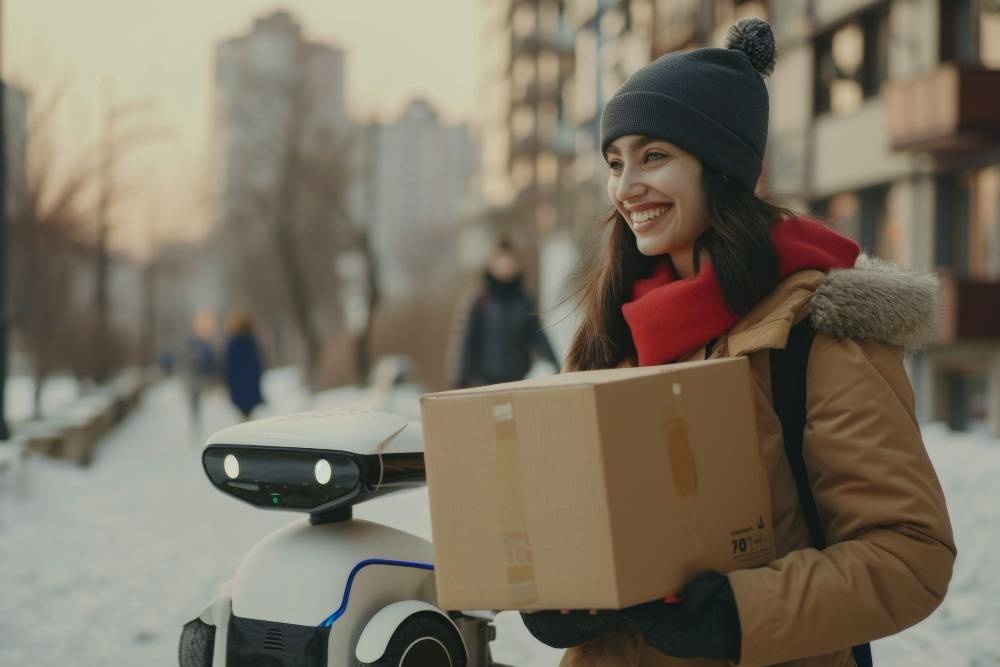
- Root causes of failed last mile delivery attempts: Inaccurate address data and customer unavailability create wasted trips daily. Geographic access challenges, weather disruptions, and poor route sequencing consistently push deliveries outside customers' availability windows.
- Prevention mechanisms that eliminate failed drops: Pre-delivery address validation, proactive customer communication, and real-time location intelligence close the most common failure gaps. Dynamic disruption, adaptation, and driver accountability systems powered by last mile delivery tracking prevent the rest.
- How FarEye closes every failure gap: FarEye delivers an 18% increase in first-time delivery rates and 50% fewer WISMO inquiries. A 95% increase in OTIF delivery rate and a +15 point customer NPS improvement demonstrate the platform's measurable impact.
- A structured implementation roadmap: Establishing baseline metrics and deploying effective last mile delivery tracking infrastructure forms the foundation of effective prevention. Address validation integration, proactive communication protocols, and weekly performance reviews sustain continuous improvement across the network.
Failed delivery attempts are silent operational disasters that systematically multiply costs across networks. When customers are unavailable at scheduled times, entire delivery attempts become wasted investments that cascade through operations, destroying efficiency and eroding margins daily.
The global last mile delivery market is valued at USD 207.10 billion in 2026, expanding to USD 378.59 billion by 2033. Within this growth, failed drops create a hidden cost that progressive logistics leaders can no longer absorb.
Real-time last mile delivery tracking identifies failure causes before drivers leave the depot, enabling prevention rather than reaction. Let's explore the root causes of failed drops, the prevention mechanisms, and how FarEye helps organizations transform last mile delivery tracking into measurable improvement.
5 Root Causes of Failed Last Mile Delivery Attempts
Failed delivery attempts stem from identifiable causes that real-time last mile delivery tracking can address proactively rather than reactively.
1. Inaccurate or Incomplete Address Information
Incorrect address data prevents drivers from locating delivery destinations, creating costly ambiguity across the fleet. Last mile delivery tracking software with address validation flags problematic data before dispatch, preventing failures at the source.
2. Customer Unavailability and Timing Misalignment
Fixed delivery windows create inflexibility when customers cannot be present at scheduled times. Real-time last mile courier tracking enables proactive customer contact before driver arrival, allowing dynamic scheduling adjustments that prevent wasted delivery attempts.
3. Geographic Accessibility and Location Challenges
Restricted-access areas and gated communities pose challenges that even capable route planning software cannot anticipate on its own. Last mile delivery tracking systems storing building access codes equip drivers with the right information before arrival, not after failure.
4. Weather and Traffic Disruptions
Unexpected traffic incidents and weather events delay drivers beyond scheduled delivery windows without warning. Real-time last mile delivery tracking enables dynamic rerouting and proactive communication, preventing unavailability caused by disruptions outside driver control.
5. Poor Route Planning and Stop Sequencing
Inefficient stop sequencing creates timing conflicts that push deliveries outside customer availability windows daily. Route optimization software embedded within last mile delivery tracking platforms recalculates stop sequences continuously, aligning driver arrival times with confirmed customer availability.
A 70-year-old cabinet manufacturer boosted delivery success rate by 73% and cut manual intervention in half by giving drivers the right information before every attempt. Explore how a structured rollout got them there. See the Results.
6 Ways Real-Time Last Mile Delivery Tracking Eliminates Failed Attempts
Most failed deliveries trace back to a handful of preventable causes: bad address data, absent customers, blocked access, and disruptions that surface too late to act on. Real-time last mile delivery tracking attacks each cause before it becomes a wasted trip, shifting operations from reactive recovery to upstream prevention.
1. Catching Bad Address Data Before Dispatch
A large share of failures are baked in before a driver leaves the depot, sitting in incomplete or malformed address records. Validating addresses at the point of order, not at the doorstep, removes this failure class entirely, because a stop that cannot succeed is corrected while there is still time to fix it. Last mile delivery tracking software with AI-powered flagging eliminates a significant proportion of failed attempts before they ever occur.
2. Confirming the Customer is Home
An accurate route still fails when nobody answers the door. Arrival-window notifications let customers confirm, reschedule, or redirect ahead of time, converting a would-be failed attempt into a delivery that lands when someone is actually present to receive it. Last mile courier tracking enables this communication loop, preventing unavailability-related failures across typical delivery networks.
3. Equipping Drivers for Access Barriers
Gate codes, buzzer numbers, loading-dock rules, and restricted-zone permissions decide success at properties a driver cannot simply talk their way into. Surfacing these access details on the driver's device before arrival closes a failure gap that no amount of routing efficiency can overcome on its own.
Last mile delivery optimization depends on this intelligence being available dynamically rather than stored in disconnected, inaccessible systems.
4. Acting on Disruptions While They Still Matter
Traffic, road closures, and weather turn a feasible schedule infeasible mid-shift. Continuous condition monitoring flags at-risk stops early enough to reroute or renotify, so a single disruption is contained instead of cascading into a string of missed windows.
5. Aligning Arrival With Real Availability
Even a well-sequenced route fails if it reaches a customer during the one window they are unavailable. Sequencing that respects confirmed availability, not just geographic proximity, keeps arrival times matched to when customers can actually take the delivery.
6. Turning Attempt Data Into Fewer Repeat Failures
Every failed attempt carries a reason code, and those reasons form a pattern. Analyzing why drops fail, by driver, route, area, or time of day, lets operations correct the systemic causes, so the same avoidable failure stops recurring across the network.
7. Driver Accountability and Performance Analytics
Real-time performance metrics visible to management create accountability that reduces careless failures across the network. Last mile delivery tracking visibility builds a quality culture where driver behavior improves consistently through transparent, data-driven performance measurement.
How FarEye Reduces Failed Drops Through Advanced Last Mile Delivery Tracking
The six mechanisms above describe what prevention looks like. Executing them at enterprise volume requires those capabilities to run as connected platform layers rather than separate tools. FarEye's comprehensive last mile delivery tracking covers the full path from order intake to delivery closure, with agentic AI handling the exception work that normally consumes dispatcher hours.
1. Agentic AI That Clears Exceptions Before Dispatch
FarEye's PILOT operates as an AI dispatcher across eleven specialized agents handling more than 200 decisions daily. It validates orders, corrects addresses, schedules appointments, detects staffing gaps, and reschedules failed stops without waiting for a dispatcher to notice.
PILOT compresses roughly ten hours of dispatcher activity into about 60 minutes of supervised oversight, with human-in-the-loop controls retained for higher-risk decisions.
2. Dynamic Routing That Reacts Mid-shift
FarEye recalculates affected stops when traffic, cancellations, or urgent orders disrupt an active plan, leaving unaffected routes untouched. Revised sequences reach driver devices immediately, which prevents the common failure of drivers executing a plan that stopped being valid an hour earlier. Enterprises report an 18% year-over-year increase in first-time delivery rates and a 16% increase in stops per route.
3. Control-Tower Visibility Across Carriers and Modes
FarEye consolidates shipment data moving across road, rail, air, and sea into a single monitoring view. Teams see ETA drift, long halts, route deviations, and carrier handover delays while there is still time to intervene. This upstream visibility matters because final mile failures frequently originate in delays that occurred several legs earlier.
4. Customer-side Control That Prevents Wasted Trips
FarEye gives customers live tracking, proactive notifications, delivery slot selection, and controlled rescheduling. Shifting routine changes to self-service removes the coordination burden from support teams while stopping unnecessary trips before dispatch. The result is a 50% reduction in WISMO inquiries and a 15-point NPS increase, with up to 70% of routine enquiries handled through self-service.
5. Failure Analytics That Close the Loop
FarEye tracks performance across 61-plus business metrics, comparing planned against actual outcomes by driver, route, territory, and time of day. Reason-code analysis surfaces which failures are systemic rather than incidental, so corrections target root causes instead of symptoms. Operations also report an 80% reduction in manual status-update effort and a 22% year-over-year decrease in dispatch time.
6. Improved OTIF and Routing Efficiency
With FarEye, enterprises see a 6% increase in OTIF-compliant deliveries, 75M+ kilometers saved through route optimization, and an 18% reduction in average cost per delivery. Additionally, 550K+ metric tonnes of GHG emissions have been reduced through smarter last mile delivery optimization across the network.
7. Enhanced Customer Experience via Proactive Last Mile Delivery Tracking
FarEye achieves a 50% reduction in WISMO inquiries and a +15 point increase in customer NPS across delivery operations. A 95% increase in OTIF delivery rate and an 80% reduction in manual status update effort further demonstrate the platform's measurable impact on customer experience.
Blue Dart needed real-time shipment visibility to cut repeated delivery attempts across 35,000+ locations. FarEye's live tracking and dynamic routing drove a 22% rise in first-attempt deliveries with 360° visibility of ground activity. Explore the Blue Dart Results.
Implementation Best Practices for Failed Drop Prevention
Implementing last mile delivery tracking requires a structured, phased approach aligned with organizational capabilities. Here is how leading operations build prevention infrastructure systematically:
1. Establish Baseline Metrics First
Document current FADR, OTIF, NPS, and CSAT scores before deployment. Without accurate starting points, improvement cannot be measured or attributed to specific prevention mechanisms.
2. Deploy Real-time Tracking Infrastructure
Implement GPS tracking across all delivery vehicles and mobile applications, enabling live driver updates. This data foundation makes every subsequent prevention mechanism in your route planning software operationally effective.
3. Integrate Address Validation Systems
Connect last mile delivery tracking software with automated address verification tools that flag problematic data before dispatch. This eliminates the most preventable category of failed attempts before drivers ever leave the depot.
4. Enable Proactive Customer Communication
Deploy SMS and notification systems confirming customer availability before delivery attempts. Advance notice and self-serve rescheduling options prevent the majority of unavailability-related failures across typical networks.
5. Build and Maintain Location Intelligence
Capture building access codes, gate entry requirements, and special delivery instructions systematically. Keep this data current and accessible to drivers through the last mile delivery tracking platform before every attempt.
6. Review Metrics Weekly and Improve Continuously
Track FADR, OTIF, NPS, and CSAT on a weekly cadence, analyzing failure patterns by root cause. Investing in route optimization software delivers its full return only when performance data drives continuous refinement of protocols.
Eliminate Failed Delivery Attempts and Drive Improvement with FarEye
Failed delivery attempts are recoverable operational losses that real-time last mile delivery tracking converts into a measurable competitive advantage. Every failed drop prevented strengthens FADR, improves OTIF compliance, raises NPS, and reduces redelivery costs that silently erode delivery margins daily.
The root causes are identifiable, the prevention mechanisms are proven, and the implementation pathway is structured. Organizations that invest in last mile delivery tracking infrastructure stop absorbing preventable costs and start compounding performance improvements across every metric that matters.
FarEye delivers the address validation, proactive communication, location intelligence, and dynamic routing that modern last mile operations demand at scale.
Contact FarEye today to schedule your personalized failed delivery prevention assessment and discover how leading logistics organizations dramatically improve FADR while reducing operational costs simultaneously.
Schedule Your Assessment →Frequently Asked Questions
What is the best last mile delivery tracking software for reducing failed drops?
The best last mile delivery tracking software combines real-time visibility, address accuracy, customer communication, and driver support to reduce failed delivery attempts.
What are the main causes of failed last mile delivery attempts?
Failed deliveries commonly result from inaccurate addresses, customer unavailability, poor route planning, traffic delays, and limited delivery status visibility.
How does real-time tracking eliminate failed delivery attempts?
Real-time tracking helps teams monitor delivery progress, identify delays, adjust routes, and provide accurate updates to improve delivery completion rates.
How does address validation reduce failed deliveries?
Address validation reduces failed deliveries by correcting inaccurate location details, improving geocoding accuracy, and helping drivers reach the right destination.
How does proactive customer communication prevent failed drops?
Proactive communication keeps customers informed about delivery schedules, arrival updates, and delays, reducing missed deliveries and improving recipient availability.
How does location intelligence help drivers succeed on the first attempt?
Location intelligence provides accurate navigation, delivery context, and route insights, helping drivers find destinations faster and complete deliveries successfully.
How does FarEye's last mile delivery tracking improve first-time delivery rates?
FarEye improves first-time delivery rates through real-time visibility, predictive insights, and optimized execution, helping achieve an 18% increase in first-time deliveries.
What measurable results does FarEye's last mile delivery tracking deliver?
FarEye delivers measurable impact with 6% higher OTIF deliveries, 75M+ kilometers saved, 18% lower delivery costs, and improved delivery efficiency.
How do you implement last mile delivery tracking to prevent failed drops?
Implementation requires accurate data, integrated systems, driver training, customer communication workflows, performance tracking, and continuous optimization based on delivery insights.
Reference: Shevgan, Monica. 2026a. "Last Mile Delivery Market Opportunities & Forecast 2026-2033." Coherent Market Insights. March 30, 2026. Figures are subject to change — verify current numbers before publishing updates.