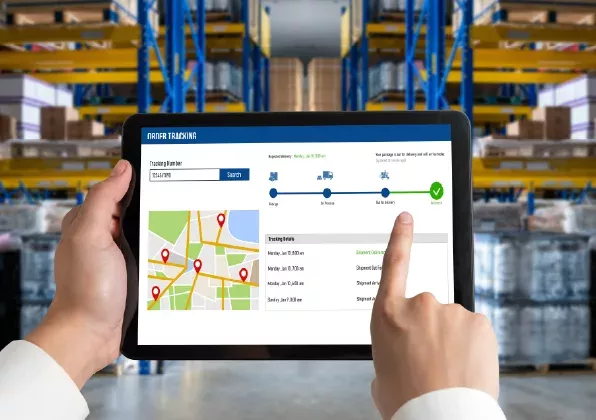
- Dynamic routing helps logistics teams plan multiple-stop routes using live order, driver, vehicle, and delivery-window data.
- It improves dispatch accuracy by adjusting routes when traffic, capacity, weather, or customer changes disrupt planned execution.
- Teams gain stronger ETA accuracy, lower miles, fewer delivery exceptions, and faster recovery across complex service zones.
- Intelligent dispatch tools support control tower visibility, predictive alerts, automated stop-level workflows, and smarter driver assignment.
- FarEye connects dynamic routing with route optimization software, driver workflows, tracking, and customer communication in one execution layer.
- This helps enterprises protect SLAs, reduce firefighting, and improve delivery performance at scale.
The last-mile delivery market is estimated at USD 207.10 billion in 2026 and could reach USD 378.59 billion by 2033. For logistics leaders, that growth means denser stop lists, tighter delivery windows, dispatcher overload, and rising service expectations.
Dynamic routing helps teams plan multiple-stop routes from live order data, then adjust execution when traffic, capacity, weather, or customer changes disrupt plans. FarEye supports this shift with intelligent routing, dispatch visibility, driver workflows, and customer communication across active delivery networks.
Fixed routing leaves dispatchers reacting after issues appear, while intelligent dispatch tools support faster decisions before SLAs slip. Let's learn how dynamic routing helps teams plan smarter multiple-stop routes and recover faster from delivery disruptions.

Why Multiple-stop Delivery Planning Breaks With Fixed Routes
Fixed plans assume route conditions stay stable after dispatch, but courier and fleet networks rarely work that way. Live routing gives teams flexibility to protect delivery promises when every route carries moving constraints.
1. Delivery Volumes Change After Planning
Late orders, cancellations, and priority changes disrupt stop sequences, driver workloads, and promised delivery windows across active routes.
2. Traffic and Road Events Shift Route Feasibility
Congestion, closures, weather delays, and local restrictions can turn an efficient route into a late route within minutes.
3. Drivers Lose Time at Stops
Parking delays, service-time variance, failed attempts, and customer unavailability compress every downstream delivery window on the route.
Fixed planning breaks because delivery execution changes faster than static route sheets can support daily.
Dispatcher effort is where dynamic routing pays back fastest. A leading logistics company in Thailand used FarEye Route to cut its fleet from 300 vehicles to 130, reduce planners and dispatchers by 70%, and shorten dispatch-process time by 66%. See how They Achieved it.
What Dynamic Routing Means for Multiple-stop Delivery Operations
Dynamic routing means continuous route decision-making across live orders, vehicles, drivers, delivery windows, and service commitments. It helps dispatchers move from manual replanning toward exception control across active delivery operations daily.
1. Routes are Built From Live Order Data
Orders, customer locations, delivery windows, service times, vehicle capacity, and route density shape every routing decision.
2. Route Plans Adapt During Execution
Dynamic routing adjusts routes when traffic changes, pickups run late, drivers lose time, or urgent orders enter the network.
3. Dispatchers Move From Manual Planning to Control
Dispatchers monitor route risk, approve exceptions, coordinate drivers, and protect service windows with real-time operational context.
Dynamic routing should act as an execution capability, not a mapping feature attached to disconnected workflows.
Core Benefits for Logistics Teams
The benefits of dynamic routing become visible when teams measure cost, ETA accuracy, service quality, and dispatcher productivity. Live routing improves planning accuracy while helping operations recover faster from delivery exceptions during busy shifts.
1. Better ETA Accuracy Across Stops
Live routing inputs improve estimated arrival times, helping customers receive more accurate updates throughout active delivery windows.
2. Lower Miles, Fuel Use, and Route Waste
Optimized sequencing reduces backtracking, empty miles, fuel exposure, and inefficient movement across dense service territories.
3. Faster Recovery From Delivery Exceptions
Teams can reassign, resequence, or replan stops before one disruption creates several missed delivery commitments.
4. Stronger Dispatcher Productivity
Automation reduces repetitive replanning, allowing dispatchers to focus attention on late routes and high-risk orders.
These gains show why live routing intelligence directly affects margin, service quality, and operational resilience.
Advantages Over Traditional Route Planning
The advantages of dynamic routing become clear when traditional plans face live network disruption. Dynamic routing keeps routes feasible when fixed plans become outdated during active execution across complex zones.
1. Traditional Planning Ends Before Dispatch
Legacy planning creates a fixed sequence, then leaves dispatchers to resolve every downstream disruption manually.
2. Dynamic Systems Keep Routes Operationally Feasible
Live systems account for traffic, service time, driver capacity, customer windows, and SLA exposure together.
3. AI Improves Decisions Across Every Route
AI models compare cost, distance, ETA risk, workload balance, and delivery priority before recommending route changes.
Dynamic routing helps fleets manage route feasibility continuously instead of reviewing failures after delivery completion.
Intelligent Dispatch Tools That Support Live Routing
Intelligent dispatch turns routing decisions into driver actions, customer updates, and recoverable delivery workflows. These tools help logistics teams control field execution without adding more manual dispatcher effort daily.
1. Control Tower Visibility
A control tower tracks active stops, route progress, ETA drift, driver status, and at-risk deliveries from one workspace.
2. Predictive Risk Alerts
FarEye's Orders at Risk view compares projected arrival times with scheduled delivery slots, then flags likely service breaches.
3. Automated Stop-level Workflows
Driver apps can auto-select mandatory next statuses, reducing screen interactions and improving stop-level update speed.
4. Driver and Vehicle Assignment Rules
Assignment logic considers capacity, shift timing, driver skill, zone familiarity, vehicle type, and delivery service needs.
Smart dispatch tools make route decisions actionable across drivers, customers, carriers, and operations teams faster.
Wondering what accurate ETAs look like in practice? A leading furniture retailer connected customer-selected delivery slots with vehicle allocation and routing on FarEye, recording a 97% increase in ETA accuracy, 24% more on-time deliveries, and 300% higher supported order volumes.
How FarEye Enables Dynamic Routing for Multiple Stops
FarEye connects planning, dispatch, tracking, driver workflows, customer experience, and operational analytics into one execution layer. Dynamic routing becomes stronger when route intelligence connects with visibility and automated field execution daily.
1. AI-based Route Optimization Across Constraints
FarEye processes order, vehicle, road, driver, capacity, and service constraints to generate feasible delivery routes.
2. Dynamic and Real-time Routing
FarEye helps delivery teams adjust routes as operating conditions change, including traffic, delivery windows, vehicle status, and field delays. This keeps multi-stop routes practical during execution, instead of leaving dispatchers to rebuild plans manually after disruptions appear.
3. Predictive Visibility Through Orders at Risk
The system highlights likely delays early, helping teams intervene before SLA windows close across active routes.
4. Multi-day Route Execution
FarEye supports extended routes through cross-date slot validation, reducing false alerts for field executives.
5. Customer Visibility and Delivery Experience
Branded tracking, proactive notifications, and AI-based ETAs reduce WISMO pressure during uncertain delivery windows.
FarEye makes dynamic routing part of a larger execution system spanning planning, dispatch, tracking, and recovery.
FarEye Impact for Routing and Dispatch Teams
Dynamic routing investments must show measurable gains across delivery reliability, cost control, sustainability, and customer experience.
| Metric | FarEye Impact |
|---|---|
| Route Generation | 90% faster |
| Kilometers Saved | 75M+ through route optimization |
| Average Cost per Delivery | 18% reduction |
| OTIF-compliant Deliveries | 6% increase |
| WISMO Calls | Up to 67% reduction |
| GHG Emissions Reduced | 550K+ metric tonnes |
These outcomes connect routing intelligence with stronger cost control, improved customer confidence, and faster dispatcher decisions.
Implementation Best Practices for Rollout
A successful rollout depends on clean data, configured constraints, integrated systems, and dispatcher readiness. Routing performs best when route planning software connects with real execution workflows from day one.
1. Clean Address and Geocoding Data
Poor geocoding creates inaccurate ETAs, route deviation, failed stops, and avoidable dispatcher escalations.
2. Configure Routing Constraints Before Go-live
Configure time windows, vehicle capacity, driver skills, service time, road limits, and SLA tiers before launch.
3. Run Parallel Planning First
Compare AI-generated routes with existing plans to validate mileage, feasibility, workload balance, and service performance.
4. Train Dispatchers for Exception Control
Dispatchers should move from route builders to control tower operators, managing risk, intervention, and recovery.
5. Track Performance by Route and Zone
Measure cost per stop, miles per route, OTIF, WISMO volume, driver productivity, and SLA breaches.
Structured rollout helps teams gain value without disrupting live delivery operations across high-volume networks.
Plan Smarter Multiple-stop Routes With FarEye's Dynamic Routing
Multiple-stop delivery networks cannot depend on fixed route plans when live conditions change every hour. Dynamic routing helps logistics teams adjust routes, protect delivery windows, and recover faster from field disruptions.
FarEye connects route optimization software, intelligent dispatch, driver workflows, tracking, and customer communication into one execution layer. Teams can identify route risks earlier, rebalance work faster, and keep customers informed with more accurate delivery updates.
That combination helps leaders reduce miles, improve ETA accuracy, protect SLA performance, and reduce manual firefighting across complex routes.
Book a meeting with FarEye to improve multiple-stop delivery planning and control route performance at scale.
Book a Meeting With FarEye →Frequently Asked Questions
Why does multiple-stop delivery planning break with fixed routes?
Fixed routes cannot respond to traffic, order changes, driver delays, failed deliveries, or capacity shifts, causing route inefficiencies, missed windows, and higher delivery costs.
What are the benefits of dynamic routing for logistics teams?
Dynamic routing improves fleet productivity by continuously optimizing stop sequences, reducing unnecessary mileage, protecting delivery windows, and improving ETA accuracy during execution.
How is dynamic routing better than traditional route planning?
Traditional planning optimizes before dispatch, while dynamic routing uses live traffic, GPS data, order updates, and operational constraints to adjust routes continuously.
What intelligent dispatch tools support live routing?
Intelligent dispatch uses AI route optimization, driver apps, telematics, real-time tracking, predictive ETAs, and automated exception management to improve delivery decisions.
How does FarEye enable dynamic routing for multiple stops?
FarEye enables multi-stop optimization by considering delivery windows, vehicle capacity, driver availability, traffic conditions, and route constraints while recalculating plans dynamically.
What measurable results does FarEye's dynamic routing deliver?
FarEye delivers measurable improvements, including 18% lower delivery costs, 75M+ kilometers saved, and improved route efficiency through intelligent logistics optimization.
What are best practices for rolling out dynamic routing software?
Successful rollout requires clean location data, integrated systems, accurate business constraints, dispatcher training, driver adoption, pilot testing, and continuous optimization.
What are WISMO calls in last-mile delivery?
"Where is My Order?" (WISMO) calls occur when customers request shipment updates, usually due to unclear ETAs, limited visibility, or delayed delivery communication.
What is the best dynamic routing software for multiple-stop deliveries?
The best software combines AI-powered route optimization, real-time re-planning, fleet visibility, constraint handling, and scalability for complex multi-stop delivery networks.
Reference: Shevgan, Monica. 2026a. "Last Mile Delivery Market Opportunities & Forecast 2026-2033." Coherent Market Insights. March 30, 2026. Figures are subject to change — verify current numbers before publishing updates.