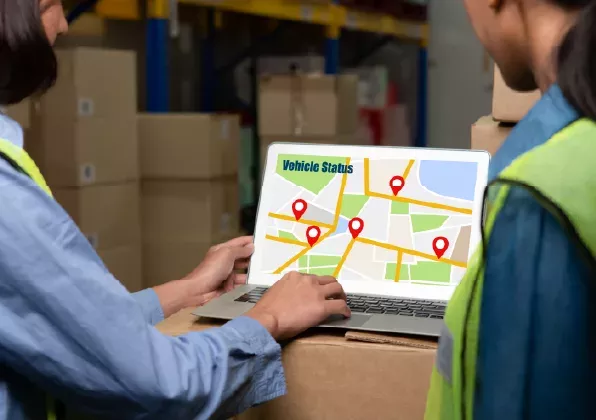
- Routing software for logistics helps enterprises build resilient delivery networks across volatile demand, tighter SLAs, driver constraints, and disruptions.
- It connects route planning, dispatch, live visibility, exception management, and analytics across active fleet operations.
- Teams can plan around order priority, vehicle capacity, driver hours, road limits, and real-time route risks.
- FarEye strengthens execution with AI-based routing, Orders at Risk, Control Tower visibility, and automated driver workflows.
- The platform helps reduce miles, improve OTIF, lower delivery costs, and recover faster from network disruptions at enterprise scale.
- Resilient routing gives logistics leaders stronger control over service performance and delivery cost.
Globally, the logistics market is projected to grow from USD 359.70 billion in 2026 to USD 863.62 billion by 2034. For logistics leaders, that growth brings tighter delivery windows, rising costs, driver shortages, and higher SLA exposure.
Routing software for logistics helps teams plan, execute, monitor, and recover across changing network conditions. Fixed routing cannot protect margins when road closures, late pickups, capacity gaps, and customer changes appear after dispatch.
The shift now demands resilient routing intelligence, real-time orchestration, and faster exception control across active fleet operations. Let's examine how resilient delivery networks now depend on smarter routing decisions and FarEye's execution intelligence.

Why Delivery Network Resilience Depends on Smarter Routing
Resilience means your network keeps moving when demand, traffic, capacity, and customer expectations change during active execution. Routing software for logistics helps teams build that resilience before routes leave the hub during peak demand.
1. Fixed Routes Cannot Absorb Daily Disruptions
Fixed route sheets fail when traffic spikes, pickups slip, service times expand, or drivers lose time at congested docks.
2. Resilient Networks Need Real-time Replanning
Routing software for logistics recalculates feasible routes using live constraints, including ETA variance, stop priority, capacity, and driver availability.
3. Dispatchers Need Predictive Visibility Before SLAs Fail
Predictive alerts help dispatchers identify at-risk orders, delay clusters, and service breaches before customers call support.
Resilient delivery execution begins when dispatchers stop reacting late and start controlling exceptions before delivery promises break.
A leading logistics company in Thailand used FarEye Route to run the same delivery workload with 130 vehicles instead of 300. The deployment also cut dispatch-process time by 66% and reduced planning effort by 70%. Read how the Thailand Fleet Rebuilt its Routing Model to see the Full Before-and-After Breakdown.
Delivery Route Inputs in Modern Logistics
The question, "What are delivery routes based on?", matters because distance is only one planning input. Modern routing combines commercial priorities, operational constraints, regulatory rules, and live network signals across daily delivery operations.
1. Order Priority and Delivery Windows
Routing software for logistics weighs promised delivery slots, SKU handling needs, order urgency, customer availability, and service commitments.
2. Vehicle Capacity and Fleet Type
Planning engines match route demand with payload limits, cube capacity, vehicle class, EV range, refrigeration, and fleet availability.
3. Driver Hours and Compliance Rules
The FMCSA requires qualifying 30-minute breaks after eight cumulative driving hours, making compliance-aware routing critical for United States fleets.
4. Road Restrictions and Real-time Conditions
Systems factor traffic, weather, closures, tolls, tunnels, bridge limits, restricted roads, and local delivery access rules.
When these inputs work together, routing software for logistics creates routes that are feasible, compliant, and commercially useful.
Blue Dart combined FarEye Route, Track, and Experience to gain 360-degree visibility across ground operations. First-attempt deliveries rose by 22% as dispatchers recovered exceptions earlier. Explore the Blue Dart Delivery Visibility Case Study for the Execution Details Behind That Gain.
Fastest Route Logic for Enterprise Delivery Operations
The answer to "What is the fastest route?" is not always the shortest path between two stops. The best route protects delivery promises while balancing compliance, service time, cost, and customer experience.
1. The Fastest Route Protects Delivery Commitments
A faster enterprise route considers stop sequence, time windows, driver breaks, service duration, and downstream SLA exposure.
2. Shortest Distance can Create Higher Costs
A shorter path can fail when low bridges, heavy congestion, missed slots, or wrong vehicle assignments disrupt execution.
3. AI Helps Find the Best Operational Route
AI models compare ETA, mileage, cost, capacity, risk probability, and workload balance before recommending routing decisions.
Speed becomes valuable only when it supports on-time performance, driver compliance, and predictable customer communication.
Core Capabilities of Routing Software for Logistics
Enterprise delivery networks need routing intelligence that connects planning, dispatch, tracking, and performance analytics at scale. Routing software for logistics should function as an execution layer, not a disconnected planning calculator.
1. Dynamic Route Planning
Dynamic routing generates optimal stop sequences, adjusts routes after dispatch, and supports live replanning without manual intervention.
2. Constraint-based Route Optimization
Route optimization software processes vehicle limits, order rules, driver availability, depot cutoffs, road conditions, and cost targets together.
3. Multi-day Route Planning
Longer routes require cross-date delivery slot validation, overnight stop planning, driver breaks, and accurate job status tracking.
4. Real-time Visibility and Exception Alerts
Control tower visibility tracks active stops, route progress, ETA drift, driver delays, failed attempts, and customer-impacting exceptions.
5. Systems Integration
Route planning software should connect with TMS, WMS, OMS, telematics, carrier systems, driver apps, and customer notifications.
6. Analytics for Continuous Improvement
Analytics should track OTIF, cost per delivery, stops per hour, route deviation, WISMO calls, and SLA breach patterns.
The right capability stack helps routing software for logistics turn delivery data into faster decisions and stronger network resilience.
How FarEye Strengthens Logistics Routing and Delivery Resilience
FarEye helps enterprises connect planning, dispatch, driver execution, visibility, and customer experience across one routing layer. For large networks, routing technology must improve outcomes without creating new operational complexity across every region.
1. AI-based Routing Across Complex Constraints
FarEye processes order, vehicle, road, driver, capacity, and service constraints to generate optimized enterprise delivery routes.
2. Predictive Risk Visibility for Dispatchers
The Orders at Risk view compares projected arrival times against delivery slots, then flags likely breaches for action.
3. Multi-day Route Execution
FarEye supports extended routes through accurate cross-date slot validation, reducing false alerts for field executives.
4. Automated Stop-level Workflows
Mobile workflows auto-select mandatory next statuses, helping drivers update jobs faster with fewer screen interactions.
5. Control Tower Visibility for Live Recovery
The control tower helps teams monitor active routes, trigger exception workflows, and recover delays before SLA windows close.
FarEye makes routing software for logistics more useful by connecting route intelligence with real-time execution control.
FarEye Impact for Resilient Delivery Networks
Resilience must show measurable gains across cost, service, utilization, and sustainability across enterprise routes and delivery regions. FarEye's routing software for logistics supports these outcomes across enterprise delivery networks with measurable operational impact.
| Metric | FarEye Impact |
|---|---|
| OTIF-compliant Deliveries | 6% increase |
| Kilometers Saved | 75M+ through route optimization |
| Average Cost Per Delivery | 18% reduction |
| GHG Emissions Reduced | 550K+ metric tonnes |
| Route Generation | 90% faster |
| WISMO Calls | Up to 67% reduction |
These outcomes show how routing intelligence improves performance while reducing manual firefighting across complex network conditions.
Implementation Best Practices for Routing Software for Logistics Rollout
Deployment success depends on clean data, configured constraints, integrated workflows, and dispatcher adoption. Routing software for logistics performs best when teams treat rollout as operational transformation rather than technology replacement.
1. Clean Address and Geocoding Data First
Bad address quality creates poor ETAs, missed stops, route deviation, failed deliveries, and unnecessary dispatcher escalations.
2. Configure Constraints Before Go-live
Teams should configure vehicle rules, service tiers, delivery windows, driver hours, carrier rules, and hub cutoffs early.
3. Run Parallel Planning Before Full Rollout
Parallel planning compares AI-generated routes against existing plans, helping teams validate cost, feasibility, and service performance.
4. Train Dispatchers for Exception Oversight
Dispatchers should shift from manual route building toward monitoring, intervention, escalation, and SLA protection during daily control tower operations.
5. Track Performance at 30, 60, and 90 Days
Measure OTIF, mileage, cost per delivery, driver productivity, WISMO volume, failed attempts, and SLA breach trends.
A measured rollout helps routing software for logistics deliver value quickly without disrupting live delivery operations.
Build a More Resilient Delivery Network With FarEye
Routing failures rarely come from one delayed driver, missed scan, or poor turn selection inside complex networks. They usually come from disconnected planning, weak visibility, and slow exception response across active delivery networks.
FarEye helps logistics teams connect routing, dispatch, tracking, customer communication, and analytics into one execution layer. With intelligent routing software for logistics, enterprises reduce miles, improve utilization, protect OTIF, and recover faster from disruptions.
That shift gives leaders cost visibility, stronger driver productivity, and better customer confidence across every delivery promise.
Book a demo with FarEye to strengthen routing resilience across your delivery network at enterprise scale.
Book a Demo With FarEye →Frequently Asked Questions
Why do resilient delivery networks depend on smarter routing?
Resilient networks use smarter routing to adapt to disruptions, balance capacity, protect SLAs, and maintain efficient deliveries despite changing conditions.
What are delivery routes based on in modern logistics?
Modern delivery routes consider order volume, locations, traffic, vehicle capacity, driver availability, delivery windows, and operational constraints.
What is the fastest route for enterprise delivery operations?
The fastest route is not always the shortest. Enterprise routing evaluates traffic, constraints, priorities, and real-time conditions to find optimal paths.
What are the core capabilities of routing software for logistics?
Core capabilities include dynamic optimization, real-time rerouting, capacity planning, ETA prediction, fleet management, tracking, analytics, and exception handling.
What is OTIF in delivery routing?
On-time In-full (OTIF) measures whether deliveries arrive within the promised timeframe and with complete order quantities, reflecting routing effectiveness.
How does FarEye strengthen logistics routing and delivery resilience?
FarEye strengthens routing resilience through AI optimization, real-time visibility, dynamic adjustments, carrier coordination, and intelligent decision-making across delivery networks.
What measurable results does FarEye's routing software deliver?
FarEye delivers measurable improvements, including 18% lower average delivery costs, 75M+ kilometers saved, and improved route efficiency through optimization.
What are best practices for rolling out routing software for logistics?
Best practices include defining objectives, integrating systems, validating data, configuring constraints, training teams, monitoring KPIs, and continuously improving processes.
What is the best routing software for logistics for resilient delivery networks?
The best routing software combines AI-powered optimization, real-time adaptability, visibility, and scalability. FarEye supports resilient enterprise delivery networks through intelligent routing.
Reference: Market Data Forecast. "Global Logistics Market Size, Share, Growth & Trends, 2034." Market Data Forecast. Last updated February 2026. Figures are subject to change — verify current numbers before publishing updates.