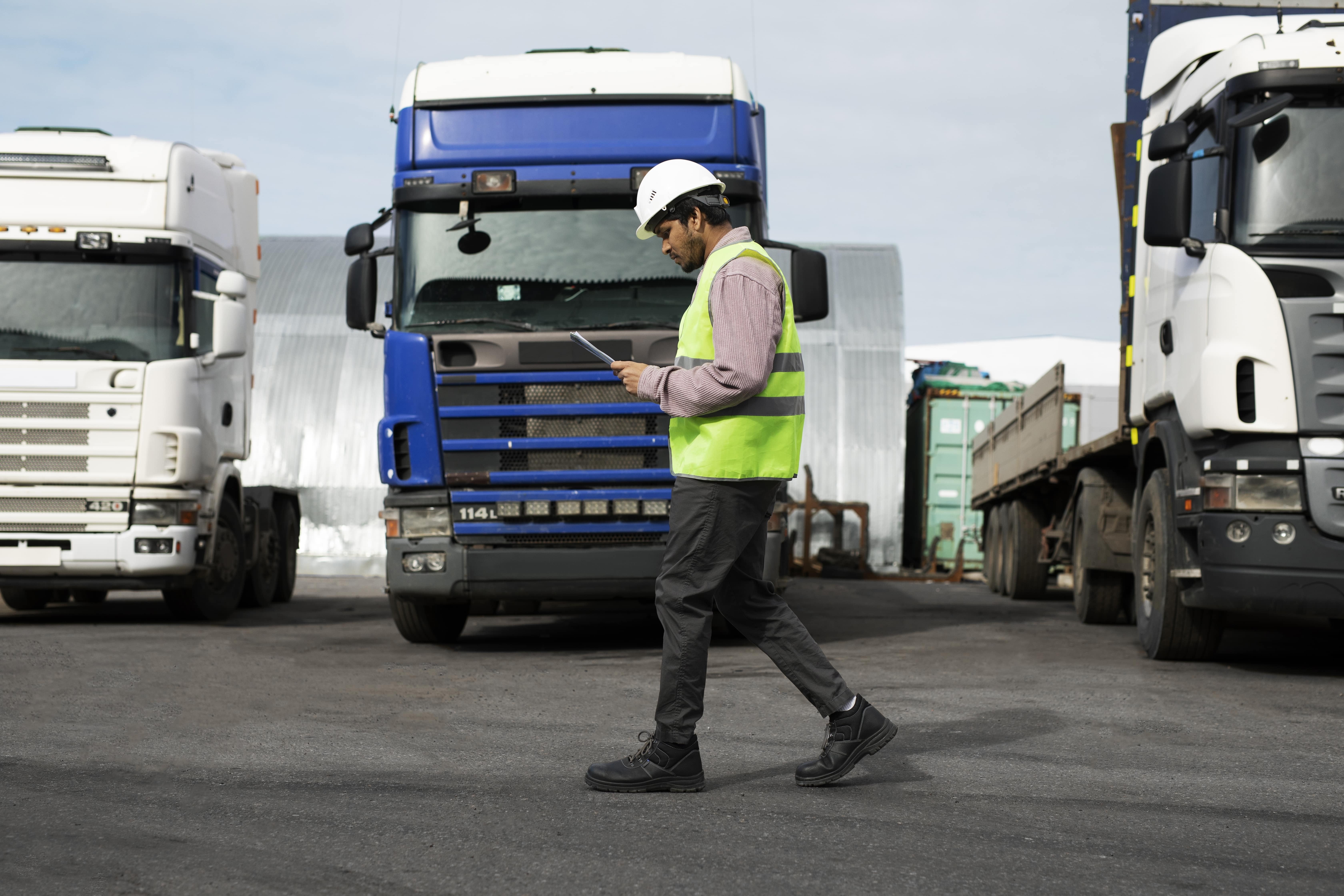
- Delivery truck routing software now supports real-time orchestration across FTL, LTL, mixed fleets, multi-day routes, and live delivery exceptions.
- It helps logistics leaders manage DoT compliance, traffic shifts, load consolidation, driver limits, and SLA windows before routes are dispatched.
- FarEye adds AI-based routing, control tower visibility, rate-based carrier selection, and predictive alerts for enterprise fleet execution at scale.
- The delivery truck route optimization software generates routes for 1M+ stops under 15 minutes and reduces miles by up to 20%.
- With route planning software, teams improve OTIF, cut WISMO calls, lower delivery costs, and recover faster from route disruptions during peak demand periods.
The trucks market is projected to grow from USD 420.8 billion in 2026 to USD 792.6 billion by 2035. Yet fleets competing for that growth cannot rely on fixed route plans built for slower delivery networks. Delivery truck routing software has become a core operating system, shaping OTIF rates, delivery costs, driver compliance, and customer retention.
For logistics leaders, the pressure is clear: every delay, empty mile, and missed delivery window now affects margin directly. The shift from legacy planning to real-time delivery orchestration is a structural change in fleet management, execution, and performance measurement. Let's examine what this shift requires and how enterprise fleets are building smarter routing operations with FarEye.

What Real-time Delivery Orchestration Actually Means for Truck Fleets
Orchestration is not re-routing. It is continuous, automated decision-making across every active variable in a live fleet operation. Legacy delivery truck routing software builds a plan before dispatch and holds it.
Real-time orchestration updates that plan continuously as conditions change, without dispatcher intervention, without full replanning, and without disrupting committed delivery windows. The distinction matters because the failure mode of legacy planning is not occasional. It is structural.
Three variables break fixed plans every single shift:
- Live traffic and road events close corridors that were clear at planning time, making ETAs unreliable within hours of dispatch.
- Order injections and cancellations after routes are released, creating sequence conflicts that cascade across the full stop list.
- Driver delays and vehicle issues at any single stop compress time windows for every subsequent stop on the route.
A fleet running delivery truck routing software without real-time orchestration absorbs all three of these variables manually. Dispatchers fight. SLAs slip. Costs rise. The difference between a fleet that controls these variables and one that reacts to them is the platform underneath the operation.
A leading logistics company in Thailand rebuilt its routing operation on FarEye Route and now moves the same workload with 130 vehicles instead of 300. The deployment also cut dispatch-process time by 66% and reduced planner headcount by 70%. Check out the Full Case Study to see how They did it.
Core Delivery Truck Routing Software Capabilities That Handle Real-world Fleet Complexity
Enterprise truck routing is not a single problem. It spans dedicated fleet management, multi-stop consolidation, load optimization, and compliance enforcement across multiple vehicle types and route profiles. Delivery truck routing software built for enterprise scale addresses all of these within a unified constraint-resolution layer, not as separate modules that require manual coordination.
1. Multi-day Route Planning for FTL and Dedicated Fleets
High-value goods, long-haul routes, and dedicated fleets need multi-day planning. Delivery truck routing software factors delivery times, driver hours, rest periods, overnight stops, and cross-date sequencing without disrupting SLA windows.
2. DoT-compliant Driver Hours Built Into Planning
Transportation route planning software embeds Hours of Service rules into route planning. It accounts for break times, drive limits, and duty hours before dispatch, reducing compliance risks and manual checks.
3. Multi-stop LTL Routing With Load Consolidation
LTL routing depends on combining shipments moving in the same direction. Route optimization software sequences pickups, stops, and delivery windows together, helping reduce fuel use, transit time, and cost per shipment.
4. Load Co-mingling to Reduce Empty Miles
Route planning software identifies co-mingling opportunities across shipments headed to similar regions. This improves vehicle utilization, lowers empty backhaul miles, and reduces return transportation costs.
5. Order, Vehicle, Road, and Driver Constraints in One Layer
Enterprise routing resolves order weight, delivery windows, vehicle capacity, road restrictions, bridge limits, closures, rest stops, fuel stops, and driver compliance together. This improves route accuracy before dispatch.
6. Real-time Shipment Visibility Across Networks
Live tracking gives shippers and carriers stop-level visibility across fleet and carrier networks. Real-time ETA updates and exception alerts help teams act before delays become failed deliveries.
Indonesia's largest grocer executed more than 100,000 routes with FarEye auto-routing, saving 10,000 planning hours while lifting truck fill rate by 12% and on-time delivery by 5%. Read the Full Story Here.
How FarEye Helps Enterprises get More From Delivery Truck Routing Software
FarEye's delivery truck routing software combines AI-based route optimization, real-time control tower execution, and full-constraint route generation into a single platform. The measurable outcomes are documented across fleet size, geography, and delivery type.
1. AI-based Routing Across FTL, LTL, and Mixed Fleets
FarEye processes order, vehicle, road, driver, and capacity constraints together to generate optimized routes across FTL, LTL, and mixed fleets. Enterprise teams can generate routes covering 1M+ stops in under 15 minutes, while improving capacity utilization or reducing miles by up to 20%.
2. Real-time Control Tower for Live Exception Management
An AI-powered control tower monitors active routes continuously, helping teams identify delays, detours, and long halts as they occur. Control Tower Agents report 60% less firefighting, with real-time reassignments resolving exceptions before SLA windows close across active fleet operations.
3. Multi-day Route Execution With Compliance Built in
Multi-day routes require compliance checks before dispatch, especially when drive limits, break rules, and rest windows affect planned arrival times. FarEye embeds DoT driver hours logic into route planning, reducing manual verification and lowering compliance risk across large fleet operations.
4. Fleet Performance Outcomes at Enterprise Scale
Measured outcomes include a 6% increase in OTIF-compliant deliveries, 75M+ kilometers saved, and 18% lower average delivery cost. Improved route efficiency and load utilization also support sustainability goals, with 550K+ metric tonnes of GHG emissions reduced across the network.
5. Rate-based Routing That Reduces Carrier Spend
Rate-based routing selects the lowest-cost carrier or fleet option using live rates, performance history, and delivery requirements. High-volume shippers have recorded up to USD 1.7M in annual savings by replacing manual carrier selection with algorithm-driven dispatch allocation.
6. Customer Visibility That Cuts Support Volume
Branded tracking pages give customers AI-driven ETA updates tied to live route progress, replacing fixed delivery windows that quickly become inaccurate. With proactive notifications, FarEye can reduce WISMO calls by up to 67% and cut support ticket volume by 50%.
Implementation Best Practices for Delivery Truck Routing Software Rollout
A sequenced deployment protects live operations and ensures the platform performs from day one rather than after months of post-launch configuration correction.
- Validate address, stop, and geocoding data before go-live to prevent route failures.
- Configure vehicle rules, driver compliance, and SLA tiers during onboarding to avoid manual overrides.
- Run parallel planning before fleet cutover to compare AI-generated routes with existing plans.
- Train dispatchers for exception oversight, since delivery truck routing software shifts them from route builders to monitors.
- Integrate with TMS, WMS, and OMS systems before live order processing to prevent data silos.
- Track OTIF, cost per delivery, miles driven, and WISMO volume at 30, 60, and 90 days.
Plan Smarter Routes and Recover Faster With FarEye
Fixed route plans no longer match enterprise fleet complexity across multi-day runs, mixed fleets, DoT rules, and live disruptions. When SLA windows tighten, delivery truck routing software must process constraints across orders, vehicles, roads, drivers, and capacity.
FarEye brings AI-based route optimization software, real-time control tower execution, and predictive exception management into one enterprise routing layer. Our route planning software helps teams reduce miles, improve utilization, protect service levels, and act before delays become SLA failures.
By connecting planning, dispatch, tracking, and recovery, fleets can move from reactive firefighting to proactive performance control. That shift gives leaders clearer cost visibility, stronger driver productivity, and better customer confidence across every delivery promise.
Book a demo to see how FarEye helps fleets plan smarter, dispatch faster, and control delivery costs at scale.
Book a Demo →Frequently Asked Questions
What does real-time delivery orchestration mean for truck fleets?
Real-time delivery orchestration connects routing, tracking, capacity, drivers, and carriers to adapt operations continuously as conditions change.
What core capabilities should delivery truck routing software include?
Delivery truck routing software should include dynamic routing, capacity planning, driver compliance, tracking, dispatch automation, analytics, and exception management.
How does delivery truck routing software handle DOT driver hours compliance?
It considers driver availability, hours-of-service limits, required breaks, and schedules to create feasible routes that support DOT compliance.
What is the difference between FTL and LTL routing?
FTL routing manages dedicated truckloads, while LTL routing optimizes shared shipments by balancing pickups, deliveries, capacity, and consolidation opportunities.
How does FarEye help enterprises get more from delivery truck routing software?
FarEye helps enterprises optimize truck routing through AI planning, real-time visibility, automated dispatch, carrier coordination, and continuous route improvements.
What measurable results can FarEye's delivery truck routing software deliver?
FarEye delivers measurable improvements, including 18% lower delivery costs, 75M+ kilometers saved, and enhanced route efficiency through intelligent optimization.
What is rate-based routing, and how does it reduce carrier spend?
Rate-based routing compares carrier costs, service levels, and capacity options to select efficient transportation choices while controlling delivery expenses.
What are the best practices for implementing delivery truck routing software?
Best practices include clean data, system integration, clear constraints, pilot testing, driver training, KPI tracking, and continuous optimization.
What should enterprises consider when choosing delivery truck routing software?
Enterprises should evaluate scalability, integrations, AI capabilities, compliance support, fleet flexibility, real-time visibility, analytics, and measurable business outcomes.
Reference: Global Market Insights Inc. "Trucks Market Size & Share 2026–2035." Published April 2026. Accessed July 6, 2026. Figures are subject to change — verify current numbers before publishing updates.