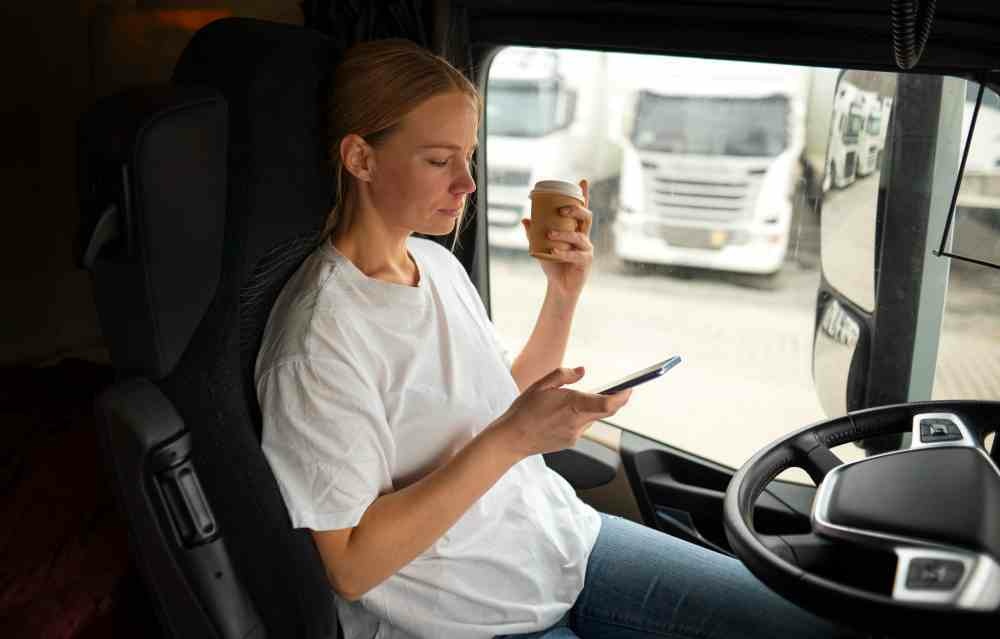
- A route planner for multiple stops improves driver productivity by creating clearer stop sequences, realistic ETAs, and live route updates that reduce decision fatigue during delivery shifts.
- Better route quality directly reduces driver stress by lowering backtracking, repeated dispatch calls, customer escalations, and avoidable delays across multi-stop routes.
- FarEye helps logistics teams improve driver execution through real-time recalculation, route visibility, historical delivery data, and smarter planning workflows for high-volume delivery networks.
A delivery day can become stressful long before the first stop is completed. Drivers manage traffic, changing stop sequences, customer calls, proof-of-delivery tasks, access issues, and last-minute dispatch updates, often while trying to stay within tight delivery windows.
With 68% of executives identifying ETA accuracy and reliability as a top AI priority in home delivery operations, improving route visibility and decision-making has become essential for delivery teams. Driver productivity depends on how clearly routes are planned, how realistic ETAs are, and how much decision-making pressure drivers face during each shift.
An AI-driven route planner for multiple stops can help reduce that pressure by providing drivers with clearer sequences and better route visibility. Let's learn how route planning software helps delivery teams build smarter plans that support driver productivity, and how FarEye stands out as a multi-stop route planner.
Why Driver Productivity Breaks Down on Multi-stop Routes
Multi-stop routes are mentally and physically demanding because drivers manage several variables at once. They need to follow stop sequences, handle customer availability, complete delivery proof, adjust to traffic, and stay aligned with dispatch updates.
Productivity drops when drivers spend too much time making their own route decisions. Missed turns, poor sequencing, waiting time, unclear instructions, and manual updates can reduce the number of successful stops completed in a shift.
Common productivity blockers include:
- Poor stop sequencing creates unnecessary backtracking.
- Unrealistic delivery windows that add pressure from the start.
- Traffic delays that create downstream timing issues.
- Inaccurate addresses that increase search time.
- Repeated customer calls that interrupt driving flow.
- Poor load sequencing that causes unnecessary handling.
- Limited live support that forces drivers to solve issues alone.
An AI-powered route planner for multiple stops can reduce these issues by making the route easier to understand, execute, and adjust throughout the day.
See how FarEye's route planner removes these daily blockers for delivery teams. Book a Demo
The Hidden Link Between Route Quality and Driver Stress
Driver stress often comes from uncertainty, not workload alone. A driver can manage 25 stops more confidently when the route is logical, ETAs are realistic, and exceptions are clearly handled.
Bad routing shifts operational complexity onto drivers. They must decide which stop to prioritize, how to recover lost time, when to call dispatch, and how to manage customer expectations. This can create fatigue during long shifts.
FarEye's route planner for multiple stops helps reduce this friction by integrating route planning, real-time visibility, and dynamic routing decisions into a single execution flow. This coordinated approach can improve delivery success rates, with dispatchers recording an 18% YoY increase in first-time delivery using FarEye's software.
Better route quality supports drivers in several ways:
- Stop order feels aligned with road reality.
- Drivers spend less time calling dispatch.
- Customer tension reduces when ETAs are realistic, thereby reducing WISMO queries.
- Manual rerouting becomes less frequent.
- Shifts are less likely to extend because of avoidable planning gaps.
- Drivers can focus more on safe, timely delivery.
What a Route Planner for Multiple Stops Actually Does for Drivers
A route planner for multiple stops should help create routes that are realistic, efficient, and easier to execute across the full shift.
| Route Planning Function | What Drivers Experience |
|---|---|
| Smart Stop Sequencing | Clearer order of deliveries |
| Time-window Planning | More realistic schedules |
| Traffic-aware Routing | Better route adjustments |
| Skill Matching | Suitable assignments |
| Capacity-aware Planning | Better load fit |
| Live Route Updates | Clear instructions when plans change |
| Predictive ETAs | Better customer communication |
The best route planner for multiple stops reduces decision fatigue. It gives drivers fewer issues to resolve manually and greater confidence in each routing decision.
How Multi-stop Route Planners Make Every Delivery Shift Easier to Execute
Driver productivity improves when the full route is easier to follow, not when drivers are simply pushed to complete more stops.
1. Better Stop Sequencing Helps Drivers Complete More Deliveries
A good sequence considers delivery windows, road conditions, service time, customer priority, vehicle capacity, and zone flow. It also prevents urgent deliveries from being pushed too late in the route.
For drivers, a better sequence means fewer decisions on the road and more focus on safe, timely execution. FarEye's route optimization software accounts for multiple constraints, helping teams create routes that are practical for drivers to complete.
Better stop sequencing helps:
- Reduce unnecessary backtracking
- Improve zone-wise movement
- Prevent urgent deliveries from being delayed
- Improve completion rates within the same shift
- Support better fuel and time efficiency
- Reduce avoidable driver confusion
2. Realistic ETAs Reduce Pressure During the Delivery Day
Unrealistic ETAs create a chain reaction. Drivers feel rushed, customers become impatient, and dispatchers have to manage avoidable escalations.
A strong route planner for multiple stops improves ETA accuracy by considering travel time, service time, historical dwell patterns, and live route conditions.
Realistic ETAs help because:
- Drivers are less likely to feel behind from the start.
- Customers receive more accurate delivery windows.
- Dispatchers handle fewer ETA-related calls.
- Delivery teams can identify route risk earlier.
- Driver performance is measured against fairer expectations.
- Managers can separate planning issues from driver execution issues.
3. Dynamic Route Updates Help When the Day Changes
Even the best morning route can change during the day. Traffic, customer availability, urgent orders, dwell-time delays, and vehicle constraints can all affect planned execution.
Dynamic route updates reduce the need for drivers to improvise. For example, a traffic jam may block the planned path, a customer may request a later delivery window, or a priority order may need same-day insertion. In each case, the driver should not be left to solve the problem alone.
FarEye supports real-time route recalculation, helping dispatch teams guide drivers with updated routes instead of leaving them to manage disruptions manually. This adaptive routing approach also improves route efficiency, with FarEye helping save 75M+ kilometers through route optimization.
4. Reduce Communication Overload
Communication overload is one of the most overlooked causes of driver stress. When routes are unclear or constantly changing, drivers spend too much time calling dispatch, confirming ETAs, explaining delays, or asking for updated instructions.
A strong route planner for multiple stops reduces this pressure by keeping drivers, dispatchers, and customers aligned through live route visibility and proactive updates.
See how an African retailer cut delivery time by 15% with FarEye's routing. View Case Study
What Should Logistics Teams Measure to Improve Driver Productivity?
Driver productivity should not be measured only by completed deliveries. Teams should also assess route quality, workload fairness, and the number of avoidable disruptions drivers face.
A route planner for multiple stops becomes more valuable when performance data feeds future planning decisions. The goal is not to push drivers harder. It is to design routes that make productive work easier, safer, and more predictable.
Important metrics include:
- Stops completed per shift
- Average time per stop
- Planned vs. actual route adherence
- Miles driven per completed delivery
- Failed delivery attempts
- Driver wait time
- Number of route deviations
- ETA accuracy
- Customer calls per route
- Overtime hours
- Driver satisfaction feedback
- Dispatch interventions per route
These metrics help teams understand whether route plans are practical in the field. They also show where drivers need better route support, clearer instructions, or more realistic schedules.
Best Practices for Using a Route Planner for Multiple Stops
A route planner for multiple stops works best when teams combine automation with clean data, operational rules, and driver feedback. The platform can only improve execution when the inputs reflect actual delivery conditions.
1. Clean Address and Location Data Before Routing
Poor address quality creates avoidable search time and stress for drivers. Accurate geocoding helps routes become easier to follow. Teams should standardize customer addresses, verify map pins, and add clear delivery instructions where needed.
2. Use Real Service Times, Not Fixed Assumptions
Different stops require different handling time, access effort, and customer interaction. Real service-time data makes schedules fairer. A residential delivery, a high-rise delivery, and a bulky order should not be treated the same way.
3. Match Routes with Driver Familiarity
Drivers who know certain zones can complete routes more confidently and efficiently. This is especially important in dense, complex, or high-traffic delivery areas. Familiarity can reduce navigation errors, parking confusion, and customer access delays. It also helps drivers manage routes with more confidence.
4. Build Time-window Buffers Into Dense Routes
Overpacked schedules can make drivers feel like they're already late before the shift properly begins. Buffers improve route realism and reduce unnecessary pressure. Dense routes need room for dwell-time variation, traffic changes, customer delays, and access issues.
5. Keep Dispatchers Focused on Exceptions
Drivers need support when routes change, but every small decision should not require manual calls or dispatcher intervention. A good route planner for multiple stops should reduce the need for repetitive coordination. Dispatchers should focus on delays, failed attempts, priority orders, and customer-impacting issues.
6. Use Route Adherence Data for Coaching
Route deviations should be reviewed to identify planning gaps, traffic challenges, or process issues, not simply driver behavior. Sometimes the route design itself creates unnecessary friction. A route planner for multiple stops helps teams compare planned and actual execution.
7. Improve Route Logic with Historical Data
Past delivery data helps refine dwell times, zone patterns, customer availability, and route-level bottlenecks. Over time, this helps teams build routes that better match field conditions.
FarEye helps logistics teams use delivery data to continuously improve routing quality and driver execution. This creates a stronger feedback loop between planning and daily performance, helping reduce manual dispatch effort and supporting a 22% YoY decrease in dispatch time.
Check out how Asia Pacific's leading healthcare provider raised vehicle capacity utilization by 30% with FarEye. Explore the Case Study Today
Make Every Multi-stop Route Easier for Drivers to Execute
Driver productivity improves when routes are easier to execute, not when drivers are simply asked to move faster. A strong multi-stop route planner gives drivers clearer sequences, better ETAs, fewer manual decisions, and stronger support when delivery conditions change.
With FarEye's route planning software, logistics teams can plan smarter multi-stop routes, improve driver productivity, and reduce operational stress across high-volume delivery networks.
Request a demo to see how an AI-powered route planner for multiple stops approach can support both delivery performance and driver experience.
Request a Demo →Frequently Asked Questions
How does a multi-stop route planner improve driver productivity?
A multi-stop route planner improves driver productivity by creating efficient stop sequences, reducing unnecessary mileage, and balancing workloads across vehicles. It considers factors such as traffic, delivery windows, vehicle capacity, and driver schedules to create practical routes. This helps drivers complete more stops while reducing delays and route-related stress.
How can route planners make multi-stop delivery shifts easier for drivers to execute?
Route planners simplify multi-stop delivery shifts by providing optimized routes, clear stop sequences, accurate ETAs, and real-time updates. Drivers spend less time making manual decisions and can focus on completing deliveries efficiently. Dynamic adjustments also help them manage unexpected changes such as traffic disruptions, delays, or new delivery requirements.
Which driver productivity metrics should businesses track for multi-stop deliveries?
Businesses should track metrics such as stops completed per hour, deliveries per driver, route adherence, delivery completion rate, idle time, mileage efficiency, first-attempt delivery rate, and overtime hours. Monitoring these metrics helps identify productivity gaps and improve route planning, driver performance, and overall delivery efficiency.
What are the best practices for using a multi-stop route planner to improve driver productivity and reduce stress?
Best practices include setting accurate delivery constraints, using real-time route updates, monitoring driver feedback, reviewing performance metrics, and continuously refining routes based on historical data. Businesses should also ensure drivers understand route changes and have access to clear navigation and delivery information. FarEye helps enterprises improve multi-stop delivery execution through AI-powered routing, constraint management, real-time visibility, and optimized route planning workflows.
Source: AlixPartners, "2026 Home Delivery Survey." Accessed August 27, 2026. Figures are subject to change — verify current numbers before publishing updates.