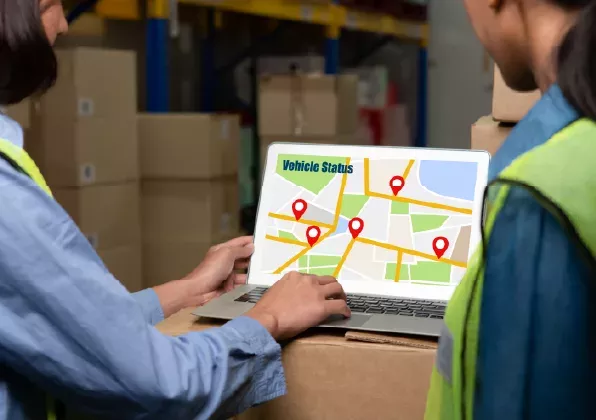
- Fragmented last-mile carrier data creates costly blind spots: Private fleets, 3PLs, and gig drivers operate through disconnected systems, forcing reactive management instead of intelligent control across your network.
- Manual processes leak significant hidden costs: Rate selection without live performance data results in missed SLAs, inflated redelivery expenses, and billing discrepancies that compound silently over multiple cycles.
- FarEye delivers measurable operational ROI: Automated rate shopping, AI routing, and control tower visibility cut delivery costs by 15%, improve OTIF by 95%, and reduce carrier onboarding time by 90% through unified platform architecture.
- FarEye scales without proportional increases in staff: The platform unifies data streams, automates complex allocation decisions, and adapts through self-learning algorithms as your last-mile carrier network expands.
Every last-mile carrier added to your network without unified technology multiplies operational complexity rather than capacity. Private fleets, third-party logistics (3PL) partners, and gig drivers all generate data in incompatible formats, creating visibility gaps that simultaneously compound costs and erode service quality.
The global last mile delivery market is valued at USD 207.10 billion in 2026, expanding to USD 378.59 billion by 2033. Amid this growth, enterprises that manage last-mile carrier networks through manual processes are incurring costs that technology systematically eliminates.
Modern platforms unify fragmented data streams, automate complex allocation decisions, and scale operations without proportional increases in staff. Let's examine how technology transforms every layer of last-mile carrier management and how FarEye delivers measurable impact across each one.
The Last-mile Carrier Complexity Problem at Scale
Managing a growing last-mile carrier network without unified technology creates four compounding operational problems that manual intervention cannot resolve systematically.
1. Fragmented Last-mile Carrier Data Creates Blind Spots
Private fleets, third-party partners, and gig drivers operate through disconnected systems with limited API access. Without unified data normalization, final mile tracking breaks down at every handoff, forcing reactive management rather than intelligent control.
2. Manual Carrier Allocation Leaks Cost
Rate selection without live performance data leads to higher exception rates, missed Service Level Agreements (SLAs), and inflated redelivery costs. Organizations that rely on dispatcher judgment under pressure consistently overpay and underperform compared to intelligent automation.
3. Slow Carrier Onboarding Caps Network Growth
Manual integration processes consume weeks of IT resources per new carrier partner. This bottleneck prevents expansion at market pace, leaving critical capacity gaps during peak seasons, when additional carriers are most needed.
4. Invoice Reconciliation is Manual and Error-prone
Hidden surcharges and contract discrepancies go undetected without automated reconciliation, silently eroding margins across every carrier contract. Financial damage accumulates across multiple billing cycles before manual reviews surface errors.
Blue Dart, South Asia's largest express network with 35,000+ locations across India, achieved a 22% increase in first-attempt delivery success with complete 360° visibility into ground operations, using the same control tower approach outlined above. Explore the Blue Dart Case Study.
How Technology Transforms Last-mile Carrier Management
Technology addresses each of these challenges not as point solutions but as an integrated system. The platform connects carrier data, financial controls, and customer experience into a single operational layer that scales with your network.
Automated Rate Shopping
Intelligent platforms compare rates across contracts in real time, ensuring every shipment is routed through the most cost-effective carrier. Carrier leaderboards track performance while custom fulfillment rules prioritize top partners based on reliability and cost efficiency.
Carrier Control Tower
A unified control tower centralizes updates from all carrier partners into a single view. Teams proactively identify risks, surface exceptions before SLAs are breached, and provide accurate, real-time delivery information regardless of the carrier fulfilling the shipment.
Rapid Carrier Onboarding
Pre-built connectors and flexible APIs reduce last-mile carrier onboarding time, enabling faster network expansion without proportional increases in IT resources. Organizations respond to capacity demands in days rather than weeks.
Key Technology Capabilities for Scalable Last-mile Carrier Operations
Beyond the foundational capabilities above, enterprise-grade platforms deliver a deeper set of technical capabilities that determine whether last-mile carrier operations can truly scale with growth.
1. AI-powered Allocation and Performance Scorecards
AI-driven carrier selection optimizes cost and service quality simultaneously by using standardized scorecards across all carrier types. Capacity forecasting models network requirements months ahead, preventing peak shortfalls.
Embedded route optimization software aligns assignments with actual constraints rather than fixed assumptions, delivering measurable On-time In-full (OTIF) improvements across the fleet.
2. Branded Customer Experience
Customers receive consistent, personalized communications regardless of which last-mile carrier fulfills their order. Branded tracking links, email customizations, and milestone notifications reduce WISMO calls and build trust, driving higher lifetime value across repeat purchase cycles.
3. Automated Invoice Reconciliation
Finance teams gain full control over audits, surcharges, and hidden charges through complete automation. Issues are highlighted instantly against live performance data, protecting profits and eliminating manual reconciliation that scales poorly with network complexity. Every discrepancy surfaces before compounding across future invoices.
4. Real-time Exception Management
Automated workflows surface risks before SLA breaches occur, triggering predefined reassignment logic that replaces reactive firefighting with structured recovery. Operations teams shift from crisis management to proactive governance, with every exception documented and routed without manual triage.
5. Self-learning Architecture
Algorithms continuously optimize route planning software logic, carrier selection, and ETA prediction, improving accuracy with each delivery. Microservices architecture scales components independently during peaks without degradation. Low-code configuration lets operations adapt processes without IT dependency as networks evolve.
How FarEye Powers Scalable Last-mile Carrier Operations
FarEye provides enterprise-grade last-mile carrier management purpose-built for multi-carrier environments. The platform delivers multiple capabilities within a single unified system, connecting rate shopping, carrier visibility, customer experience, and financial reconciliation into coherent operational control.
1. Unified Visibility Across Networks
FarEye consolidates private fleets, outsourced partners, and gig networks into a single layer. Dispatchers view all active routes and delivery statuses without switching between portals. This eliminates blind spots across multimodal operations.
2. Smarter Allocation Based on Cost and Performance
FarEye keeps costs under budget by automating rate shopping across carrier contracts. Carrier leaderboards track partner performance across the network, while custom automated fulfillment rules prioritize top last-mile carrier partners based on historical reliability and cost efficiency. Organizations report up to 15% reductions in delivery costs with multi-carrier strategies.
3. Advanced Capacity Forecasting
Using FarEye, planners spend 80% less time responding to Requests for Proposals (RFPs). This early visibility provides control before execution pressure builds. You negotiate from knowledge rather than reacting to immediate shortages.
4. Real-time Delivery Scheduling
Dynamic slot availability helps teams fit urgent orders with minimal disruption. The system respects Hours-of-Service (HoS) rules and skill requirements to ensure legal, feasible assignments that improve on-time performance.
5. AI-powered Routing and Dispatch
FarEye creates optimized routes 90% faster than manual methods. The platform handles 1Mn+ stops in under 15 minutes. Drivers complete 15% more daily stops with 50% fewer navigation errors.
6. Agentic AI Dispatch Through PILOT
FarEye's PILOT operates as an agentic AI dispatcher across connected last-mile carrier workflows. Eleven specialized agents validate orders, correct addresses, schedule appointments, detect staffing gaps, and contact carrier partners. PILOT handles more than 200 decisions daily and reschedules failed stops before they breach service commitments.
It also audits proof of delivery and reconciles carrier invoices against contracted rates. The platform compresses roughly ten hours of dispatcher activity into around 60 minutes of human oversight. Routine actions run autonomously, while higher-risk carrier decisions remain under authorized human review.
7. Improved Capacity Improvement
Better asset utilization and reduced miles drive immediate cost savings. With FarEye, up to 20% improvement in capacity utilization can be achieved through intelligent sequencing and load consolidation across the last-mile carrier network.
8. Last-mile Carrier Control Tower Execution
End-to-end visibility is provided through seamless integration with all partners. FarEye centralizes updates from multiple carriers into a single control tower, enabling teams to proactively identify and mitigate risks while consistently delivering an informative customer experience.
Control tower agents report 60% less firefighting time through proactive resolution before SLAs break down.
9. Business Analytics and Instant Reconciliation
FarEye automates the complete invoice reconciliation process while maintaining full control over audits, surcharges, and hidden charges. Issues are highlighted instantly against performance data, safeguarding profits across every last-mile carrier contract in the network.
61+ business metrics with drill-down capabilities help isolate areas for improvement. CXOs achieve a 60% reduction in SLA breaks with real-time reassignments.
10. Unleash Higher Customer Lifetime Value
The combined impact of FarEye's platform delivers a 95% increase in OTIF delivery rate and a 90% reduction in carrier onboarding time. These gains create compounding returns in both operational performance and customer satisfaction.
Implementation Best Practices for Last-mile Carrier Technology
Successful deployment requires planning beyond software selection. These practices ensure sustained value from your investment.
1. Connect Highest-volume Carriers First
Private fleets offer the fastest integration paths and immediate visibility gains. High-performing 3PL partners follow, establishing operational momentum. Complex gig network integrations proceed once the core last-mile carrier infrastructure has stabilized, ensuring disruption is minimized at every stage of rollout.
2. Standardize Carrier Performance Metrics
OTIF rates, cost per delivery, and SLA adherence must be normalized across all carrier types before meaningful performance benchmarking is possible. Standardization removes the ambiguity that allows underperforming carriers to operate without accountability across the network.
3. Automate Reconciliation From Go-live
Manual invoice checking cannot scale alongside a growing last-mile carrier network. Automated reconciliation should be active from day one, protecting margins across all carrier contracts before billing discrepancies can compound.
4. Establish a Monthly Carrier Review Process
Monthly performance reviews surface underperforming carriers and optimization opportunities. Quarterly platform assessments ensure your last-mile carrier operations keep pace with network evolution and continuously raise the performance ceiling as delivery volumes grow.
Scale Your Last-mile Carrier Network with Technology Built for Growth
Last-mile carrier complexity does not diminish with scale. It compounds. Every carrier added without unified technology widens visibility gaps, leaks costs, and creates service inconsistencies that erode margins and customer trust.
Fragmented systems drain resources through manual reconciliation and reactive firefighting that smarter platforms eliminate. FarEye delivers automated rate shopping, carrier control tower, branded customer experience, and invoice reconciliation that modern multi-carrier operations demand.
Recognized in the Gartner® Market Guide for Multicarrier Parcel Management Solutions, FarEye gives logistics leaders the platform to grow their network without growing operational burden.
Your competitors are already optimizing their carrier networks. Contact FarEye today to schedule your personalized last-mile carrier management assessment and discover how unified technology transforms delivery performance at scale.
Schedule Your Assessment →Frequently Asked Questions
What is the best last-mile carrier management software for multi-carrier networks?
The best last-mile carrier management software should unify carrier data, automate workflows, and improve visibility across complex networks. FarEye enables enterprises to manage multiple carriers through centralized control, real-time tracking, and performance insights.
Why does last-mile carrier complexity compound at scale?
Last-mile carrier complexity increases with multiple partners, inconsistent data formats, varying service levels, fragmented systems, and the need for standardized delivery performance.
How does technology transform last-mile carrier management?
Technology transforms carrier management by connecting partners, automating decisions, standardizing workflows, and providing real-time visibility across every delivery operation.
What is automated rate shopping in carrier management?
Automated rate shopping compares carrier costs, capacity, service levels, and delivery requirements to select suitable options while controlling transportation expenses.
How does a carrier control tower improve delivery visibility?
A carrier control tower consolidates shipment updates, carrier performance, exceptions, and operational data into one view for faster decisions and issue resolution.
How does automated invoice reconciliation protect margins?
Automated invoice reconciliation matches carrier bills with shipment records, identifies discrepancies, reduces manual audits, and prevents unnecessary transportation cost leakage.
How does FarEye speed up carrier onboarding and network expansion?
FarEye accelerates carrier onboarding through flexible integrations, pre-built connectors, and unified workflows, helping enterprises expand networks faster with fewer operational disruptions.
What measurable results does FarEye deliver for last-mile carrier operations?
FarEye delivers up to 90% faster carrier onboarding, a 15% reduction in delivery costs, up to 67% fewer WISMO calls, and improved network visibility.
How do you implement last-mile carrier technology successfully?
Successful implementation requires phased carrier integration, accurate data validation, clear performance metrics, team training, and continuous optimization after deployment.
Reference: Shevgan, Monica. 2026a. "Last Mile Delivery Market Opportunities & Forecast 2026-2033." Coherent Market Insights. March 30, 2026. Figures are subject to change — verify current numbers before publishing updates.