- Why automation is reshaping last mile logistics tracking: Legacy systems create dangerous blind spots that compound daily. Unified platforms are replacing point solutions across global networks. The cost of inaction grows with every missed delivery.
- Key technologies defining the future: AI-powered routing algorithms continuously improve ETA accuracy at scale. IoT and telematics feed real-time data into unified control towers. Predictive analytics surfaces bottlenecks before SLAs are ever at risk.
- Core capabilities and how FarEye delivers them: FarEye's unified control tower provides single-pane visibility across every fleet. Intelligent AI Agents handle routing, auditing, and fleet partner selection. FarEye Plan brings territory, capacity, and cost planning into one digital twin.
- A structured implementation strategy: Phase carrier integration by volume for maximum immediate impact. Automated data validation protects visibility layers from day one. A governance framework ensures continuous improvement as your network evolves.
The last mile delivery industry is projected to reach USD 311.3 billion by 2035, growing at a CAGR of 7.5% during the forecast period 2025–2035. As supply chains grow more automated and customer expectations continue to rise, last mile logistics tracking has shifted from an operational nice-to-have into a genuine competitive differentiator.
Enterprises that cannot see across their delivery networks in real time are absorbing costs that smarter competitors are eliminating. FarEye helps logistics leaders close that gap with enterprise-grade last mile logistics tracking capabilities built for the complexity of modern automated supply chains.
Let's examine the critical capabilities defining effective last mile logistics tracking and how FarEye helps enterprises transform fragmented networks into coherent, controllable, and high-performing delivery operations.
Why Automation Is Reshaping Last Mile Logistics Tracking
Legacy tracking systems were never designed for today's delivery complexity. Batch updates, siloed carrier data, and manual exception handling create visibility gaps that compound daily. Here is why automation is now essential for last mile logistics tracking.
1. The Blind Spot Problem in Legacy Systems
Batch updates arriving every four hours and disconnected carrier data leave enterprises managing by reaction rather than intelligence. Every missed ETA generates a support inquiry, and every failed delivery escalates operational cost.
2. How Automation Restructures Real-time Control
AI, machine learning, and IoT are not just improving delivery speed. How logistics leaders monitor, manage, and optimize networks in real time is being fundamentally transformed by these technologies.
3. Why Unified Last Mile Logistics Tracking Platforms Are Replacing Point Solutions
Leading global enterprises are successfully connecting their private fleets, outsourced 3PL partners, and independent gig networks into single visibility layers for better operational control.
Consequently, this powerful strategic integration actively turns last mile logistics tracking from a basic back-office function into a highly critical executive boardroom priority.
4. The Compounding Cost of Inaction
Margins erode one missed delivery at a time for organizations without automated last mile logistics tracking, while competitors with unified platforms convert complexity into competitive advantage.
Key Technologies Driving the Future of Last Mile Logistics Tracking
Several converging technologies are defining the future of last mile logistics tracking in automated supply chains.
1. AI and Machine Learning: From Firefighting to Forward Planning
Self-learning routing algorithms continuously improve ETA accuracy by analyzing historical delays, zone patterns, and driver behavior, shifting operations teams away from reactive problem-solving toward proactive network management.
2. IoT and Telematics: The Real-time Data Foundation
Real-time vehicle tracking, sensor feeds, and fleet telemetry flow through connected telematics into unified control towers, providing instant visibility across every active enterprise asset.
3. API-first Integration: Modernizing Without Disruption
Legacy systems remain intact as API-first architecture connects final mile logistics tracking platforms to ERP, WMS, TMS, CRM, and IoT sensors without displacement. Consequently, this powerful digital integration enables growing global enterprises to modernize their operational visibility without undertaking costly infrastructure overhauls today.
4. Predictive Analytics: Acting Before SLAs Break
Predictive analytics actively surface network bottlenecks before they impact service levels, giving operations teams the foresight to act before delivery SLAs are at risk globally.
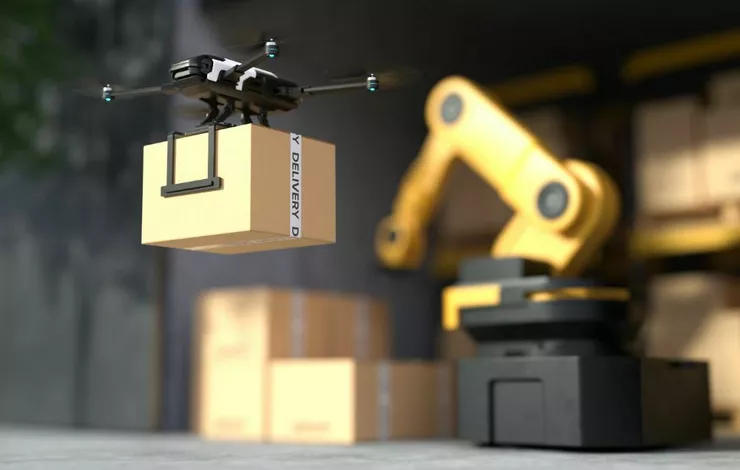
5. Automation and Robotics: Extending Intelligence Down the Supply Chain
Supply chain intelligence extends through advanced warehouse sorting systems and autonomous delivery vehicles, reducing human dependency to enable faster and more consistent last mile execution.
Core Capabilities for Automated Last Mile Logistics Tracking
Not every platform delivers genuine automation. Here are the capabilities that actually close visibility gaps in last mile logistics tracking.
1. Unified Control Tower Architecture: One View Across Every Fleet
Unified control tower architecture delivers single-pane visibility across owned fleets and outsourced partners, giving planners and dispatchers consistent real-time information through one interface.
2. Real-time Exception Handling: Reassign Before SLAs Break
Automated workflows activate the moment exceptions occur through real-time exception handling, triggering reassignments before SLAs break rather than after damage is already done.
3. Dynamic Slot Management: Smarter Scheduling at Scale
Dynamic slot management powered by AI scheduling drives significant improvement in stops per hour while keeping on-time performance consistently high across the network.
4. Branded Customer Experience: Visibility That Builds Loyalty
Customer trust is built through branded tracking interfaces that provide customers with real-time visibility, reducing WISMO calls and creating a delivery experience that drives repeat purchases.
5. Carrier Performance Analytics: Governance Across Every Metric That Matters
Deep visibility across business metrics powers carrier performance analytics, giving CXOs governance tools to continuously improve last mile logistics tracking and hold partners accountable globally.
6. Microservices Architecture: Peak Season Resilience Built In
Peak-season surges no longer degrade performance thanks to a scalable microservices architecture that scales individual components independently as new carrier types join and delivery volumes fluctuate.
How FarEye Powers Automated Last Mile Logistics Tracking at Scale
FarEye provides enterprise-grade last mile logistics tracking purpose-built for multi-carrier, automated supply chain environments. Here is what the platform delivers across every layer of your delivery network.
1. Carrier Connectivity and Network Onboarding
Private fleets, 3PL partners, and gig networks connect through FarEye's pre-built connectors and flexible APIs, delivering a 90% reduction in carrier onboarding time. AI-powered carrier allocation within FarEye cuts delivery costs by up to 15% and reduces the time dispatchers spend responding to carrier RFPs by 80%.
2. AI-powered Routing and Dispatch Efficiency
Optimized routes are generated 90% faster through FarEye, handling 1Mn+ stops in under 15 minutes and delivering up to 20% improvement in capacity utilization or reduction in miles driven.
Drivers complete 15% more stops per day with 50% fewer navigation errors, and control tower agents spend 60% less time firefighting through FarEye's proactive real-time reassignments.
3. Intelligent AI Agents for Last Mile Logistics Tracking
Acting as intelligent employee assistants, FarEye's AI Agents successfully manage operational tasks including route optimization, smart routing, rate-based routing, and complex territory planning.
Furthermore, they provide smart audits, real-time freight visibility, smart trips for driver behavior, urban smart parking, and fleet partner selection. Every agent within FarEye enables operations teams to work faster and with greater precision across the entire network.
4. Hyper-personalized Customer Delivery Experience
Data points, including demographics, personal preferences, historic sentiments, NPS scores, and delivery anxiety signals, power FarEye's hyper-personalization engine to deliver individually tailored experiences at scale.
The business impact is measurable: higher customer lifetime value, improved NPS, increased average order value, and a direct reduction in churn rate through personalized delivery communications.
5. Customer Experience and WISMO Reduction
With FarEye, missed deliveries are reduced by up to 25% through personalized notifications, and 70% of routine enquiries are handled through self-serve. Customer service teams using FarEye report 50% fewer WISMO tickets, a +15-point increase in NPS, and a 60% reduction in SLA breaches.
6. FarEye Plan: Final Mile Digital Twin
Territory, capacity, and cost planning come together in FarEye Plan, a single final mile digital twin built for smarter network design. Density Smoothing carefully balances daily workloads across multiple territories while Hub Network Optimization actively enables highly strategic hub placement for modern enterprise operations.
Furthermore, dynamic territory planning seamlessly adapts to changing daily delivery patterns, while AI-powered capacity forecasting within FarEye eliminates reactive peak-season planning.
7. Enterprise Scalability and Future-ready Architecture
Microservices architecture, low-code workflow configuration, and self-learning systems make FarEye's last mile logistics tracking a future-ready investment. With every delivery run, the platform grows smarter, scales with your network, and continuously raises the performance ceiling across your entire supply chain.
Implementation Strategy for Automated Last Mile Logistics Tracking
Turning last mile logistics tracking investment into measurable returns requires a structured deployment approach.
1. Phase by Volume: Start Where Impact Is Highest
Connect the highest-volume carriers first for maximum immediate impact. Private fleets offer the fastest integration paths, followed by high-performing 3PL partners. Complex gig network integrations proceed once core infrastructure stabilizes, ensuring disruption is minimized at every stage of rollout.
2. Data Validation: Protect Your Visibility Layer From Day One
Inconsistent carrier data corrupts visibility layers before they can deliver value. Validate location timestamps, geofence triggers, and status update completeness from day one, rejecting non-compliant data streams until carriers resolve quality issues. Clean data is the foundation on which effective route planning software operates.
3. Change Management: Build the Teams That Maximize Technology Value
Dispatchers, planners, and customer service teams need hands-on training across unified interfaces and consolidated tracking views. Technology value is only as strong as the teams equipped to use it. Investing in people alongside route optimization software ensures the platform delivers its full potential from launch.
4. Governance Framework: Build a Structure for Continuous Improvement
Assign clear ownership for carrier scorecards and routing parameter tuning. Monthly business reviews surface underperforming carriers, while quarterly platform assessments ensure your last mile logistics tracking platform keeps pace with network evolution and continuously raises the performance ceiling across your delivery operations.
Turn Last Mile Logistics Tracking Into Your Competitive Edge With FarEye
The high annual growth in last mile delivery rewards organizations with superior visibility and compounds the disadvantage of those without it. Every day without unified last mile logistics tracking widens the gap between leaders and the rest.
FarEye delivers the unified control towers, AI-powered optimization, seamless integrations, and proven business impact that automated supply chains demand. Leading enterprises already achieve 90% faster carrier onboarding, 95% OTIF improvement, and +15 NPS gains through FarEye's platform.
Your supply chain complexity demands sophisticated final mile logistics tracking technology.
Discover how unified visibility transforms your delivery performance.
Schedule your personalized last mile logistics tracking assessment.
Reference: Nagrale, Priya. "Last Mile Delivery Market Research Report Information by Service Type, Technology, Application, Delivery Time, and Region — Market Forecast Till 2035." Market Research Future, March 2026. Figures are subject to change — verify current numbers before publishing updates.