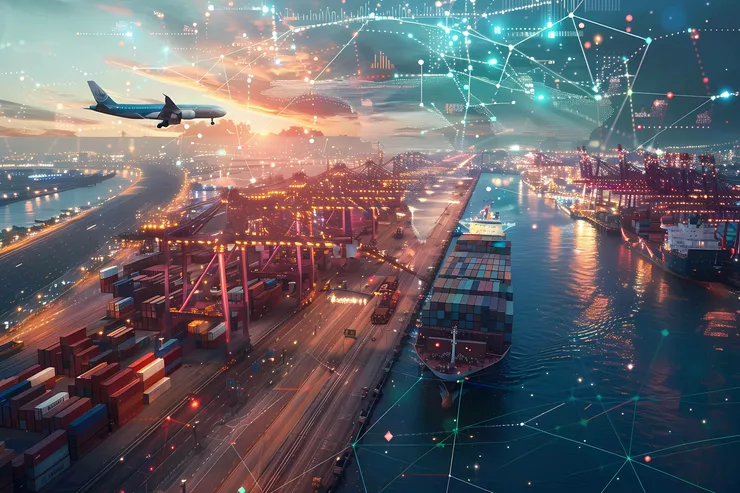
- Real-time supply chain visibility means live, actionable data about the location, condition, and status of goods at every point in the supply chain — from supplier to end customer. Only 6% of organizations currently achieve full end-to-end visibility.
- It operates through four layers: IoT and GPS data collection, AI-powered analytics for delay prediction, a control tower dashboard for operations teams, and a customer-facing notification layer that reduces WISMO contacts.
- The five biggest consequences of poor real-time supply chain visibility are: customer churn, inaccurate KPI benchmarking, delayed deliveries, rising overhead costs, and elevated transportation risks.
- The four core benefits of investing in real-time supply chain visibility are: cost reduction through optimized routing and reduced wastage, better customer experiences through live updates, reduced risk exposure through proactive exception management, and easier regulatory compliance.
- Real-world results prove the ROI: BlueTribe achieved a 40% productivity increase, Tata Steel gained complete end-to-end predictive visibility, and a leading GCC retail conglomerate achieved a 97% on-time delivery rate with 60% fewer WISMO contacts using FarEye.
- Supply chain visibility is now the #1 logistics trend according to 2025 decision-maker surveys. 82% of supply chain organisations increased IT spending in 2025 with visibility tools as a primary focus, and next-gen supply chain companies with advanced visibility report a 23% profit increase.
- FarEye delivers real-time supply chain visibility through a unified platform covering carrier orchestration, live GPS tracking, control tower dashboards, predictive ETAs, and automated customer communication — purpose-built for enterprises managing 10,000+ daily deliveries across multi-carrier networks.
Anyone who regularly shops online knows that the happiness that a 'Your order is out for delivery' message brings knows no bounds! However, more often than not, this message is not enough to help us know the exact whereabouts of our order. This is where the significance of real-time visibility in logistics emerges. The new-age customer needs up-to-date information with the exact location of their order and businesses today have realized the importance of fulfilling this need.
From sending out a single message notifying the customer about their order being out for delivery, to giving real-time live delivery updates, businesses have come a long way! In earlier days, tracking down a fleet to its exact location at all points was impossible. Relying on manual processes and continuous coordination with multiple stakeholders was time-consuming and expensive. But the digital transformation of logistics has completely changed the game. Owing to the rapid development of technology and software, we now have tools that allow organizations to have access to real-time supply chain visibility of delivery activities taking place on the ground level. All the information can be accessed on a single platform throughout the day, without any hassle, and also keeps all stakeholders up-to-date.
What is Real-Time Supply Chain Visibility?
Real-time supply chain visibility essentially means live information that allows you to monitor the route of the goods and their exact location at any given point. It allows you to understand what is actually happening, under what conditions, and the occurrence of any issues. It enables you to rectify the problem by ascertaining the situation and finding the best solution on the spot, in turn saving up on costs.
For a full comparison with related concepts, see our guide on supply chain visibility software.
Improve efficiency and reduce costs with better visibility
What is Real-Time Transportation Visibility in Supply Chain and Logistics?
Real-time transportation visibility in supply chains and logistics has become a necessity nowadays. It refers to logistic activities that track and trace, in real-time, the movement of goods and packages from the suppliers, manufacturers, warehouses and hubs to the end customer.
Real-time visibility in the supply chain leverages GPS-tracking and sophisticated software to allow businesses to plan, schedule, and monitor their logistics process at all points.
It provides supply officers with access to trackable information in real-time such as order receipts, the status of raw materials, shipping details, regulatory information, and the exact status of the order. Better management of multiple facets of this complex process helps businesses to gain a competitive edge, enhance productivity, increase transparency and customer satisfaction, and also reduce transportation costs.
This is especially critical as part of broader last-mile delivery management where the final leg carries the highest cost and the highest customer expectation.
How Does Real-Time Supply Chain Visibility Work?
Real-time supply chain visibility works by connecting data from every node and movement in the supply chain: supplier, factory, warehouse, carrier, and final delivery — into a single unified platform. This is achieved through a combination of four core technology layers.
- Data Integration and IoT Sensors: GPS devices, RFID tags, telematics units, and IoT sensors attached to vehicles, containers, and goods generate a continuous stream of location and condition data. This data flows automatically into a central platform via APIs and EDI feeds, eliminating the manual check-ins and phone calls that create delay and error. For enterprises managing mixed fleets, this integration typically extends across 3PL integration platforms and multi-carrier networks simultaneously.
- AI-Powered Analytics and Predictive Intelligence: Raw location data alone is not real-time supply chain visibility — it is just tracking. True visibility requires an AI engine that interprets the data: predicting delay probability from traffic and weather signals, flagging SLA breach risk before it happens, and recommending corrective routing options automatically. This is the layer that converts data into actionable decisions rather than retrospective reports.
- Control Tower Dashboard: A logistics control tower aggregates all data sources into a single operational view where supply chain managers can see every shipment, every carrier, and every exception simultaneously. Instead of toggling between five carrier portals, teams work from one command center with configurable alert rules, exception queues, and escalation workflows.
- Customer-Facing Communication Layer: Real-time supply chain visibility only delivers its full value when it reaches the end customer. Automated delivery notifications, self-serve tracking portals, and dynamic ETA updates, all powered by the same live data, reduce WISMO (Where Is My Order) contacts, build trust, and reduce customer service cost simultaneously.
5 Key Challenges Accompanied by Lack of Real-Time Transportation Visibility
Since real-time transportation visibility capabilities have transformed the way enterprises execute logistics operations, organizations that are not utilizing this new-age technology are facing major challenges. Unable to keep up with their competitors, the lack of real-time visibility of delivery activities leads to inefficiencies in different areas of the business.
For a comprehensive look at what these gaps cost in practice, see the consequences of poor supply chain visibility.
1. Customer Churn
Customer churn refers to when existing customers cease their relationship with a business organization. It is an important metric for every organization to know the customer churn rate as it affects overall success.
The lack of real-time transportation visibility leads to a higher customer churn rate. This is because modern customers demand end-to-end delivery transparency and will only continue to engage with businesses that fulfill their promise of not only providing timely orders but also delivering accurate information. A poor delivery experience at the last mile is the most common trigger for customer churn in e-commerce and retail.
2. Inaccurate KPI Benchmarking of Deliveries
Real-time visibility is a boon for planning, allotment, and tracking of deliveries and also to measure the performance of delivery personnel. It is an imperative KPI to set benchmarks for deliveries in order to understand and prepare for future requirements and to ensure that the delivery process goes on smoothly.
Without real-time visibility and control, inaccuracies would creep in when planning and monitoring the supply chain process, which would ultimately lead to wastage of resources and loss of revenue. More importantly, it makes managing logistics partners and 3PL providers difficult, since businesses tend to have little or no insight into how often they cause delivery delays, what their productivity levels are, and whether they are adhering to service-level agreements. See the key delivery performance KPIs that real-time visibility makes measurable.
3. Delayed Deliveries
The supply chain is monitored by multiple stakeholders. Lack of real-time visibility leads to confusion and chaos as it is almost impossible for the stakeholders to track down the shipment. Without accurate information about the location of the vehicle, the driver's performance, ETA, and on-ground activities, the delivery of the order is delayed. This not only leads to losses but also affects the reliability of the business in the customers' minds. If customers experience delayed deliveries, it is just a matter of time before they shift to the next best alternative.
4. Increasing Overhead Costs
Whether it is through reduced fuel consumption or lessening the damage of goods, it is important to keep track of every potential issue in the supply chain that might lead to unnecessary wastage.
Real-time visibility is the only solution that helps managers stay abreast of all developments that occur throughout the supply chain. It helps them know the optimized routes, traffic conditions, and also monitor the diversions that a driver undertakes. Poor visibility can lead to discrepancies and increases the chances of theft and damage to goods during transit. The end result is decreased productivity and excessive overhead costs that otherwise could easily be saved. Route optimization becomes possible only when visibility gives managers accurate, live data to act on.
5. Increasing Transportation Risks
The logistics industry is prey to multiple risks and poor visibility only increases them, especially in areas that aren't well connected. Poor infrastructure, excessive traffic, theft, pilferage and the subsequent risk of accidents and personal injuries to drivers pose a huge threat to the transportation sector on the whole.
Lack of accurate real-time data and insights about the conditions throughout the route of the delivery can lead to increasing transportation risk, damage to goods, and delayed deliveries.
How Blue Tribe Foods Used Real-Time Visibility to Increase Productivity by 40%
Discover how Blue Tribe Foods leveraged FarEye's real-time logistics visibility to streamline operations, improve delivery execution, and achieve a 40% increase in productivity.
Read the Case Study →Top 4 Key Benefits of Real-Time Transportation Visibility in Logistics
Supply chain visibility has become a crucial component for every business organization that seeks to conduct its operations more robustly and with better efficiency. In the world of logistics, it is essential to utilize this technology within your operations in order to survive in the competitive market.
1. Cost-Effectiveness
Reducing costs is more often the number one goal for most organizations. Real-time insights about the order's whereabouts throughout the transit stage is an important factor contributing to achieving cost-effectiveness.
Accurate insights and data about inventory, routes, and land logistics issues at different points can enable businesses to deal with risks and correct discrepancies at the right time. This not only enhances productivity levels but also leads to a high return on investment in the long run. In other words, increased visibility eliminates unnecessary route diversions and vehicle idling. It ensures that deliveries are executed by leveraging highly optimized routes that reduce miles traveled. All these factors shrink total-ownership costs of transportation activities.
2. Delightful Customer Experiences
Consumers today are smarter and more equipped with technology than ever before. They expect faster and better delivery experiences from businesses across different sectors. And since customer satisfaction is the ultimate goal for organizations and is a major competitive differentiator, businesses have realized the importance of making logistics operations customer-centric.
The high expectations from consumers have led to an extremely competitive online delivery marketplace where businesses strive to deliver products in a shorter span of time and without any delays or mistakes.
Real-time transportation empowers businesses to provide customers with live updates on the delivery progress. It also helps track last-minute changes in customer delivery preferences and quickly addresses the same by changing delivery workflows on the fly.
3. Reduced Risks
Insights about every step of the logistics system and the supply chain can enable business owners to minimize risks. Real-time visibility in the supply chain helps identify risks and figure out corrective measures before the risk leads to major losses. Mitigating risks at the right time leads to higher productivity, enhanced reliability, more transparency, and higher profits in the long run. Advanced delivery management tools make logistics management proactive by leveraging predictive intelligence capabilities.
4. Effective Regulatory Compliance
In order to run operations smoothly, compliance with government regulations is an absolute necessity. With an array of regulations surrounding road safety, transportation, and environmental protection, it is imperative for businesses to stay up to date and manage their operations accordingly. This is even more important for organizations that engage in the export and import of products, as the process is even more complex with varying tariffs, regulations, trade rules, and other requirements.
A real-time transportation visibility platform is an excellent tool to ensure that your business is in compliance with all necessary regulations. It also enables you to anticipate new regulations and avoid sanctions or fines.
Data-driven decision-making based on analytics and collaboration is increasingly becoming the preferred way of carrying out delivery operations. Real-time supply chain visibility allows you to leverage such data and insights to make more calculated decisions in line with your business goals. Learn how this connects to OTIF performance and how leading enterprises measure the impact.
Real-World Examples of Real-Time Supply Chain Visibility
Real-time supply chain visibility is not a theoretical concept. The following examples from FarEye's customer network show what it delivers in practice across different industries and geographies.
BlueTribe Foods — 40% Productivity Increase Through Real-Time Delivery Visibility
Challenge: BlueTribe, a leading plant-based food brand, needed real-time visibility into its last-mile delivery operations to track driver performance and delivery status across urban routes.
Solution: FarEye provided live GPS tracking, automated dispatch, and a unified dashboard giving operations teams real-time insight into every delivery in motion.
Outcome: 40% increase in delivery productivity through better route visibility, driver accountability, and exception management.
Tata Steel — Predictive Intelligence for Complete End-to-End Supply Chain Visibility
Challenge: Tata Steel required end-to-end visibility across its complex B2B delivery network — including tracking deliveries of heavy industrial materials to construction and manufacturing sites across India.
Solution: FarEye's platform delivered real-time shipment tracking, predictive ETA intelligence, and a control tower view across multi-carrier and own-fleet operations.
Outcome: Complete end-to-end visibility across delivery operations, enabling predictive intelligence that reduced delays and improved delivery reliability for enterprise accounts.
Leading GCC Retail Conglomerate — 60% WISMO Reduction and 97% On-Time Delivery Rate
Challenge: A leading GCC retail conglomerate managing 20,000+ daily deliveries across 15 carriers had no unified visibility into carrier performance or shipment status, leading to high WISMO volumes and missed delivery windows.
Solution: FarEye Track provided proactive real-time parcel tracking across all 15 carrier partners, with automated customer notifications and a branded self-serve tracking experience.
Outcome: 97% on-time delivery rate (well above the regional industry average) and 60% reduction in WISMO enquiries across 6 million annual parcels.
In Conclusion: Real-Time Supply Chain Visibility Is a Competitive Advantage, Not a Feature
Real-time supply chain visibility is no longer a technology upgrade on a roadmap — it is the operational foundation that separates enterprises that manage disruption from those that are managed by it. When only 6% of organizations have full end-to-end visibility and 80% experienced a supply chain disruption in 2024, the gap between visibility leaders and laggards translates directly into margin, customer retention, and market share.
The businesses that invest in real-time supply chain visibility today gain a compounding advantage: lower delivery costs through optimized routing, fewer customer service contacts through proactive communication, better carrier accountability through performance data, and the ability to respond to disruptions in minutes rather than days. Next-gen supply chain companies with advanced visibility technology already report a 23% profit increase over peers who have not made this investment (Accenture, 2024).
For enterprise logistics and supply chain leaders, the question is no longer whether to invest in real-time supply chain visibility. It is which platform gives you the depth of carrier integration, the quality of AI-powered exception management, and the speed of deployment to realize value this quarter, not next year.
FarEye is purpose-built for this layer. With 1,500+ pre-integrated carriers, a unified control tower, and AI-driven predictive ETAs deployed across 200+ enterprise customers in 30 countries, FarEye gives your team real-time supply chain visibility that turns logistics from a cost center into a customer experience differentiator.
See FarEye's Real-Time Supply Chain Visibility in Your Environment
Our solutions team will show you exactly how FarEye's control tower, predictive ETAs, and carrier integrations work against your carrier mix and delivery geographies.
Frequently Asked Questions
What is real-time supply chain visibility?
Real-time supply chain visibility is the ability to monitor the location, status, and condition of goods at every stage of the supply chain as it happens — from raw material sourcing through final customer delivery. It uses GPS tracking, IoT sensors, carrier API integrations, and AI analytics to give operations teams and customers live, accurate information without manual check-ins or portal switching.
Why is real-time supply chain visibility important?
Without it, supply chain teams operate reactively — finding out about delays, exceptions, and failures only after customers complain. With visibility, teams can identify and resolve issues before they escalate, reducing failed deliveries, overhead costs, customer churn, and SLA breaches. 80% of organizations experienced at least one supply chain disruption in 2024; visibility is the primary mechanism for catching and containing those disruptions early.
How does real-time supply chain visibility reduce costs?
It reduces costs through five mechanisms: eliminating unnecessary route diversions and vehicle idle time; reducing failed first-attempt deliveries (which cost $15–$30 per reattempt); cutting expedited shipping needed to recover from late orders; reducing inventory holding costs through better demand signal accuracy; and lowering customer service overhead from WISMO contacts.
What technology powers real-time supply chain visibility?
The technology stack includes: GPS and telematics devices on vehicles and containers; IoT sensors for condition monitoring (temperature, humidity, shock); carrier and 3PL API integrations for automatic status feeds; AI and machine learning engines for delay prediction and exception alerting; and a unified dashboard or control tower for operations teams. Platforms like FarEye combine all five layers in a single enterprise system.
What is the difference between real-time supply chain visibility and shipment tracking?
Shipment tracking shows you where a specific package is at a given moment — typically via a carrier's own portal, with updates on the carrier's schedule. Real-time supply chain visibility covers the entire logistics network simultaneously: all shipments, all carriers, all warehouses, all drivers — with AI-powered exception alerts, predictive ETAs, and the ability to take corrective action before delays become customer-facing problems.
How does FarEye provide real-time supply chain visibility?
FarEye delivers real-time supply chain visibility through: live GPS and carrier-integrated shipment tracking across 1,500+ pre-connected carriers; a logistics control tower dashboard giving operations teams a single view of all active shipments; AI-powered predictive ETAs that update dynamically based on live conditions; automated exception alerts for delays, SLA risks, and carrier failures; and a customer-facing branded tracking experience that reduces WISMO contacts.
Sources: Accenture, 2024; FarEye customer case studies. Figures are subject to change — verify current numbers before publishing updates.