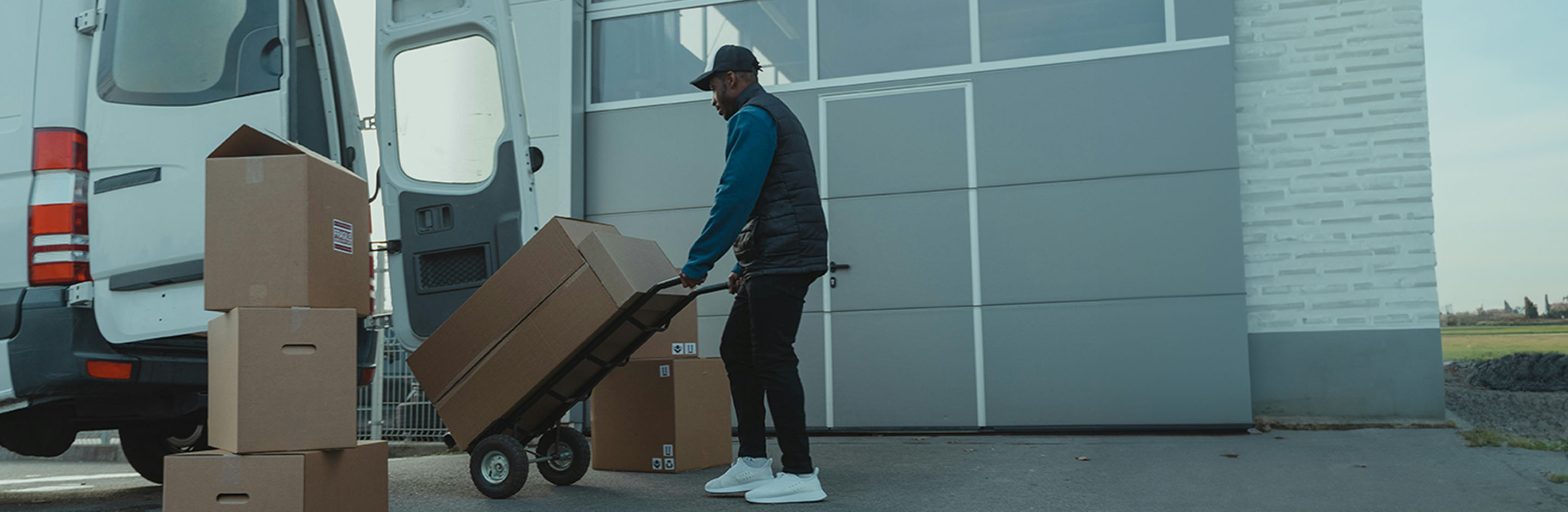
- First-mile delivery is defined as the initial movement of goods from a supplier, merchant, factory, store, or customer into the logistics network. It usually ends when the shipment reaches a carrier hub, warehouse, or distribution facility for processing.
- The customer only sees the final delay, but the problem often starts upstream. A late pickup, a wrong address, or a missed hub cutoff can break the delivery window before last-mile planning even begins.
- First-mile and last-mile delivery mirror each other. The first mile moves many origins toward fewer facilities and is judged on on-time pickup, dwell, and cost per pickup, not stop density or first-attempt rate.
- Optimizing first-mile delivery means fixing pickup data quality, forecasting load from history, consolidating collections, allocating the right vehicles, digitizing proof of pickup, and adjusting routes after dispatch.
- FarEye connects pickup planning, fleet allocation, routing, driver execution, and real-time visibility in one platform. Customers report strong results, including a 30% rise in vehicle capacity utilization and route-planning time cut from 120 to under 30 minutes.
A shipment may miss its final delivery window because it entered the logistics network late. Incorrect shipment information or a missed hub cutoff can create the same result. The customer sees the final delay, but the operational problem may have started during first-mile delivery.
The global logistics market is projected to grow from $12.68 trillion in 2026 to approximately $24.36 trillion by 2035, at an 8.05% CAGR. As shipment volumes and network complexity increase, reliable first-mile planning becomes essential for protecting capacity, facility cutoffs, and downstream delivery commitments.
This initial stage determines when goods enter the network, which vehicle collects them, and whether sufficient capacity is available. It also affects whether receiving facilities obtain accurate shipment records before sorting and onward transportation begin.
Effective first-mile logistics connects shipment readiness, pickup scheduling, load forecasting, vehicle allocation, driver assignment, route execution, and warehouse handoff. Businesses must also coordinate fragmented origins, changing pickup requests, strict facility cutoffs, and mixed fleets.
Let us examine how first-mile delivery works, where operational losses develop, and how enterprises can create a more predictable pickup network.
What is First-mile Delivery?
First-mile delivery is defined as the initial movement of goods from a supplier, merchant, manufacturer, warehouse, store, or customer location into the logistics network. It usually ends when the shipment reaches a carrier hub, fulfillment center, warehouse, or distribution facility for further processing.
The precise origin and destination depend on the operating model. For manufacturers, first-mile transportation may connect a production facility with a distribution center. For e-commerce companies, it may involve merchant pickup followed by transfer to a courier or fulfillment hub.
| Business Model | Typical First-mile Movement |
|---|---|
| Manufacturer | Factory or production plant to a warehouse or distribution center |
| Retailer | Supplier or distribution facility to a store, warehouse, or fulfillment center |
| E-commerce Marketplace | Merchant location to a carrier or fulfillment hub |
| Courier or 3PL Provider | Seller or customer pickup point to the first sorting facility |
| Grocery Distributor | Supplier, farm, or production facility to a warehouse or store network |
| Big-and-Bulky Operator | Manufacturer, store, or customer location to a staging or distribution facility |
| Reverse Logistics Provider | Customer or store location to a returns hub, repair center, or storage facility |
First-mile logistics also includes the operational work surrounding the physical collection.
| Activity | Operational Purpose |
|---|---|
| Pickup-request Creation | Captures collection location, load, priority, and service requirements |
| Shipment-readiness Confirmation | Confirms that goods, packaging, labels, and documents are ready |
| Pickup Scheduling | Coordinates origin availability with driver and facility schedules |
| Vehicle and Driver Allocation | Assigns suitable resources based on capacity, skills, and equipment |
| Pickup Route Planning | Groups locations and determines an executable stop sequence |
| Shipment Scanning | Records goods as they enter the network |
| Proof of Pickup | Confirms collection time, quantity, and condition |
| Real-time Tracking | Monitors route progress, dwell, delays, and missed pickups |
| Warehouse Handoff | Transfers the shipment and its records to the next stage |
First-mile delivery begins before a vehicle moves. Accurate data, shipment readiness, and pickup scheduling determine whether the physical collection can occur as planned.
How Does the First-mile Delivery Process Work?
First-mile delivery operates as a connected cycle. It begins with a valid collection request and ends when completed pickup data improves the next planning cycle.
| Stage | Main Activities | Operational Output |
|---|---|---|
| Create the Pickup Request | Capture origin, shipment dimensions, priority, service level, and readiness time | Valid pickup order |
| Validate Shipment Readiness | Confirm packaging, labeling, documentation, quantity, and availability | Collection-ready shipment |
| Forecast Pickup Volume | Estimate demand by merchant, zone, product, day, and time | Required fleet capacity |
| Allocate Vehicles and Drivers | Match loads with capacity, equipment, skills, shifts, and operating cost | Suitable resources |
| Build Pickup Routes | Group origins, sequence stops, and protect delivery windows and hub cutoffs | Executable pickup route |
| Execute Collections | Scan shipments, verify quantity and condition, and capture proof | Confirmed pickup |
| Track and Manage Exceptions | Monitor delays, dwell, failed pickups, new orders, and route deviations | Updated operational status |
| Complete the Facility Handoff | Validate arrival, documentation, condition, and shipment receipt | Completed first-mile movement |
| Review Performance | Compare forecast, route, capacity, and service assumptions with actual results | Improved future planning |
Which Industries Depend on First-mile Delivery?
First-mile delivery supports industries that must collect goods, materials, or returns before further storage, processing, or distribution.
| Industry | Typical First-mile Requirement |
|---|---|
| Courier and Parcel | Collect merchant shipments before sorting |
| Third-party Logistics (3PL) | Coordinate clients, pickup points, fleets, and service levels |
| E-commerce | Move seller orders into fulfillment and carrier networks |
| Retail | Transfer goods from suppliers into stores and distribution facilities |
| Manufacturing | Move raw materials or finished goods between plants and warehouses |
| Grocery | Manage time-sensitive supplier, warehouse, and store movements |
| Pharmaceuticals and Healthcare | Protect timing, traceability, temperature, and product integrity |
| Big and Bulky | Match products with suitable vehicles, loading equipment, and handling teams |
| Auto-Parts Distribution | Coordinate frequent and time-sensitive replenishment |
| Reverse Logistics | Collect returns from customers, stores, and service centers |
What are the Differences Between First-mile and Last-mile Delivery?
First-mile delivery moves goods from an origin into the logistics network. Last-mile delivery moves them from the final distribution point to the end recipient.
The operating models differ in load structure, route pattern, customer interaction, and service risk.
| Comparison Area | First-mile Delivery | Last-mile Delivery |
|---|---|---|
| Primary Purpose | Move goods into the logistics network | Complete delivery to the recipient |
| Typical Origin | Supplier, merchant, factory, store, or customer | Hub, warehouse, store, or fulfillment center |
| Typical Destination | Carrier hub, warehouse, or distribution center | Home, business, store, locker, or pickup point |
| Load Profile | Consolidated collections or larger shipment volumes | Smaller orders distributed across many destinations |
| Route Pattern | Multiple origins moving toward fewer facilities | Fewer facilities serving many customer locations |
| Planning Focus | Shipment readiness, consolidation, capacity, and cutoffs | Stop density, delivery windows, access, and failed attempts |
| Customer Visibility | Usually indirect | Direct and highly visible |
| Common Cost Drivers | Origin fragmentation, low fill, dwell, and missed handoffs | Labor, mileage, reattempts, and service-window pressure |
| Core KPIs | On-time pickup, dwell, utilization, and cost per pickup | OTIF, first-attempt delivery, ETA accuracy, and cost per delivery |
Weak pickup planning can increase downstream cost even when the final delivery route is well designed. Poor consolidation, incomplete scans, and late hub arrivals can undermine capacity and ETA assumptions used later.
First-mile and last-mile teams should work from connected shipment, capacity, milestone, and exception data.
What are the Main First-mile Delivery Challenges?
First-mile networks become difficult when operations coordinate many merchants, suppliers, pickup windows, vehicle types, and receiving facilities.
| First-mile Challenge | Operational Consequence | Likely Root Cause | KPI to Monitor |
|---|---|---|---|
| Fragmented Pickup Points | Higher mileage and route complexity | Limited shipment consolidation | Pickups per route |
| Uncertain Shipment Volume | Wrong vehicle or insufficient capacity | Weak historical demand data | Forecast accuracy |
| Inconsistent Readiness | Waiting and missed collections | Poor origin coordination | Pickup-readiness rate |
| Manual Route Planning | Slow dispatch and planner dependency | Spreadsheets and disconnected tools | Planning time |
| Limited Load Visibility | Underused or overloaded vehicles | Missing weight, volume, or quantity data | Vehicle capacity utilization |
| Missed Pickup Windows | Late entry into the network | Unrealistic schedules | On-time pickup rate |
| Long Origin Dwell | Lower driver productivity | Loading or documentation delays | Average dwell time |
| Limited Pickup Tracking | Late exception response | Manual calls and milestone gaps | Tracking coverage |
| Incorrect Location Data | Failed collection or route deviation | Incomplete addresses or coordinates | Address-correction rate |
| Resource Mismatch | Unsafe or unsuccessful pickup | Missing capacity, skill, or equipment rules | Reassignment rate |
| Poor Hub Coordination | Queues and missed cutoffs | Routes ignore facility capacity | On-time hub arrival |
| Paper-based Proof | Reconciliation errors and slower handoffs | Manual shipment records | Documentation-error rate |
| Unexpected Requests | Route rebuilding and overtime | Static planning | Successful insertion rate |
| Weak Exception Ownership | Delays spread across the network | Missing alerts and escalation rules | Resolution time |
A pickup route can fail even when travel estimates are accurate. Loading, documentation, readiness, and origin dwell may create more delay than driving between stops.
How can Businesses Optimize First-mile Delivery?
Successful first-mile delivery optimization starts before route creation. Businesses need accurate orders, predictable origin processes, suitable capacity, digital execution, and timely exception management.
1. Improve Pickup Data Quality
Every pickup order should include validated coordinates, shipment dimensions, product requirements, operating hours, and a realistic readiness time.
Standardized merchant pickup instructions reduce interpretation differences between planners, drivers, and warehouse teams. Integrations with OMS, WMS, TMS, merchant portals, and carrier systems also reduce duplicate entry.
Useful measures include data-completeness rate, address-correction rate, and capacity-related route changes.
2. Use Historical Data for Load Forecasting
Historical pickup data can reveal expected volume by origin, zone, weekday, time, product category, and seasonal period.
That information supports better fleet optimization before dispatch. Planners can estimate cube, weight, vehicle count, and outsourced capacity before orders are assigned.
Historical pickup information supported volume prediction and vehicle selection across the first-mile delivery operation. The implementation reduced vehicle requirements by 60%, planner and dispatcher requirements by 70%, driver requirements by 40%, and dispatch-stage time by 66%.
Forecast accuracy, uncollected volume, emergency capacity additions, and planned-versus-actual load should be tracked.
3. Consolidate Pickup Demand
Shipment consolidation groups compatible collections into practical vehicle loads. Businesses can consolidate by location, time window, product requirements, destination facility, or pickup zone.
Milk-run structures may also collect from several origins before completing one warehouse handoff. However, fewer routes should not become the only objective. Consolidation must protect readiness times, product compatibility, driver hours, and hub cutoffs. Track pickups per route, load factor, empty miles, and cost per pickup.
4. Improve Vehicle and Driver Allocation
Vehicle allocation should consider weight, volume, equipment, access restrictions, temperature needs, range, and operating cost. Driver assignment should account for working hours, licensing, skill-based mapping, territory knowledge, and facility requirements. Owned and outsourced capacity should be compared within the same allocation process.
The implementation increased vehicle capacity utilization by 30% and improved on-time deliveries by 15%. Additionally, automated workflows accelerated freight invoice settlements by 5x, while real-time temperature monitoring helped reduce product-damage risk.
Vehicle utilization, reassignment rate, load factor, and outsourced fleet cost show whether resource allocation is improving.
5. Optimize Pickup Routes
Pickup route planning should combine order allocation, stop sequencing, vehicle capacity, driver schedules, pickup windows, traffic, service duration, and facility cutoffs.
Dynamic pickup routing can also evaluate urgent collections against active routes. Feasible orders may be inserted without rebuilding unaffected work. This approach helps dispatch automation respond to changing merchant demand while protecting existing commitments.
FarEye's auto-routing solution helped Indonesia's largest grocer execute over 100,000 routes and save 10,000 planning hours. Route-planning time fell from 120 minutes to under 30 minutes. The implementation also achieved 100% shipment visibility, a 99% TMS application usage success rate, a 12% increase in truck fill rate, and a 5% improvement in on-time delivery.
Recommended measures include route-generation time, pickups per route, route adherence, on-time pickup, and vehicle fill rate.
6. Digitize Pickup Execution
Driver workflows should provide the assigned route, stop instructions, shipment details, and pickup contact information. Barcode or QR scanning can confirm individual shipments. Electronic proof of pickup may include timestamps, quantities, signatures, images, condition records, and location details.
Digitizing these activities reduces paperwork and improves the accuracy of the warehouse handoff. Track proof-completion rate, scan accuracy, documentation errors, and manual calls per route.
7. Create Real-time Pickup Visibility
First-mile tracking traces goods throughout the initial transportation stage. It can connect multiple loading points, drivers, order identifiers, and facility movements within one operational view.
Pickup visibility should identify:
- Late driver arrival
- Extended origin dwell
- Missed collections
- Load discrepancies
- Route deviations
- Revised hub arrival times
- Missing proof
- Facility congestion
Alerts should also identify who owns each exception and when escalation becomes necessary.
FarEye's delivery automation solution reduced warehouse loading time by two to four hours and achieved 100% automation of delivery processes. Additionally, OTIF deliveries increased by 6%, while productivity across sales and supply chain teams improved by 12–15%.
Relevant KPIs include tracking coverage, exception-resolution time, origin dwell, status-call volume, and on-time facility arrival.
8. Learn From Completed Pickup Routes
Completed routes should update future planning assumptions.
| Planned Measure | Actual Measure |
|---|---|
| Forecast Pickup Volume | Collected volume |
| Scheduled Driver Arrival | Actual arrival |
| Estimated Service Time | Actual origin dwell |
| Planned Vehicle Utilization | Actual load utilization |
| Planned Route | Recorded driver movement |
| Scheduled Hub Handoff | Actual handoff time |
| Forecast Operating Cost | Actual cost |
Route analytics should identify merchants with recurring readiness issues, locations with long loading times, inaccurate volume assumptions, and common route deviations.
First-mile improvement becomes continuous when completed pickups change the assumptions used for the next planning cycle.
Which Technologies Support First-mile Logistics Optimization?
Technology creates value when it connects planning decisions with field execution and operational feedback.
| Technology | First-mile Function | Operational Value |
|---|---|---|
| Route Optimization Software | Allocates collections and sequences stops | Improves route feasibility and resource use |
| Demand Forecasting | Predicts pickup volume by origin and period | Supports capacity planning |
| Dispatch Automation | Assigns routes and tasks to drivers | Reduces manual coordination |
| Appointment Scheduling | Coordinates origin and facility windows | Reduces waiting and missed collections |
| Driver Mobile Application | Provides tasks, scans, proof, and instructions | Standardizes pickup execution |
| Real-time Tracking | Monitors vehicles and pickup milestones | Identifies delays earlier |
| Geofencing | Records arrival and departure events | Measures origin dwell accurately |
| Electronic Proof of Pickup | Captures quantity, condition, signatures, and images | Improves auditability |
| Control Tower | Consolidates routes, milestones, and exceptions | Supports network-level intervention |
| Carrier Management | Compares rates, capacity, and performance | Improves outsourced allocation |
| Route Analytics | Measures planned-versus-actual results | Supports continuous improvement |
| Enterprise Integrations | Connects OMS, WMS, TMS, ERP, and carrier data | Creates a consistent operating record |
Connected automation can synchronize assignments, approvals, tracking events, and exception workflows across the first, middle, and last-mile.
Software cannot compensate for inaccurate data, unclear operating rules, limited adoption, or disconnected execution workflows.
How do First-mile and Last-mile Operations Affect Each Other?
First-mile and last-mile operations have separate responsibilities, but both depend on shared shipment data, milestone accuracy, and exception visibility.
| First-mile Event | Effect on the Wider Delivery Journey |
|---|---|
| Pickup Occurs Late | Sorting and outbound dispatch begin late |
| Actual Volume Differs From Forecast | Fleet and capacity plans become inaccurate |
| Product Information is Incomplete | Handling or final delivery requirements may be missed |
| Shipment Reaches the Wrong Hub | An additional transfer or rerouting becomes necessary |
| Origin Scan is Missing | Supply chain visibility begins with an information gap |
| Packaging is Unsuitable | Damage risk increases during later handling |
| Handoff is Incomplete | Downstream teams must reconcile records |
| Pickup Exception is Not Shared | Customer ETAs remain based on outdated assumptions |
Middle-mile logistics connects central facilities with regional hubs, stores, or fulfillment nodes. The last mile then moves goods to the recipient. Each stage depends on the quality and timing of the previous handoff.
Improving one stage in isolation can move cost elsewhere. Businesses should measure the full journey rather than optimize pickup and final delivery separately.
Which KPIs Measure First-mile Delivery Performance?
Mileage alone cannot explain first-mile performance. Businesses should evaluate pickup reliability, capacity, productivity, cost, data quality, and handoff readiness together.
| Performance Area | KPI | What it Measures |
|---|---|---|
| Pickup Reliability | On-time pickup rate | Collections completed within the agreed window |
| Pickup Success | First-attempt pickup rate | Pickups completed without another visit |
| Planning | Route-planning time | Time required to create dispatch-ready routes |
| Capacity | Vehicle capacity utilization | Share of available load space used |
| Route Productivity | Pickups per route | Origin stops completed on each route |
| Driver Productivity | Pickups per driver hour | Collections completed against working time |
| Cost | Cost per pickup | Total first-mile operating cost per completed collection |
| Distance | Empty miles | Distance traveled without productive load |
| Origin Efficiency | Average dwell time | Time spent waiting, loading, and documenting |
| Forecasting | Volume forecast accuracy | Difference between expected and collected volume |
| Execution | Route adherence | Alignment between planned and actual movement |
| Visibility | Tracking coverage | Pickups with complete digital milestones |
| Exceptions | Pickup exception rate | Collections affected by delays, errors, or failure |
| Recovery | Exception-resolution time | Time required to resolve a pickup problem |
| Handoff | On-time hub arrival | Routes reaching facilities before cutoff |
| Data Quality | Scan and documentation accuracy | Correctness of shipment records |
On-time Pickup Rate = Pickups completed within the agreed window ÷ Total completed pickups × 100.
Vehicle Capacity Utilization = Used load capacity ÷ Available load capacity × 100.
First-attempt Pickup Rate = Pickups completed on the first visit ÷ Total pickup attempts × 100.
A lower cost per pickup is not an improvement when missed cutoffs, incomplete collections, dwell, or downstream delays increase.
When Does Enterprise First-mile Delivery Software Make Sense?
Enterprise delivery management software becomes valuable when planners cannot reliably manage complexity through spreadsheets or basic routing tools.
| Enterprise Software is Valuable When | A Simpler Process May Be Sufficient When |
|---|---|
| Thousands of pickups must be planned | Pickup volume is small and predictable |
| Collection points change frequently | Locations and schedules remain fixed |
| Multiple hubs or depots are involved | One origin serves one facility |
| Owned and outsourced fleets work together | One driver and vehicle complete the work |
| Volume varies significantly by origin | Loads remain consistent |
| Pickup windows and hub cutoffs are strict | Collection times remain flexible |
| Dispatchers rebuild routes frequently | Routes rarely change |
| Real-time visibility is required | Manual updates are adequate |
| Merchant readiness varies | All shipments follow a controlled internal process |
| Exceptions affect later commitments | Delays have limited downstream impact |
Fleet size alone should not determine the need for enterprise first-mile delivery route planning software. Pickup variability, density, constraint complexity, and exception frequency are stronger indicators.
How Should Businesses Evaluate First-mile Delivery Software?
Evaluation should test the actual pickup operation rather than a small demonstration with clean data.
| Evaluation Area | Question to Ask | Evidence Required |
|---|---|---|
| Operational fit | Can it model pickup windows, readiness, capacity, and hub cutoffs? | Requirements demonstration |
| Forecasting | Can it predict pickup volume by origin and period? | Historical comparison |
| Route Planning | Can it manage realistic volumes and operating constraints? | Peak-day replay |
| Dynamic Response | Can it handle urgent pickups, cancellations, and vehicle failures? | Exception simulation |
| Resource Allocation | Can it coordinate owned, outsourced, and hybrid fleets? | Allocation demonstration |
| Driver Execution | Can routes, instructions, scans, and updates reach drivers? | Mobile workflow test |
| Visibility | Can teams identify late or incomplete pickups? | Live dashboard demonstration |
| Integration | Can information move into and out of the platform? | API and architecture review |
| Governance | Can users explain, approve, and audit decisions? | Decision logs and approval workflows |
| Business Outcomes | Does it improve the current operating baseline? | Controlled pilot results |
Test the software against shipment-not-ready events, unexpected volume, urgent pickup requests, driver absences, vehicle breakdowns, merchant cancellations, and facility delays.
The system should also explain why an order was assigned, why it remained unassigned, or why a particular route changed.
A visually efficient route is insufficient. The software must create plans that drivers, merchants, and receiving facilities can execute consistently.
How Does FarEye Support First-mile Delivery Optimization?
FarEye connects planning, routing, and real-time execution rather than treating pickup route planning as an isolated map-based activity. The AI-driven orchestration platform creates a shared operating layer across delivery workflows.
| FarEye Capability | First-mile Role | Operational Focus |
|---|---|---|
| Plan | Forecasts demand, capacity, territory, and resources | Pickup readiness |
| Route | Allocates vehicles and creates multi-stop pickup routes | Fleet efficiency |
| Execute | Delivers driver tasks, scanning, instructions, and proof workflows | Pickup completion |
| Track | Monitors vehicle movement, milestones, dwell, and delays | Real-time visibility |
| Dynamic routing | Inserts or reallocates changing pickup requests | Exception response |
| Analyze | Compares planned and actual performance | Continuous improvement |
| Enterprise integrations | Connects transportation, warehouse, order, and carrier systems | Data consistency |
FarEye Route generates schedules around driver availability, vehicle capacity, time windows, service requirements, committed ETAs, and different fleet models. It also supports dynamic optimization and connections with TMS, WMS, and carrier systems.
Pickup Forecasting and Capacity Planning
Historical volume can support origin-level forecasting, territory design, fleet sizing, and capacity planning. This allows operations to identify likely shortages or underutilization before dispatch.
Automated Pickup Routing and Dispatch
Multi-stop pickup routes can account for vehicle types, driver schedules, collection windows, traffic, service duration, and hub-arrival requirements. New pickup requests can also be evaluated against active routes. Feasible work may be assigned without rebuilding unaffected routes.
Connected Execution and Visibility
Driver workflows connect the plan with scanning, proof capture, route progress, and exception updates. Tracking then provides pickup visibility through revised ETAs, route deviations, dwell alerts, and warehouse handoff milestones.
Build a More Predictable First-mile Delivery Network
The first mile should be treated as an operational control point, not a routine transfer before the "important" stages begin. Reliable performance requires accurate pickup data, realistic readiness times, demand forecasting, suitable vehicles, executable routes, digital proof, and coordinated facility handoffs. It also requires completed-route data to improve the next planning cycle.
Connecting first-mile and last-mile information helps prevent upstream issues from becoming expensive, customer-facing failures. FarEye brings pickup planning, fleet allocation, route optimization, driver execution, and real-time visibility into a connected logistics environment.
Book a demo with FarEye to explore how your business can reduce manual coordination, improve vehicle utilization, and strengthen first-mile delivery performance.
Book a Demo →Frequently Asked Questions
What is first-mile delivery?
First-mile delivery is defined as the initial movement of goods from a supplier, manufacturer, merchant, warehouse, store, or customer location into a logistics network. It usually ends at the first carrier hub, warehouse, fulfillment center, or distribution facility, where goods are prepared for further transportation.
What is the difference between first-mile and last-mile delivery?
First-mile delivery moves goods from an origin into the distribution network. Last-mile delivery moves them from the final facility to the recipient. The first mile focuses on readiness, consolidation, and capacity, while the last mile prioritizes customer windows, stop productivity, visibility, and successful handoff.
What is the difference between first-mile, middle-mile, and last-mile transportation?
First-mile transportation moves goods from their origin to an initial warehouse or hub. Middle-mile transportation connects facilities, regional hubs, stores, or fulfillment nodes. Last-mile transportation completes the journey from the final distribution point to the customer, business, locker, or other designated recipient location.
What is first-mile logistics?
First-mile logistics covers the processes required to move goods into a distribution network. It includes shipment readiness, pickup scheduling, volume forecasting, vehicle allocation, route planning, scanning, proof of pickup, tracking, exception management, and handoff to the first warehouse, hub, or fulfillment facility.
Why is first-mile delivery important?
First-mile delivery determines when goods enter the network and whether downstream teams receive accurate shipment information. Late pickups, incomplete documents, poor consolidation, or missed facility cutoffs can delay sorting, middle-mile departures, inventory updates, customer ETAs, and final delivery performance.
What are the main challenges of first-mile delivery?
Common challenges include fragmented pickup locations, unpredictable shipment volume, inconsistent readiness, manual dispatch, poor load visibility, incorrect addresses, long origin dwell, missed pickup windows, limited tracking, vehicle mismatches, paper-based documentation, weak hub coordination, and slow exception resolution.
How can businesses optimize first-mile logistics?
Businesses can improve first-mile logistics through accurate pickup data, readiness confirmation, historical load forecasting, shipment consolidation, capacity-aware vehicle allocation, multi-stop route optimization, digital driver workflows, real-time tracking, electronic proof of pickup, facility coordination, and planned-versus-actual performance analysis.
What is first-mile tracking and why does it matter?
First-mile tracking traces goods throughout the initial transportation stage. It records pickup status, vehicle movement, arrival times, origin dwell, shipment scans, exceptions, and facility handoffs. This visibility helps teams detect delays earlier, provide accurate updates, reduce manual calls, and protect downstream schedules.
Which industries rely most on first-mile delivery?
Courier and parcel, 3PL, e-commerce, retail, manufacturing, grocery, pharmaceuticals, healthcare, auto-parts distribution, and big-and-bulky businesses rely heavily on first-mile delivery. Reverse logistics operations also use first-mile processes to collect products from customers, stores, or service centers for returns or repair.
How does first-mile delivery affect customer satisfaction?
First-mile delivery affects customer satisfaction by influencing product availability, dispatch timing, ETA accuracy, and final delivery reliability. A late or incomplete pickup can create delays that appear later in the journey. Accurate tracking and early exception handling help businesses communicate realistic expectations and protect customer commitments.
References: Narayan, Laxmi, "Logistics Market Size, Share, and Trends 2026 to 2035," Precedence Research, last modified July 7, 2026. FarEye, "Recognized on G2's 2026 Best Software List, FarEye Unveils Its AI-First Vision for Last-Mile Logistics," February 24, 2026. "FarEye Recognized in the 2025 Gartner® Market Guide for Last-Mile Delivery Technology Solutions (Representative Vendor)," December 17, 2025. G2, "FarEye Reviews & Product Details," accessed August 4, 2026. Figures are subject to change — verify current numbers before publishing updates.