
Table of Contents
- Factors Driving Growth in the Pharmaceutical Logistics Market
- The Critical Challenges of High-stakes Pharmaceutical Logistics
- How Technology Improves Pharmaceutical Delivery Routes for Sale
- How Does FarEye Optimize Pharmaceutical Delivery Routes for Superior SLA Compliance?
- Real-world Impact: How Global Leaders Win with FarEye
- Best Practices for Implementing Optimized Pharmaceutical Delivery Routes
- Safeguard Patients and Profitability by Optimizing Pharmaceutical Delivery Routes
Let Our Experts Optimize Your Deliveries Today
Let's talkThe global pharmaceutical logistics market is expanding rapidly and demands unprecedented operational precision. Valued at USD 560.81 billion in 2025, the sector is estimated to grow to USD 772.38 billion by 2031. As volumes grow, the promises of pharmaceutical delivery routes rely on tight execution, as delays pose direct risks to patient safety.
Pharmaceutical Service Level Agreements (SLAs) are strictly governed by biological viability windows, such as temperature. For logistics providers, building reliable networks is a critical asset. If managing an internal fleet or evaluating pharmaceutical delivery routes for sale, the value depends on the level of optimization.
Effective pharmaceutical delivery routes ensure life-saving medications reach destinations without thermal excursions. Let's learn the intricacies of managing these high-stakes logistics operations and how FarEye helps ensure compliance and reliability.
Factors Driving Growth in the Pharmaceutical Logistics Market
The world's supply chain is undergoing a paradigm shift, making it focus on speed and resilience now more than ever before. This, in turn, has affected the routes pharmaceuticals take in distribution as they strive to meet evolving patient needs.
- Expansion of Online Pharmacies
Online pharmacy expansion drives global growth. This shift demands optimized pharmaceutical delivery routes to handle increasing residential delivery volumes efficiently over the medium term. This consumer shift compels logistics providers to adopt hyperlocal delivery models that ensure speed and privacy for every patient. - Rising Over-the-Counter (OTC) Medicine Demand and Chronic-disease Burden
As populations age, the need for chronic treatments and OTC remedies is becoming a permanent pressure rather than a temporary spike. This shift demands logistics networks that can handle heavy, consistent replenishment without buckling. Success now hinges on predictive accuracy as supply chains must sharpen their forecasting to ensure vulnerable patients never face stockouts of daily essentials. - Acceleration of Biologics and Vaccine Cold-chain Needs
There is a sharp acceleration in the need for specialized cold-chain logistics, particularly for biologics and vaccine distribution. This short-term surge prioritizes pharmaceutical delivery routes equipped with advanced temperature monitoring. Failure to maintain strict thermal controls can result in significant financial losses, which makes advanced active cooling systems a standard. - Outsourcing Surge to 3PL and 4PL Specialists
Pharma companies are increasingly outsourcing to Third-party Logistics (3PL) and Fourth-party Logistics (4PL) specialists to manage complex supply chains. This trend drives the market for pharmaceutical delivery routes for sale as specialists acquire established networks to expand capacity. These specialists utilize economies of scale to offer better rates and technology, compelling smaller players to consolidate rapidly. - Mandatory End-to-End IoT and Track-and-Trace
Regulatory bodies are mandating strict end-to-end IoT and blockchain track-and-trace systems. Meeting these standards requires upgrading networks with smart sensors that create an undeniable record of product integrity.
Modern pharmaceutical delivery routes need to plug directly into these digital platforms, keeping the data flow between manufacturers and regulators transparent and uninterrupted. - Net-zero Logistics Investments Driving Infrastructure Renewal
Sustainability objectives are propelling investment into net-zero logistics, which heralds a transformation of existing transportation infrastructural resources. Businesses are now reassessing their routes for pharmaceutical deliveries to have lower carbon emissions, achieved via electric vehicles and smarter routes.
Optimizing these routes reduces fuel consumption significantly, helping companies meet strict carbon reduction targets while lowering long-term fleet operational costs.
The Critical Challenges of High-stakes Pharmaceutical Logistics
Scaling operations within the highly regulated medical distribution sector remains difficult due to strict compliance standards and biological sensitivity. Here are the specific hurdles that disrupt reliability and risk patient safety across the supply chain:
- Temperature-controlled Logistics (TCL)
This remains the most significant hurdle for any provider attempting to scale operations within the medical sector. Many pharmaceutical products, such as vaccines, require constant monitoring to maintain efficacy because a single breach leads to spoilage.
When evaluating pharmaceutical delivery routes for sale, investors must look for infrastructure that maintains continuous cold-chain integrity every mile of the route. Without robust thermal management, even the most geographically efficient delivery routes will fail to meet rigorous global health standards.
- Complexity of Constraints
Matching specific products to qualified vehicles is a task that exceeds manual planning capabilities, introducing significant risk. Logistics managers must account for vehicle certifications, driver training levels and specialized equipment availability before a single package is loaded. If your current delivery routes are planned using legacy methods, the risk of clerical errors remains dangerously high.
- The "Blackbox" Visibility Effect
The lack of real-time insight means it is impossible to prevent delay or damage proactively during the delivery cycle. The inability to get real-life data excludes the possibility of intervening by dispatchers when a vehicle goes off-track from the plan or faces unusual traffic congestion. It cuts at the very root of trust and the auditing of your pharmaceutical delivery routes.
How Technology Improves Pharmaceutical Delivery Routes for Sale
The days of rigid transportation network plans are behind us. Modern tech has transformed them into smart systems that respond to chaos in real time. Integrating these AI-driven tools is the surest way to toughen up pharmaceutical delivery routes and ensure they perform reliably when it matters most.
- Real‑time Visibility and Live Tracking
Think of real-time visibility as the backbone of modern logistics. It gives you the clear view needed to stick to SLAs and stop delays before they start. By tracking vehicles nonstop, dispatchers can spot bottlenecks on pharmaceutical delivery routes early, long before they threaten the delivery window.
This kind of oversight is non-negotiable for TCL, letting teams step in immediately if a vehicle drifts off its planned path. - PoD Accuracy
Electronic Proof of Delivery (ePoD) in route planning software creates immutable timestamps that eliminate the guesswork from SLA tracking and performance audits. Having accurate PoD data keeps the chain of custody intact across the entire lifecycle of your delivery routes.
This digital trail is vital when you need to settle disputes. Furthermore, it serves as proof that you are meeting strict U.S. Food and Drug Administration (FDA) or Good Distribution Practice (GDP) standards. - Carrier Integration and Performance Data
Integrated carrier networks provide essential consistency and reduce fragmentation. They allow shippers to manage multiple providers from a single dashboard. By gathering all that performance data, logistics managers can spot slow lanes and adjust delivery routes to save money.
This unified view drives smarter buying decisions, especially for companies looking to scoop up pharmaceutical delivery routes for sale to expand their reach. - Predictive ETA and Dynamic Rerouting
Predictive algorithms examine traffic patterns and warning signals to adjust routes in real time. This helps maintain strict SLA promises. Dynamic rerouting ensures that pharmaceutical delivery routes remain on the fastest and safest paths, even if a road closes unexpectedly. This responsiveness reduces empty backhaul and improves First-attempt Delivery Rates (FADR), two metrics that directly affect your profits.
To really get the most out of these upgrades, organizations need a platform that pulls these scattered data points into one place. This is where FarEye comes in with its capability of utilizing all these technologies together, allowing rigid routes of distribution to be optimized into compliance-ready routes.
How Does FarEye Optimize Pharmaceutical Delivery Routes for Superior SLA Compliance?
FarEye's specialized solutions for pharmaceutical companies help optimize delivery operations, provide real-time visibility and deliver medicines to customers on time. Through AI-powered routing, tracking and branded consumer experiences, FarEye turns complex last-mile logistics into a scalable competitive advantage.
Businesses can adapt this cloud-native architecture to meet specific operational needs, a strategy that steadily reduces logistics costs. By embedding regulatory constraints and real-time visibility directly into operations, the platform ensures every shipment effectively balances operational efficiency with uncompromising patient safety.
- AI‑powered Planning for Precise Route Sequences
FarEye's route optimization software uses AI and ML algorithms to create delivery routes that reduce delay risks and meet SLA commitments. This technology looks at past performance and current constraints to ensure delivery routes are executed accurately.
By using these AI-driven delivery routes, dispatchers can dodge congestion and prioritize urgent hospital orders without compromising overall fleet efficiency. - End‑to‑End Real‑time Visibility in Pharmaceutical Delivery Routes for Sale
By using a complete end-to-end control tower dashboard, stakeholders gain instant access to key metrics across their entire global or local network. Live tracking prevents delays by surfacing risks like route deviations early, resulting in a 6% increase in On-time In-full (OTIF) deliveries.
This enables timely interventions before an SLA is breached or products are compromised. Having this level of visibility into your pharmaceutical delivery routes enables agile decision-making that can prevent a shipment from thermal degradation. - Flexible Workflows for B2B and Patient-facing Services
FarEye's proprietary Business Process Management tool allows for automated, configurable workflows that adapt to the unique needs of every medical client. These workflows support the varied requirements of distribution centers and retail pharmacies, leading to a 22% YoY decrease in dispatch time.
This ensures standardized decisions as your delivery routes expand. This flexibility is essential for companies seeking pharmaceutical delivery routes for sale, as it enables easy integration into new territories. - Configurable ETA and Delivery Promises
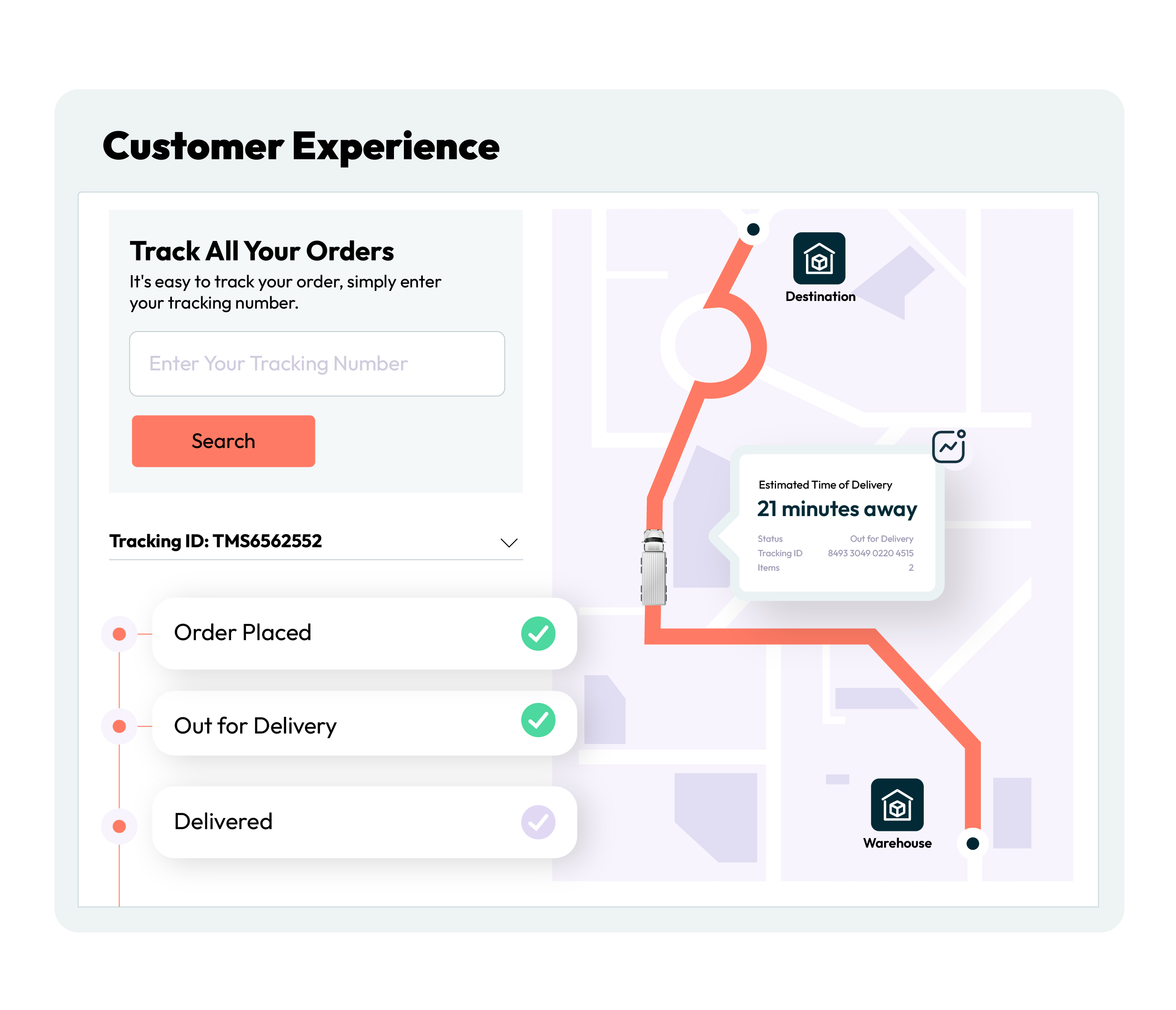
Through a consumer-grade tracking interface, customers receive real-time updates and notifications regarding the status of their critical medical orders. This branded experience significantly reduces support load by proactively addressing "Where is My Order?" (WISMO) inquiries and elevating overall satisfaction among healthcare providers.
Reliable ETAs are the cornerstone of high-quality pharmaceutical delivery. Thereby promoting essential trust between the pharmacy and the end user and supporting an 18% YoY increase in first time delivery. - Carrier Performance and Integration
A comprehensive suite for handling rate contracts and carrier performance helps minimize overpayments and exposure to costly clerical errors during reconciliation. Centralized management ensures consistency across multiple transporters.
Crucially, the platform integrates seamlessly with existing Enterprise Resource Planning (ERP), Warehouse Management Systems (WMS), Transportation Management Systems (TMS) and Order Management Systems (OMS). This connectivity ensures that route planning is based on a holistic view of inventory, order priority and transport availability.
It also reduces the variability in delivery quality often seen in unoptimized delivery routes. Companies investing in pharmaceutical delivery routes for sale must prioritize platforms that offer this level of carrier management to protect margins. - Compliance and Safety Rules Embedded in Routes
Temperature monitoring is integrated directly into route execution via sensors and GPS devices to record temperatures in real time. This ensures regulatory and handling constraints are embedded into every journey your drivers take on their delivery routes.
Skill-based mapping also ensures that only drivers with specific medical handling certifications are assigned to high-risk or high-value pharmaceutical shipments. - Analytics and Continuous Improvement
FarEye captures important transactional data that is essential for gaining insights and analytics throughout the medical supply chain. This lets logistics managers continuously measure performance through past analysis.
By spotting patterns of inefficiency, like too many empty backhauls, managers can improve their pharmaceutical delivery routes to increase profitability and service quality. - Prescription Deliveries and Online Pharmacies
The platform supports the boom in doorstep medicine with agile, cost-effective routing for high-density stops. By providing accurate ETA visibility and branded tracking, FarEye helps pharmacies reduce anxiety-driven support calls and differentiate their service, ensuring every patient stays informed throughout the pharmaceutical delivery routes. - B2B Pharma Distribution
FarEye ensures safe, on-time B2B distribution through continuous live tracking and digital PoD. The platform's seamless carrier integrations allow logistics managers to select cost-effective carriers while maintaining a secure chain of custody across high-volume pharmaceutical delivery routes. - Medical Equipment and Supplies Deliveries
For fragile and high-value equipment, FarEye centralizes management to ensure strict regulatory compliance and precise scheduling. The platform improves LTL and FTL routes for pharmaceutical delivery. This allows logistics teams to match drop-offs with hospital surgery schedules while reducing transport costs and environmental impact.
Real-world Impact: How Global Leaders Win with FarEye
FarEye's technology isn't just theoretical. It leads to real improvements in operations for major healthcare companies dealing with tough logistical challenges. Here are detailed case studies showing how FarEye has addressed key operational issues for top healthcare providers.
Case Study: Asia-Pacific’s Leading Healthcare Provider
A market leader in Asia-Pacific healthcare services faced inefficiencies in mid- and last-mile operations across 13 markets, struggling with manual processes, poor visibility and product spoilage.
FarEye streamlined operations by deploying AI-driven route optimization and automated workflows. The solution included real-time temperature monitoring and an end-to-end control tower to detect deviations, ensuring compliance and reducing product damage.
This implementation led to a 30% increase in vehicle capacity utilization and a 15% increase in on-time deliveries. The provider also experienced 5x faster freight invoice settlements through automated rate card management and saw a significant reduction in product damage risk and operational costs.
Best Practices for Implementing Optimized Pharmaceutical Delivery Routes
Deploying a new logistics platform in a regulated environment requires careful execution to avoid disruption. Follow these strategic steps to ensure a smooth transition that maximizes safety and operational efficiency.
- Audit Data Quality
Cleanse customer address and vehicle constraint data before migration to ensure routing accuracy from day one. - Deploy Specialized Route Planning Software
Ensure the route planning software is configured to handle complex pharma constraints, such as hard delivery windows, refrigerated vehicle certifications and load compatibility rules, to maintain compliance automatically. - Phased Rollout Strategy
Launch in a pilot region to refine configurations and temperature alert thresholds before scaling globally. - Driver Training and Buy-in
Conduct hands-on workshops to ensure drivers understand the mobile app and ePoD workflows for compliance. - Simulate Cold-chain Failures
Run mock disruption scenarios to test the responsiveness of the control tower and rerouting protocols. - Establish Baseline Metrics
Define clear KPIs for FADR, thermal compliance and cost per mile to accurately measure post-implementation ROI.
Safeguard Patients and Profitability by Optimizing Pharmaceutical Delivery Routes
In the pharmaceutical sector, speed results from precision and reliability is the only compliance standard. Optimized delivery routes transform logistics into a competitive advantage. For investors evaluating pharmaceutical delivery routes for sale, the underlying technology stack is the deciding factor.
FarEye ensures well-structured routes that reduce empty backhaul while maintaining high standards. Real-time visibility allows teams to manage exceptions effectively. As the market for pharmaceutical delivery routes for sale grows, winners will be those prioritizing technical excellence.
Safeguard patients and profitability by choosing a platform that understands medical complexities. Experience how the right technology turns volatility into an advantage. Contact FarEye today to refine your delivery routes for maximum safety and efficiency.
Sources:
https://www.mordorintelligence.com/industry-reports/global-pharmaceutical-logistics-market