Table of Contents
- Where Same-day Promises Actually Break During Your Day
- Spreadsheet Planning vs Courier Routing Software
- What Good Routing Looks Like When it Actually Defends Promises
- How FarEye Applies AI and Machine Learning to These Realities
- What to Demand From Courier Routing Software Before You Sign
- Bringing it Together: A Reliable Playbook You can Start Applying Tomorrow
- FAQs
Let Our Experts Optimize Your Deliveries Today
Let's talkSame-day delivery unravels the minute first cutoffs collide with school traffic, short shifts and crowded docks, straining afternoon waves everywhere. Phones keep ringing, drivers juggle access codes and the dispatch board flashes red while windows narrow faster than tours can adapt.
You promised speed because competitors advertise speed, yet speed collapses whenever density, proximity and cross-node visibility fail to align consistently. Congestion erases slack across American cities, with the typical driver losing 43 hours to traffic in 2024, roughly one workweek.
That friction turns workable tours into unreliable scrambles, as ETAs slide, calls spike and field supervisors lose mid-route recovery options. You need courier routing software that disciplines promises and fortifies execution, without more vans, overtime or reattempts; reliability follows daily.
Where Same-day Promises Actually Break During Your Day
Most breakdowns begin right after the first wave leaves the dock, because density thins and time windows tighten across scattered neighborhoods. Drivers burn minutes at gates, elevators and call boxes, while mid-day add-ons stretch tours that were only marginally feasible at dispatch.
Cutoffs collide with traffic patterns and long stem miles erase the buffer you expected during the second wave. Address quality adds friction because missing unit numbers or unclear access notes push first attempts into next slots that barely exist.
Your team feels this pressure in the control tower when the available capacity number looks fine, yet route geometry tells a different story. Hard commitments stack inside micro-windows while nearby stops remain unused, creating unbalanced zones that drain productivity.
By mid-afternoon, a few late pickups ripple across multiple tours and you lose any chance to recover without disappointing customers or paying overtime.
Spreadsheet Planning vs Courier Routing Software
| Capability | Spreadsheet | Courier Routing Software |
| Mid-route changes | Manual calls | Auto re-sequence with live traffic |
| Address quality | Ad-hoc | Validation + access notes |
| Multi-depot | Hard | Native |
| ETA accuracy | Static | Predictive & live updates |
What Good Routing Looks Like When it Actually Defends Promises
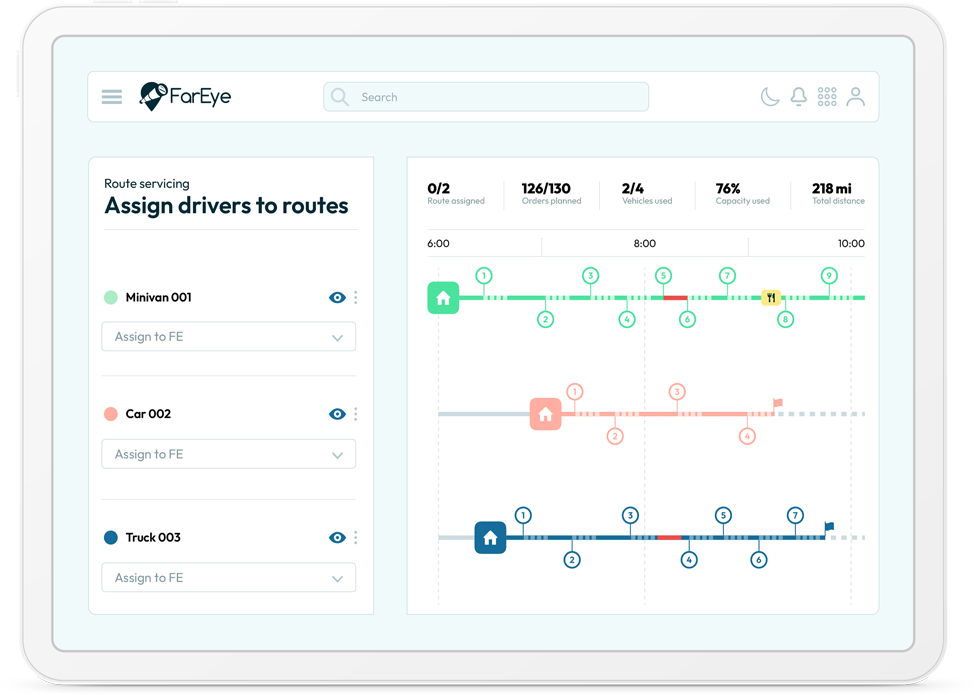
Strong courier routing software clusters stop to build density, balance territories and release waves that match the street’s natural rhythm. It validates addresses, enriches delivery notes and pairs clear curbside steps with driver guidance so apartment complexes stop swallowing minutes.
Traffic feeds update travel times continuously, so the system resequences remaining stops and swaps work between nearby tours when delays appear. You preserve time windows because the plan adapts in the field, not only at eight in the morning when everything still looked calm.
The right approach treats routing as a living process that shepherds promises through every handoff. That means feasibility checks at checkout, realistic windows and mid-route re-optimization that respects skills, vehicle constraints and building access rules.
When those elements work together, you protect SLAs without chasing speed at any cost and you convert volatility into predictable outcomes that your customers actually feel.
How FarEye Applies AI and Machine Learning to These Realities
FarEye surfaces feasible promises by checking capacity, constraints and historical speeds before checkout displays a same-day slot. Its engine powers courier route optimization software that enhances stop density orchestrates multi-depot choices and reduces unproductive miles across complex city grids.
Driver apps and routing systems for courier services present clear steps at the curb, with exceptions captured and standardized for faster resolution. Machine learning improves predictions, so route planning software tightens ETA accuracy and reduces the calls that bury your afternoon control tower.
FarEye’s orchestration sits above the day-to-day scramble and turns data into practical, operator-friendly actions that defend promises. You keep windows credible because the plan continuously reconciles live traffic, driver progress and pickup timing against what was promised earlier.
The value appears as steadier stop cadence, fewer missed appointments and calmer team communication during the busiest hours. You still lead the operation, yet the system removes friction where spreadsheets and static rules once held you back.
What to Demand From Courier Routing Software Before You Sign
Insist on mid-route re-optimization with live traffic, because day plans age quickly and drivers need help when reality shifts suddenly. Look for strong address validation, standardized exception codes and self-service rebooking links that keep first-attempt success high during peak hours.
Require multi-depot orchestration, territory shaping and skills constraints so mixed fleets stay productive without constant spreadsheet juggling each afternoon. Ask for clear plan-versus-actual analytics, including stops per hour, on-time percentage and route adherence you can trend weekly and improve decisively.
You also want routing systems for courier services that support lockers, pickup points and out-of-home delivery within the same promise logic. That flexibility shrinks doorstep risk and preserves windows in buildings with strict access rules or persistent theft exposure.
Finally, evaluate driver experience carefully, because adoption hinges on clarity, quick statusing and confident turn-by-turn guidance in crowded neighborhoods. Teams will embrace tools that make routes calmer, safer and measurably more predictable during the hours that matter most.
Bringing it Together: A Reliable Playbook You can Start Applying Tomorrow
Start with honest promise logic, then let courier routing software build density, reserve capacity and adapt tours as conditions change. Instrument handoffs between cross-docks and vans and enforce prep-time service levels so late trailers stop poisoning your first departure wave.
Track first-attempt success, stops per hour and route adherence weekly, then tune bands, territories and micro-hubs with that lived evidence. Teams grow calmer when the plan remains credible, customers gain trust as ETAs stabilize and overtime recedes without expanding your fleet.
When you are ready to operationalize these moves, evaluate FarEye as your platform backbone for courier routing software that scales. Our AI-led engine keeps promises realistic at checkout and resilient on the road.
FAQs
What is courier routing software?
Courier routing software is a system that uses algorithms and constraints (e.g., driver shifts, vehicle capacity, delivery windows) to plan and optimize delivery routes automatically, minimizing manual effort and improving reliability.
How is it different from route planning apps?
Route planning apps often help map out stops or generate static route plans, while courier route optimization software handles dynamic constraints, real-time changes and holistic operational factors for enterprise scale.
Do I need mid-route re-optimization for same-day?
Yes, mid-route re-optimization lets you adjust tours when traffic shifts, add-on orders arise or delays occur so you can maintain ETA accuracy and keep same-day promises feasible.
What KPIs prove it’s working?
Stops per hour, on-time percentage, first-attempt success and route adherence are strong indicators that your routing system is delivering value.
Source: