Table of Contents
- The Driver Safety Challenge in Delivery Fleets
- How a Delivery Route Optimizer Builds Safety into the Route
- Key Features to Evaluate in a Delivery Route Optimizer for Safety Focus
- How FarEye Helps Optimize Delivery Routes and Maintain HoS Compliance
- How to Measure Safety Impact from Optimized Routing?
- Implementation Best Practices for Safe Routing
- Build a Safer Fleet with FarEye Today
Let Our Experts Optimize Your Deliveries Today
Let's talkConsider a fatigued driver late on a Friday, operating past their scheduled shift to cover last-minute stops added through manual planning. Rushing to recover time in dense traffic, they execute a sharp turn at speed, narrowly missing a pedestrian. This incident constitutes a systemic failure rather than a mere close call.
The global logistics market is projected to increase from USD 12.68 trillion in 2026 to approximately USD 23.14 trillion by 2034. Amidst this immense growth, operational efficiency frequently overshadows safety considerations in logistics. Yet, the safest operations are often the most efficient because predictable plans reduce rushed decisions and risky on road improvisation.
A delivery route optimizer plays a critical role in protecting drivers by converting chaotic, hazardous schedules into structured and manageable workflows. Let's learn the essential strategies to optimize delivery routes for driver safety and how FarEye helps enable secure, efficient fleet operations.
The Driver Safety Challenge in Delivery Fleets
Safety incidents do not happen in a vacuum. They stem from cumulative pressure and poor planning. When you peel back the layers of a roadside accident, you often find a dispatcher who was forced to make impossible choices with limited data.
Risk Factors From Poor Route Planning
Dispatchers relying on manual planning or outdated tools often fail to account for the human element. Route planning software that lacks sophistication creates routes based solely on distance. It ignores the mental toll on the driver.
- Fatigue: Routes that do not account for Electronic Logging Device (ELD) mandates or realistic transit times force drivers to skip rest. The result is slower reaction times and potential Hours-of-Service (HoS) violations.
- Stressful Deadlines: When a schedule is mathematically impossible, drivers feel compelled to speed or drive aggressively to catch up.
- Unpredictable Stops: Last minute additions without re-optimization send drivers into unfamiliar areas during peak congestion. This spikes accident probability and disrupts sequenced workflows.
- Driver Retention: Consistently unrealistic routes and constant mid shift chaos drive burnout, higher absenteeism and turnover. Smarter optimization and driver apps support predictable plans, fair workloads and clearer expectations, which improve morale and help fleets retain experienced drivers.
The Impact of Driver Safety Issues on Operations
Ignoring safety standards and Department of Transportation (DoT) compliance puts lives at risk. It also disrupts operations through preventable incidents, downtime, claims, fines and reputational damage.
- Direct Costs: Accidents trigger vehicle repairs, liability claims and damaged unit economics. Insurance premiums rise and rarely come back down.
- Downtime: An injured driver or a vehicle in the shop means lost fleet capacity. You miss Service Level Agreements (SLAs) and delay deliveries.
- Turnover: Drivers who feel unsafe leave. High turnover disrupts operations and forces you to recruit less experienced replacements. This restarts the risk cycle and increases recruitment overhead.
How a Delivery Route Optimizer Builds Safety into the Route
A modern delivery route optimizer acts as a strategic shield. It filters out unsafe variables before the driver even turns the key and moves safety from a policy on the wall to the day-to-day structure.
- Realistic Workload and Route Design to Optimize Delivery Routes
Safety starts with a realistic plan. A delivery route optimizer ingests 100+ constraints. It looks at vehicle capacity and specific delivery windows to ensure the workload is humanly possible.
By accurately calculating service times and transit times, the software ensures that a 10-hour shift is actually 10 hours. It prevents the rush culture that leads to speeding errors. - Smart Route Sequencing and Risk Avoidance
Not all miles are created equal. You can optimize delivery routes to prioritize right turns to minimize cross-traffic turns. You can avoid areas experiencing delays, theft or legal issues, requiring enhanced security, specialized handling or closer monitoring after dark or bypass school zones during pickup times.
Advanced algorithms analyze historical data. The sequence stops in a way that minimizes dangerous maneuvers and exposure to high risk road conditions. - Dynamic Rerouting and Real Time Visibility
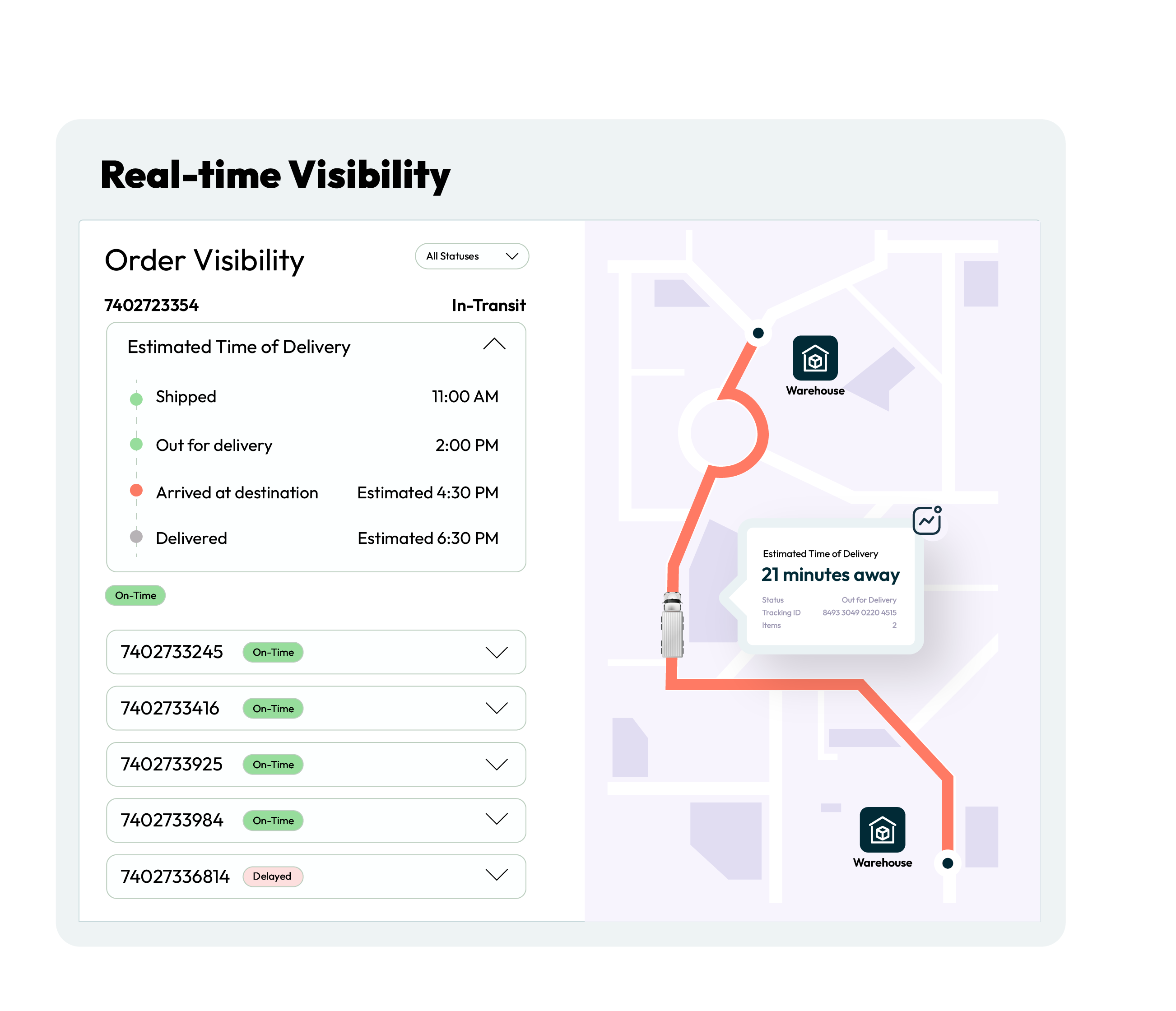
The road is unpredictable. Accidents or sudden weather changes can turn a safe route into a hazard. Route optimization software provides real time agility. If a major accident shuts down a highway, the delivery route optimizer instantly recalculates a safe alternative. It sends the update directly to the driver's app. This prevents drivers from making panicked decisions to find their own way around obstacles. - Integration With Driver Behavior and Feedback Loops
Safety is a continuous loop. Routing data combined with telematics offers a powerful view of on-road performance. If a driver consistently brakes hard on a specific route segment, managers can investigate. Perhaps the time window was too tight. Maybe the road itself is hazardous. This data-driven approach allows for targeted coaching rather than generic warnings.
Key Features to Evaluate in a Delivery Route Optimizer for Safety Focus
When selecting a delivery route optimizer, look beyond speed. You need a platform that understands the reality of the road. Ensure it includes these safety-critical features:
- Multi Stop Route Planning With Driver Hour Constraints
The system must treat HoS and break times as hard constraints. These cannot be overridden by efficiency goals. - Live Traffic and Road Condition Awareness
The ability to optimize delivery routes based on real time traffic data is essential. You must avoid gridlock and the associated risks of rear end collisions. - Driver-app With Clear Instructions
A distracted driver is a dangerous driver. The mobile interface should provide turn-by-turn navigation and clear stop details. It should not require complex interaction while driving. - Analytics Dashboard
Look for tools that visualize route deviations, dwell time and stop delays. Chronic delays often indicate a safety risk where route plans do not match reality. - Integration With Telematics
The delivery route optimizer should digest data regarding speeding or harsh braking. This data must refine future route plans. - Vehicle Match Logic
Ensure the system assigns routes based on vehicle parameters such as height, weight and load type. This prevents accidents caused by trucks entering restricted areas like low bridges. - Safety Oriented Alerting
Dispatchers should receive alerts if a driver enters a geofenced high-risk zone. If a route takes significantly longer than planned, it indicates potential trouble.
How FarEye Helps Optimize Delivery Routes and Maintain HoS Compliance
One of the most critical aspects of driver safety is strictly adhering to HoS regulations. Driver exhaustion is a primary contributor to collisions involving commercial fleets. Regulatory bodies like the DoT enforce strict limits on driving time to combat this.
FarEye’s delivery route optimizer software is engineered with compliance at its core. It does not just suggest the fastest route; rather, it suggests the legal one. By embedding regulatory constraints directly into the planning phase, the system ensures that operational speed never compromises safety protocols or jeopardizes your operating authority.
- Automated Breaks
The system automatically factors in mandatory rest breaks when planning multi-day or long-haul routes. This ensures drivers are never scheduled to drive beyond legal limits. As a result, drivers get more predictable schedules and less fatigue, which supports stronger morale and better driver retention over time. - Compliance Adherence
FarEye ensures that driver hours are compliant with DoT standards without affecting committed SLAs. - AI-based Routing and Constraint Optimization
FarEye's AI models complex variables, including strict driver shift limits, mandatory break windows and traffic patterns to generate feasible multi-stop plans. This ensures that every route is mathematically validated to fit within legal driving hours, reducing the risk of accidental violations. - Unified Visibility Across Fleets
The platform aggregates telematics, GPS and partner carrier APIs into a single control tower to show real time driver availability. Dispatchers can instantly identify which drivers have sufficient remaining legal hours to take on new assignments, preventing dispatch to fatigued or time-capped workforce members. - Predictive Intelligence With Machine Learning
It learns from historical service times across stops and routes. Then, by layering in zone patterns and recurring delay patterns such as gate access, parking scarcity and peak-hour congestion, the system continuously refines stop and travel duration estimates.
As a result, plans reflect real execution instead of best-case assumptions, which reduces “optimism bias” and prevents drivers from drifting into unplanned overtime just to finish their manifest. - Workflow Automation & Exception Handling
When on-road delays threaten to push a driver over their shift limit, the system triggers predefined workflows. It can automatically flag the risk or reassign pending stops to another driver, eliminating the need for manual patching and protecting the original driver's compliance status. - Complete Integration Stack
An API-first design simplifies integration with Transportation Management Systems (TMS), Warehouse Management Systems (WMS) and Order Management Systems (OMS).
As a result, it also connects smoothly with existing ELDs and telematics platforms. The routing engine can then pull live “clock” data, so plans reflect the driving hours actually available, not a theoretical schedule. - Financial and Carrier Optimization
The system tracks critical metrics specifically related to workforce utilization, such as overtime costs and regulatory fine exposure. This visibility highlights the financial impact of poor hour management and helps optimize for a fully compliant, cost-effective fleet.
By integrating HOS constraints directly into the routing logic, FarEye protects your drivers from exhaustion. It also protects your company from hefty regulatory fines.
How to Measure Safety Impact from Optimized Routing?
You cannot manage what you do not measure. Implementing a delivery route optimizer should correlate with specific safety Key Performance Indicators (KPIs).
- Baseline Safety Metrics to Capture
Track minor and major events per 100,000 miles to normalize performance across lanes and seasons. Spikes usually point to routing logic gaps, site-access friction or unrealistic schedules.
Measure how often drivers exceed scheduled shift hours and why. Persistent overages signal optimistic plans, weak stop-time assumptions or late day reassignments. Lower overtime supports safer driving and steadier retention.
Monitor how often drivers depart from the planned path. High deviation often means the route felt unsafe, inefficient or unworkable due to access rules, congestion or restrictions. Review by zone to tune rules.
Idle time and waste miles capture unnecessary time on the road, including detours, circling for parking and avoidable deadhead legs. Excess miles create extra fuel burn and increased exposure to road risk, while also hurting On Time In Full (OTIF) and cost per stop.
- Post-implementation Indicators of Success
After a quarter with a delivery route optimizer, incident rates often drop because routes cut down detours and late reroutes. When dispatch stops improvising mid-shift, drivers face fewer sudden turns, fewer risky merges and fewer near-misses across the same lanes.
Driver fatigue should ease because shifts become more realistic and statutory breaks stay protected. When planning reflects true service times and live constraints, drivers finish closer to schedule without rushing.
Retention often improves when the day feels safer and less stressful. Predictable manifests, fewer surprise add-ons and steadier ETAs reduce burnout, so drivers stay longer.
Vehicle wear should drop because smoother routing cuts harsh driving, idling and excess miles. That supports cleaner maintenance cycles and reduces safety risks tied to mechanical strain.
- Building the Business Case
Safety pays. When you optimize delivery routes for safety, you generate hard savings. Cost avoidance from fewer accidents and lower insurance premiums significantly boosts the software's ROI. Also, protecting your brand reputation from the fallout of a major accident is invaluable.
Implementation Best Practices for Safe Routing
Technology is only as good as its implementation. To truly enhance safety, follow these best practices:
- Accurate Input Data and Realistic Constraints
The integrity of output relies heavily on the accuracy of input data. If a route plan allocates five minutes for a stop that necessitates fifteen, the delivery route optimizer will construct an unrealistic and hazardous schedule.
It is imperative to maintain precise data regarding service times, parking availability and vehicle specifications. FarEye’s Smart Service Time feature utilizes historical data to predict realistic stop durations. This minimizes the variance between planned and actual timelines - Driver Engagement and Change Management
Drivers frequently regard new technology with skepticism. They often view it as a form of surveillance. Hence, it is vital to position the delivery route optimizer as an instrument designed for their safety.
Engaging veteran drivers during the testing phase allows organizations to demonstrate how the tool mitigates excessive overtime. Show them it avoids traffic congestion. When drivers establish trust in the solution, they are more likely to adhere to the safe routes it generates. - Continuous Monitoring and Route Refinement
Routing is not a fixed exercise. It is a dynamic process that demands ongoing vigilance. Regularly reviewing "planned versus actual" data is essential. If a specific route consistently triggers safety alerts or delays, parameters must be adjusted.
To proactively mitigate emerging risks, one must continuously optimize delivery routes based on real world feedback. - Aligning Routing with Safety Culture
A delivery route optimizer constitutes a technological instrument rather than a governing policy. It must function within a comprehensive safety culture. Operational oversight and consistent safety coaching are indispensable.
You must have an unequivocal mandate that safety takes precedence over speed. The software reinforces this cultural framework by providing the requisite data and structure necessary for enforcement.
Build a Safer Fleet with FarEye Today
A delivery route optimizer is not just an efficiency engine. It is a fundamental component of driver safety standards. By replacing guesswork with precision, these tools eliminate the chaotic conditions that lead to fatigue, stress and accidents.
When you use advanced technology to optimize delivery routes, you are making a conscious decision to prioritize the well-being of your workforce. FarEye ensures that every route is compliant. Every workload is manageable. Every driver has the best possible chance of returning home safely at the end of their shift.
Evaluate your current routing strategy today. If safety is not a built-in component of your route planning, it is time for an upgrade. Ready to prioritize driver safety? Book a demo with FarEye now to see our safety first routing in action.
Sources:
Frequently Asked Questions
How does a delivery route optimizer improve driver safety?
A delivery route optimizer improves safety by creating realistic workloads, avoiding risky roads, dynamically rerouting drivers, and using telematics to identify unsafe patterns.
What is Hours-of-Service (HoS) compliance in delivery routing?
HoS compliance means routes respect legal driving limits, required breaks, and available driver hours so schedules remain safe, realistic, and regulation-compliant.
What safety features should a delivery route optimizer have?
Look for HoS constraints, live traffic awareness, clear driver instructions, telematics integration, vehicle matching, analytics dashboards, and safety-focused geofenced alerts.
How does FarEye's delivery route optimizer maintain HoS compliance?
FarEye embeds driver-hour limits, mandatory breaks, live ELD data, predictive service times, and automated reassignment workflows directly into route planning.
How do you measure the safety impact of optimized routing?
Measure incidents per 100,000 miles, shift overages, route deviations, idle time, waste miles, driver fatigue, retention, and vehicle wear after implementation.