
Table of Contents
- Why Predictable ETAs Are Non-negotiable
- The Role of a Multi Route Planner in Delivery Operations
- How a Multi Stop Route Planner Works
- How Predictability Happens: Key Mechanisms
- Benefits for Dispatchers, Allocators, and Their Teams
- Common Implementation Challenges and How to Overcome Them
- Why FarEye Stands Out as the Solution
- Future-proof Your Delivery Promise
Let Our Experts Optimize Your Deliveries Today
Let's talkEvery time a customer checks their smartphone waiting for a delivery, their trust in your promise hangs in the balance. According to recent industry data, businesses using advanced routing software report up to a 50% reduction in delivery routes and significant improvements in ETA reliability. When fleet managers struggle to give consistent ETAs, customers grow frustrated and that frustration hits loyalty, not just operations.
For you, the dispatcher or allocator, the pressure is real: you must orchestrate dozens or hundreds of deliveries, often under tighter windows and with rising expectations. This is where a robust multi-route planner becomes the linchpin in turning promises into reliable outcomes. It ensures that your customers don’t just wait; they receive exactly what you said they would.
Why Predictable ETAs Are Non-negotiable
In your role allocating routes, you are in the direct line of fire when delivery promises slip. Customers expect accurate arrival times and seamless communication. When ETAs move unpredictably, those expectations shatter. Missed windows lead to increased support calls, redelivery costs and damage to the brand’s reputation.
Moreover, a predictable ETA isn’t just a nice-to-have. It underpins operational efficiency: fewer failed first attempts, fewer driver idle hours and smoother coordination between dispatch and field execution.
When your fleet repeatedly hits time windows, customers perceive reliability and reliability builds loyalty, which translates into fewer complaints, fewer returns and stronger lifetime value. For an enterprise logistics operation, that means the difference between a cost center and a strategic asset.
The Role of a Multi Route Planner in Delivery Operations
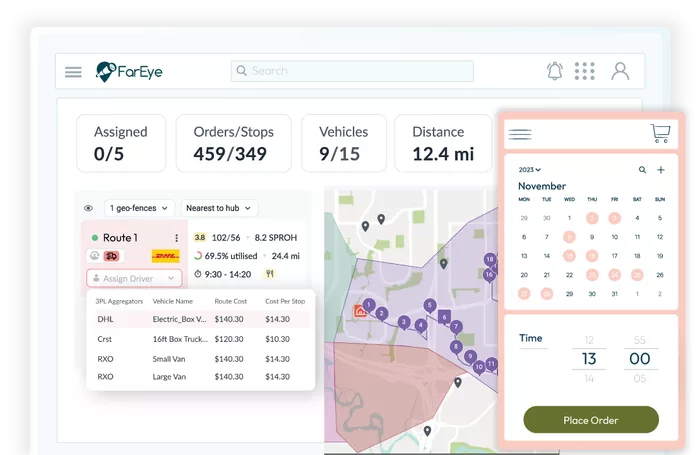
A multi route planner is more than a mapping tool. It is software that optimizes how you deploy your fleet across many stops, many vehicles, multiple constraints and still deliver on time. This goes beyond simple A-to-B routing and supports intelligent, efficient planning of routes with multiple stops. It accommodates dozens, even hundreds of stops, integrates vehicle capacities, time windows, traffic and real-time data.
By contrast, a legacy planner or manual routing may handle 10–20 stops, little dynamic routing and limited real-time constraints. When volumes grow or expectations tighten, that gap becomes obvious.
How a Multi Stop Route Planner Works
When you use a multi stop route planner, you feed in all stops, constraints (time windows, vehicle type/capacity, driver hours, driver availability) and let the algorithm design the best possible sequence. The system clusters stop, minimize total distance/time, balance workloads and prevent bottlenecks.
As the dispatcher or allocator, you receive routes that are viable, efficient and aligned with real-world constraints so you can confidently set ETAs. And when a last-minute change occurs, an extra stop, traffic jam or road closure, the system recalculates, keeping your route plan resilient.
How Predictability Happens: Key Mechanisms
To deliver on time, you must rely on more than good intentions; you need systems that manage every variable. A multi stop route planner aligns sequencing, real-time visibility and first-attempt success to keep ETAs trustworthy.
Optimized Sequencing and Constraint Management
The first lever for ETA reliability is intelligent sequencing. The software organizes the stops to minimize travel time and idle time, ensuring drivers are working and delivering rather than waiting. It factors in vehicle capacity, driver shift hours, loading/unloading times and stop priorities.
Route planning software emphasizes that advanced key constraints are built into its platform. By aligning your fleet resources correctly, you reduce variability in arrival times and thus improve your ETAs.
Real-Time Adaptation and Visibility
Even the best-planned routes can go off-track: traffic, accidents, missing customers, wrong addresses and weather all create disruption. A top-tier multi stop route planner offers real-time rerouting and visibility. For example, route optimization software analyzes live traffic, weather conditions and dynamic variables to adapt routes as the day progresses.
From your dispatcher console, you can see where trucks are, intervene if necessary and communicate proactively with customers. That transparency boosts confidence and allows you to give accurate ETAs or update them promptly when needed.
First-Attempt Success and Reliable Arrival Windows
Predictable ETAs are tightly linked to first-attempt delivery success. If drivers are optimized and routes are realistic, you reduce failed deliveries, which often throw off entire route schedules. Fewer exceptions mean fewer surprises, which means your schedule remains intact and your ETAs hold.
Data shows that smart routing software helps reduce delivery failures and thus contributes to on-time performance. As a dispatcher, when you can confidently plan routes where most stops are likely to succeed on the first try, your ETAs become credible and customers notice.
Benefits for Dispatchers, Allocators, and Their Teams
When your routing system delivers consistently accurate ETAs, you gain more than just fewer complaints; you gain trust and operational leverage. A powerful multi route planner helps your team boost fleet efficiency, scale delivery models and maintain a competitive edge.
Boosting Customer Satisfaction
When your operations consistently hit promised windows, customers feel the brand respects their time. When ETAs are reliable, fewer complaints arrive, customer service escalations drop and you gain positive word‐of‐mouth or repeat business. The realism of your ETAs communicates professionalism and control.
Better Fleet Efficiency and Resource Utilization
Using a multi route planner means you can extract more from each vehicle/driver. You might increase stops per route, reduce miles driven, lower fuel consumption and reduce overtime. For you, as the allocator, it means you can handle more volume (or maintain current volume) without proportionally scaling resources.
Scalability and Competitive Edge
In the U.S. enterprise setting, whether B2B or B2C, expectations are evolving rapidly: same-day delivery, tighter windows, urban congestion and sustainability demands. With a multi stop route planner, you’re better equipped to scale, for example, responding to seasonal peaks, urban micro-fulfilment zones or mixed fleet types (vans, bikes, EVs). For your team, this means you can adopt new delivery models or adjust to market demands without compromising your promise quality.
Common Implementation Challenges and How to Overcome Them
You know the realities: data gaps, legacy systems, driver resistance, varied vehicle types and stop-profiles. Even the best software must be adopted smartly. Here’s how to avoid pitfalls:
- Poor-quality Stop or Vehicle Data
If addresses, stop windows or capacities are fuzzy, your route plan will be optimistic rather than realistic. Make sure your input data is clean and up to date. - Lack of Driver Buy-in
If your drivers reject the optimized sequences because they feel impractical, ETAs suffer. Communicate clearly, show them how the system helps, train them on the mobile app and provide turn-by-turn guidance. - Over-promise on ETAs
If you promise unrealistic windows, even the best planner will struggle. Use realistic windows and only commit when your system supports them with high confidence. - One-time Rollout Instead of Iteration
Delivery conditions change (traffic patterns, construction, new zones). Your routing system must support continuous learning and adaptation. FarEye emphasizes machine learning and analytics built into its platform. - Ignoring the Measurement Feedback Loop
Monitor KPIs such as actual ETA deviation, first-attempt success rate, deliveries per route and fuel per stop. Use them to refine routing parameters.
Why FarEye Stands Out as the Solution
When you search for a multi route planner for enterprise scale, FarEye deserves your attention. Our platform supports multi stop route planner scenarios across large fleets, integrates AI/ML-based routing, handles dynamic constraints and offers real-time visibility. For example:
- FarEye’s machine learning and optimization engine processes large volumes of orders and accommodates multiple constraints.
- Our AI-based software highlights the ability to manage high-volume dispatches: the multi stop route planner algorithm helps enterprises handle thousands of orders in under minutes.
- The platform supports plan a route with multiple stops efficiently and adapts to last-mile realities in dense markets.
For a dispatcher, this means shifting from reactive routing to proactive, data-driven routing. This approach delivers predictable ETAs that delight customers and improve operational efficiency.
Future-proof Your Delivery Promise
When customer satisfaction is literally on the line, your ability to deliver on time becomes a core competitive advantage. FarEye’s multi route planner lets you move beyond guesswork and deliver with reliability.
By optimizing sequences, factoring in constraints, enabling real-time adjustments and reducing failures, you gain the confidence to give accurate ETAs. In short, your customers get the delivery experience they value.
If your current routing approach still feels brittle or you’re promising more than you can deliver, it’s time to upgrade. Evaluate the right solution, clean your data, train your teams and start delivering ETAs you can trust.
Source: