Table of Contents
- Performance Dashboard: Empowering Drivers with Clear Insights
- Prevent Overloaded Routes with Real-Time Capacity Validation
- Seamless Trip handling for Second-Attempt Deliveries
- Verified Delivery: Customer Review and Signature Confirmation
- Enhanced Rate Reconciliation with Shipper-Initiated Workflow
- Smarter Data Capture: Streamlined Arrays for Clearer Records and Easy Controls
Let Our Experts Optimize Your Deliveries Today
Let's talkPerformance Dashboard: Empowering Drivers with Clear Insights
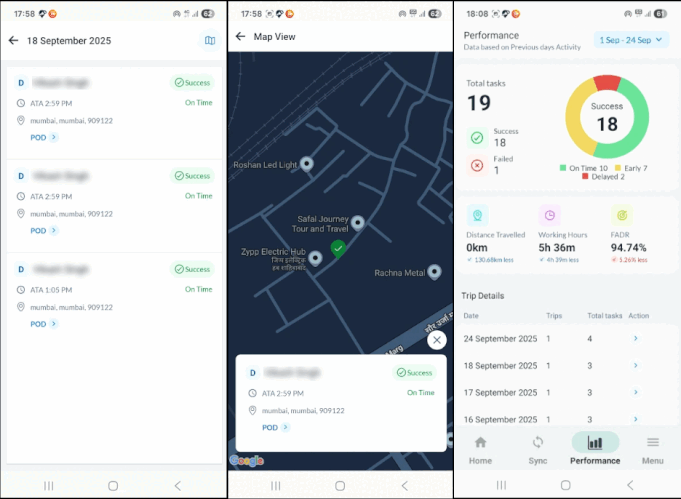
Introducing the Driver Performance dashboard, a dedicated view that gives drivers clear visibility into their historical trip performance. The dashboard consolidates delivery outcomes, task completion rates, and efficiency metrics into one streamlined view. By making key performance data easily accessible, it helps drivers evaluate their effectiveness, stay aligned with service expectations, and continuously improve delivery standards.
Highlights
- Visual Delivery Summary: Provides a quick snapshot of successful, failed, on-time, early, and delayed deliveries.
- Filters: Allows you to select custom date ranges to view past performance data.
- Key Performance Indicators: Track distance travelled, working hours, and First Attempt Delivery Rate (FADR).
- Trip History View: Drill down into daily trips with total tasks, delivery outcomes, and service metrics using the order list or map view.
Business Impact
- Better Service Quality: Focuses on On-Time Delivery and FADR to boost driver accountability, reduce re-attempts, and improve customer satisfaction.
- Transparency & Self-Tracking: Drivers can view past performance data, helping them track progress and improve results.
Prevent Overloaded Routes with Real-Time Capacity Validation
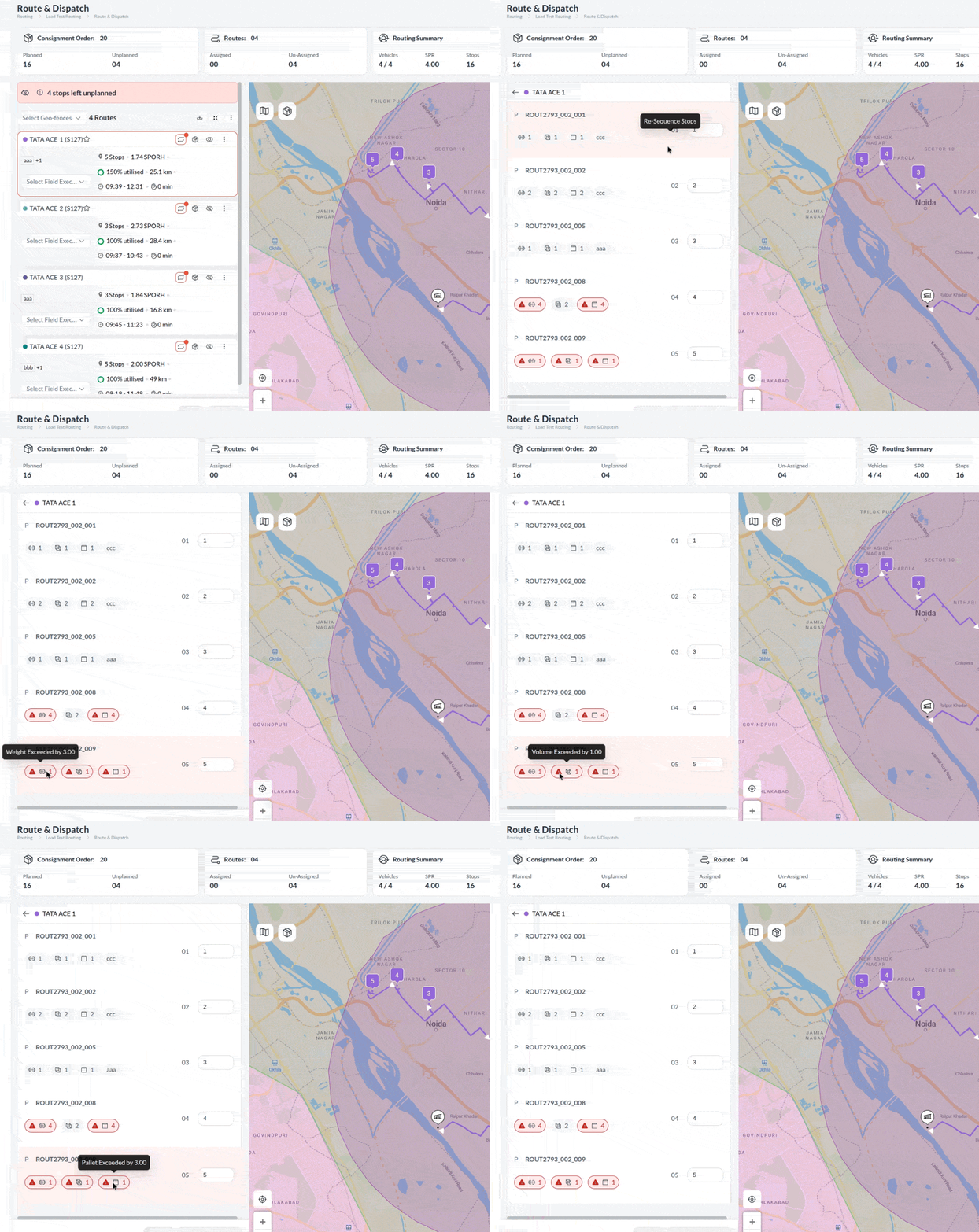
Real-time capacity validation is now applied during route re-sequencing, ensuring the system prevents routes from exceeding vehicle limits (weight, volume, or pallets). This feature validates compliance in real-time, preventing operational inefficiencies and inaccurate KPIs that can be caused by previously unchecked manual adjustments. If the new sequence exceeds capacity, the Alert System notifies the dispatcher, showing details of the overload (e.g., "Weight exceeded by 1 unit"). Dispatchers retain control, with the option to cancel the change or proceed, in which case the routing is automatically re-run to update the vehicle utilization KPI accurately.
Seamless Trip handling for Second-Attempt Deliveries
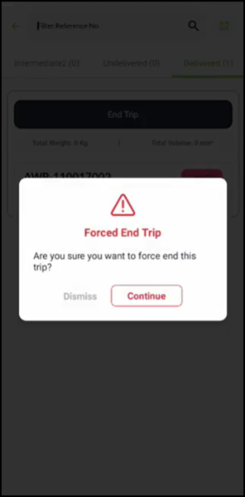
The mobile app now offers a streamlined process for managing failed deliveries, significantly reducing the number of clicks required to close a trip. After a first failed attempt, drivers can immediately choose to Fail the consignment or Re-attempt Later. To ensure compliance and efficient trip closure, the app now reminds drivers to address any remaining open consignments, allowing them to record reasons for all in bulk before finalizing the trip.
Verified Delivery: Customer Review and Signature Confirmation
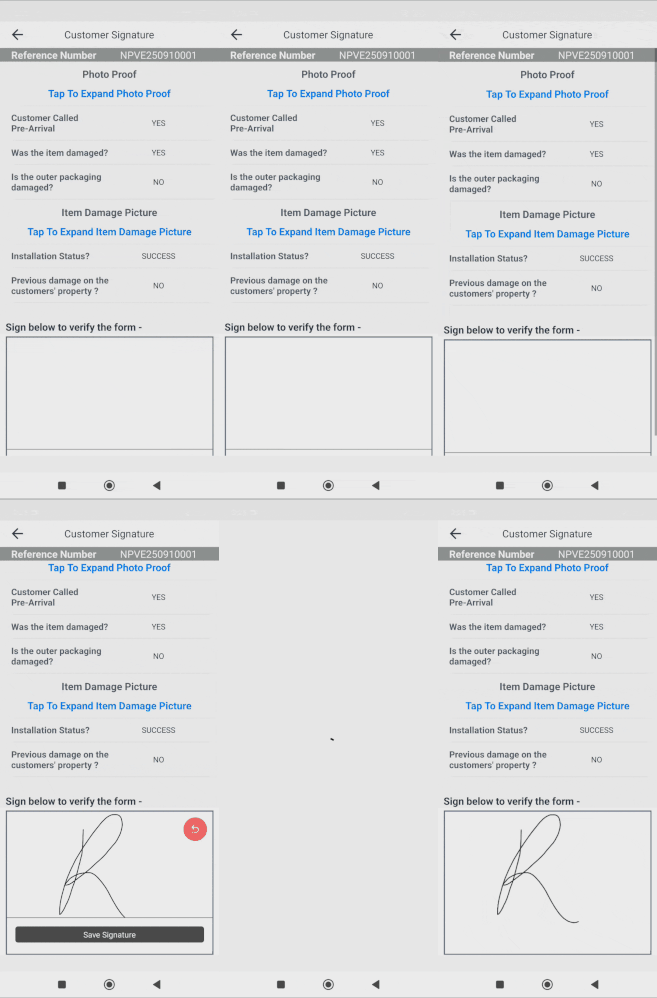
To improve driver performance tracking and ensure accurate delivery records, the mobile application now uses advanced data capture with two-step verification. In the first step, the driver captures detailed information, including PODs and answers to multiple questions at the destination. In the second step, the customer reviews the details filled by the driver, often displayed as a waiver form, which consolidates all captured data, questions, and answers. Once the customer confirms the information, their digital signature finalises the delivery record with verifiable proof. This feature is especially valuable for Big & Bulky and B2B deliveries, where detailed documentation and confirmation are critical for accountability and operational efficiency.
Enhanced Rate Reconciliation with Shipper-Initiated Workflow
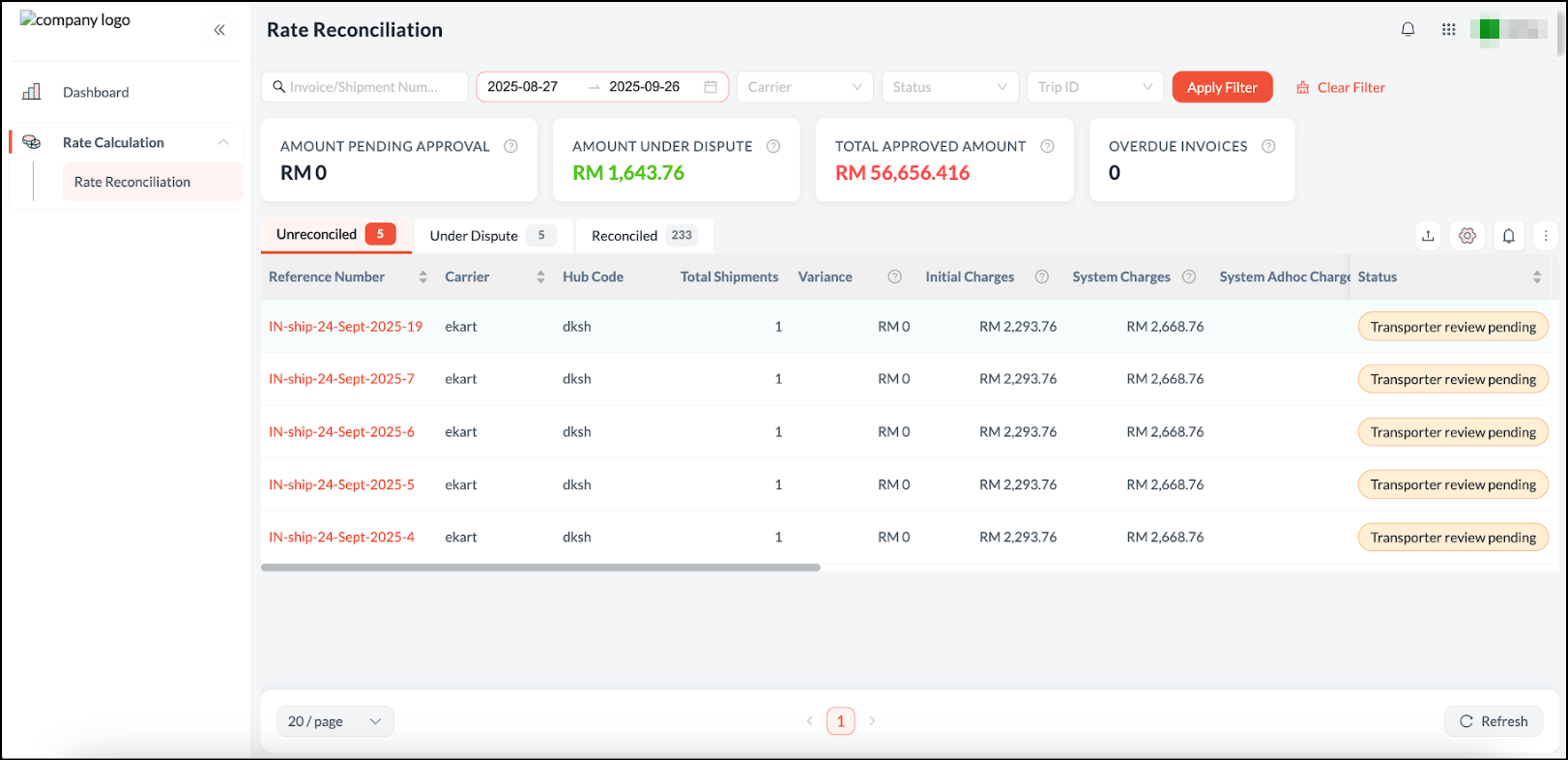
To improve the invoice reconciliation capabilities, the platform now supports a new shipper-initiated workflow. Traditionally, reconciliation has been carrier-led, with shippers validating submitted costs. However, in many operating models particularly when shippers collaborate with local or smaller carriers or have stronger negotiating leverage the process is reversed, with shippers sharing shipment costs first and expecting carriers to review and reconcile. Shippers can now initiate reconciliation directly within the platform, while carriers can validate or raise disputes as needed. By supporting both carrier-initiated and shipper-initiated reconciliations, the system aligns with real-world practices and provides greater flexibility for diverse business relationships.
Smarter Data Capture: Streamlined Arrays for Clearer Records and Easy Controls
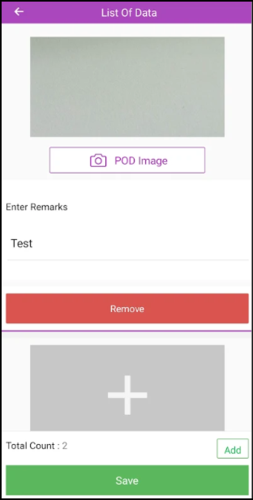
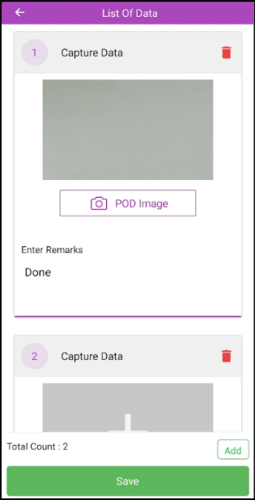
Arrays, which are used to capture multiple sets of related information, are now presented in a more streamlined format. Each entry in the array is displayed with a clear and customisable label with all related fields grouped. A delete icon on the top-right makes it easy to remove any entry, while a visible item count helps users quickly track the number of records added.