Table of Contents
- What is a Vehicle Route Planner and How Does it Work?
- The Hidden Costs of Outdated Fleet Planning
- Modern Challenges Demand Smarter Vehicle Routing
- Key Benefits of Using a Vehicle Route Planner
- Choosing the Right Vehicle Route Planner
- The Future of Fleet Management: Intelligent Vehicle Route Optimization
Let Our Experts Optimize Your Deliveries Today
Let's talkThe global route optimization software market was valued at USD 7.93 billion in 2024 and is projected to reach USD 9.04 billion in 2025. It is expected to surge to USD 25.75 billion by 2033, reflecting a 13.98% CAGR. This rapid growth underscores the increasing demand for efficient logistics solutions. A vehicle route planner powered by AI is transforming fleet operations.
At FarEye, we use AI to make delivery routes smarter and easier to manage. Our system learns from real delivery data and quickly adapts when situations change. This helps businesses save money, deliver on time, and stay competitive in a fast-moving logistics world.
What is a Vehicle Route Planner and How Does it Work?
A vehicle route planner is a digital system that automates how delivery routes are created and managed. It takes into account distance, delivery sequence, driver availability, time windows and vehicle capacity to generate efficient plans.
Unlike fixed maps, it uses AI and machine learning to process live data: traffic, weather or road restrictions and adjusts routes automatically as conditions change.
Core Functions Include:
- Route Optimization: The system figures out the most practical stop order by looking at live road conditions and delivery priorities while considering vehicle limits.
- Predictive ETA Calculation: It blends live traffic updates with past delivery data to estimate arrival times that customers and drivers can actually depend on.
- Dynamic Slot Selection: Delivery slots shift automatically to match what customers prefer and what the network can support at that time.
- Real-time Reoptimization: When something changes, such as a new order, a traffic jam or a delay, the route updates on its own to keep schedules accurate.
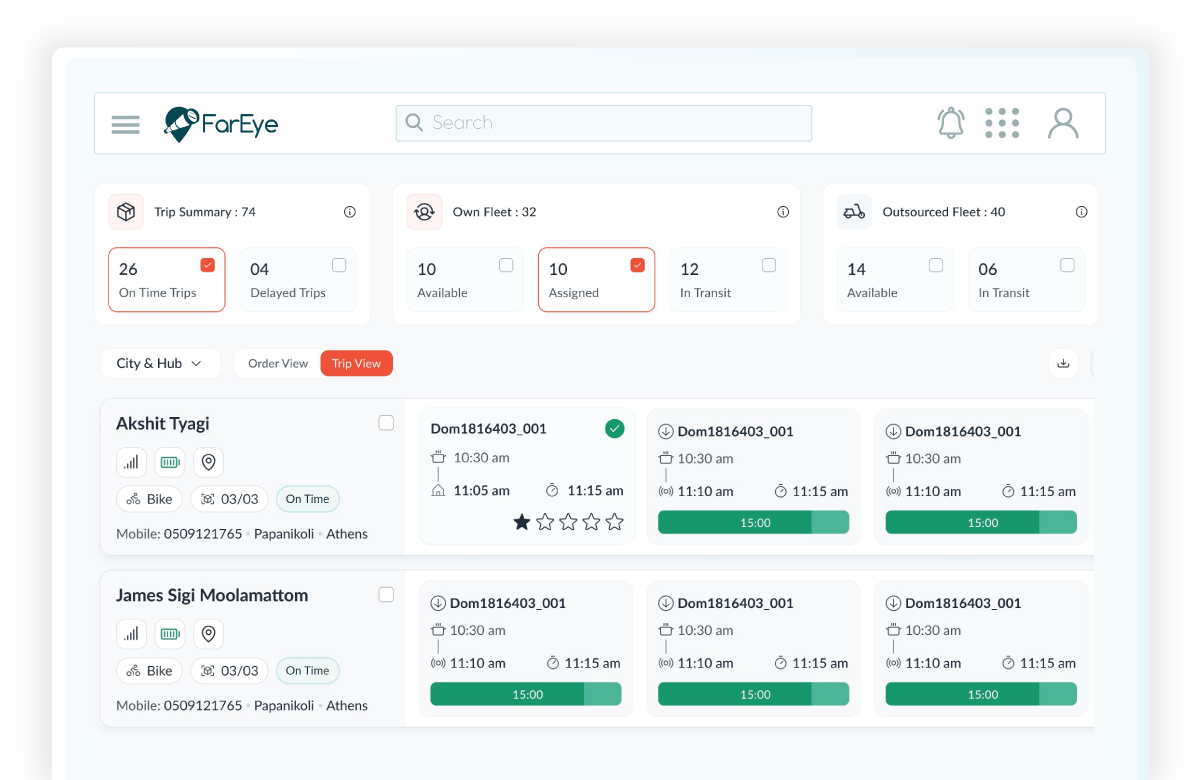
- Control Tower Visibility: Managers can view every vehicle and order in motion to see where performance is strong or slipping against SLA targets.
At FarEye, these tools integrate with systems such as WMS, ERP, and telematics. This setup keeps data flowing smoothly between warehouses, dispatchers and drivers so planners always have a full picture from scheduling to delivery at the doorstep.
The Hidden Costs of Outdated Fleet Planning
Manual systems may appear inexpensive at first, but they create hidden inefficiencies that compound over time.
Inefficient Route Sequencing
Drivers often spend hours covering overlapping routes because plans aren’t automated. Without access to live traffic insights, fleets waste fuel in congestion and lose productivity. Even a 50-vehicle operation can lose several man-hours daily simply due to poor sequencing.
Human Error in Dispatching
Manual dispatching tends to overlook critical details such as driver shifts, load limits or delivery windows. These oversights cause missed SLAs and delayed shipments. Planners then spend hours reworking schedules that an AI-led platform could fix instantly.
Increased Operating Costs
Extra miles mean higher fuel consumption and faster vehicle wear. Long driver shifts result in overtime payouts, while unbalanced loads increase breakdown risks, all of which inflate operational costs.
Lack of Control Tower Visibility
Legacy systems make it difficult to monitor real-time fleet activity. Without visibility, managers can’t detect route deviations early or prevent SLA breaches. OTIF rates drop, and accountability suffers.
Declining Customer Experience
When deliveries miss promised slots, customers lose confidence. Without proactive tracking or “Where is my order” updates, service teams are flooded with queries, hurting the brand experience.
Compounding Operational Gaps
When depots plan independently, territories overlap and some vehicles end up underutilized. Others are overburdened, leading to inconsistent productivity. Over time, these inefficiencies become costly and difficult to reverse.
Outdated planning systems leave managers reacting to problems instead of preventing them. That gap is exactly what AI-driven route planning closes.
Modern Challenges Demand Smarter Vehicle Routing
Fleet management has changed faster than most teams expected. Order volumes have surged, schedules are tighter and customers expect accuracy almost down to the minute. The older planning tools that once worked well are now falling behind.
Evolving Delivery Expectations
Same-day and next-day delivery are part of regular business now. To keep pace, fleets need routing systems that can think and react as quickly as conditions change. With vehicle route optimization, dispatchers can reshuffle routes in real time when a new order drops or when traffic suddenly slows down. It’s the kind of flexibility manual systems just can’t deliver.
Fuel Cost Volatility and Sustainability Goals
Fuel prices rise and fall every few weeks, leaving little room for waste. On top of that, sustainability targets are becoming part of daily operations. Smarter routing helps both sides of the equation by cutting empty miles, trimming idle time and planning cleaner, more efficient paths that reduce emissions while saving money.
Expanding Fleet Complexity
Fleet operations today combine EVs, two-wheelers and heavy trucks. Each type comes with its own constraints: charging cycles, payload limits or restricted zones. Intelligent vehicle route planning software handles this complexity automatically.
Multi-layered Delivery Networks
Cold-chain logistics, white glove delivery and co-mingling loads all require specialized routing logic. Manual planners simply can’t process these parameters at scale.
Integration and Data Intelligence
Modern routing depends on API integration with WMS, ERP and telematics systems. This connectivity allows unified decision-making, faster communication and better forecasting.
Predictive Planning for Volatility
AI-driven planners simulate multiple what-if scenarios to prepare for demand spikes, weather disruptions or traffic closures. This foresight helps logistics teams maintain service reliability and SLA compliance.
Key Benefits of Using a Vehicle Route Planner
A modern vehicle route planner does much more than create routes. It helps teams work smarter by turning daily logistics into a measurable competitive advantage.
Reduced Fuel and Maintenance Costs
When routes are mapped efficiently, wasted miles go down and fuel lasts longer. Dispatchers can balance workloads across the fleet to prevent overuse of certain trucks or vans. This keeps service schedules consistent and extends vehicle life, which lowers long-term maintenance costs.
Improved On-time Deliveries
Predictive routing identifies slow zones, high-traffic corridors and bottlenecks before they cause problems. The system adjusts delivery orders in real time so drivers stay on track. With this kind of vehicle route optimization, fewer delays occur and SLA performance remains steady, even on busy days.
Real-time Visibility and Better Control
Managers work better when they can see what’s happening across every route. A central dashboard gives that visibility, showing where each vehicle is and how deliveries are progressing.
When there’s a delay, automated alerts trigger real-time re-optimization so dispatchers can respond quickly. Customers are also kept in the loop with clear “Where is my order” updates that build confidence and reduce support calls.
Higher Driver Productivity and Retention
Drivers perform better when their routes are balanced and easy to follow. Clear navigation helps them move smoothly through each stop without confusion. Well-sequenced routes cut idle time and make each shift more predictable. That stability improves satisfaction, safety and retention across the fleet.
Scalability and Data-backed Insights
AI-led vehicle route planning scales easily as fleets grow. Its analytics uncover cost inefficiencies, track SLA performance and guide decisions on network design, depot placement and resource allocation.
Choosing the Right Vehicle Route Planner
When selecting a routing platform, focus on capabilities that align with both immediate and long-term goals:
- AI and ML engines for predictive optimization and automated decision-making
- Seamless API integration with WMS, ERP and telematics systems
- Centralized dashboards offering control tower visibility and detailed analytics
- Dynamic slot selection and customer-preferred scheduling
- Sustainability features, including EV routing and green delivery optimization
- Support for white glove delivery, skill mapping and co-mingling loads
At FarEye, we deliver all these through a single platform that empowers businesses to orchestrate complex operations effortlessly while maintaining SLA and OTIF goals.
The Future of Fleet Management: Intelligent Vehicle Route Optimization
Fleet management is moving away from reactive scheduling toward predictive planning. As AI, IoT and analytics continue to evolve, routing tools are beginning to make their own decisions in real time. They can respond to sudden disruptions, manage electric vehicle networks and balance cost per mile without waiting for manual input.
Future-ready organizations are already investing in intelligent vehicle route optimization to prepare for that shift. For logistics leaders aiming to reduce operational costs, boost SLA adherence and deliver consistently on time, adopting this technology isn’t just beneficial; it’s essential.
At FarEye, we help logistics teams modernize routing, connect their networks and deliver performance that customers can depend on every single day.
Source:
https://straitsresearch.com/report/route-optimization-software-market