Table of Contents
- Why Fleet Visibility Matters More Than Ever
- The Expanding Role of a Delivery Route Planner
- How Integration Enhances Fleet Visibility
- How Integration Boosts Fleet Performance
- Technology Stack That Powers Integration
- Business Impact of Integrated Route Planners
- Why Integration is the Future of Fleet Efficiency
Let Our Experts Optimize Your Deliveries Today
Let's talkThe logistics sector is under intense pressure to deliver faster, greener and more cost efficient services. According to a report, freight demand in the United States is expected to continue growing steadily, with volumes projected to reach 14 billion tons by 2035. For dispatchers and fleet managers, this growth translates into heavier order volumes, tighter service level agreements (SLAs) and resisting operational risks if visibility gaps persist.
At the heart of the challenge lies routing. Poorly integrated systems often force dispatchers to juggle spreadsheets, siloed telematics and manual driver updates. The result is reactive planning, missed time windows and higher costs. This is where a delivery route planner, especially one integrated seamlessly with enterprise systems, becomes a decisive advantage.
By integrating data from order management, telematics, customer platforms and warehouse systems, route planners transform routing from a back office function into a centralized control tower of fleet visibility and performance.
Why Fleet Visibility Matters More Than Ever
For logistics teams, visibility is not just about knowing where trucks are. It is about understanding why they are delayed, what the downstream impact will be and how quickly the system can adapt. Rising customer expectations for accurate ETAs and real time communication have turned visibility into a strategic necessity.
When delivery routes are managed through disconnected systems, dispatchers face blind spots in capacity utilisation, service times and driver compliance. Integration with a route planner bridges these gaps, creating a single source of truth for the fleet.
The Expanding Role of a Delivery Route Planner
As logistics grows more complex, the delivery route planner has evolved from a simple navigation tool into an intelligent engine for operational efficiency and adaptability.
- Beyond Simple Maps
A modern delivery route planner is not limited to generating turn by turn directions. It ingests thousands of parameters, driver rosters, shift rules, vehicle capacity, traffic patterns, fuel costs, EV charging availability and even service time predictions at delivery locations. This allows dispatchers to orchestrate deliveries with precision while balancing costs and performance.
- From Traditional to Dynamic Routing
Traditional fixed routes quickly become obsolete in today’s volatile operating environment. Integration empowers the planner to shift from traditional to dynamic routing, recalculating delivery routes as traffic, weather or order priorities change. This ability to reoptimize mid shift reduces failed deliveries and improves customer satisfaction.
How Integration Enhances Fleet Visibility
- Real Time Vehicle Tracking and Control
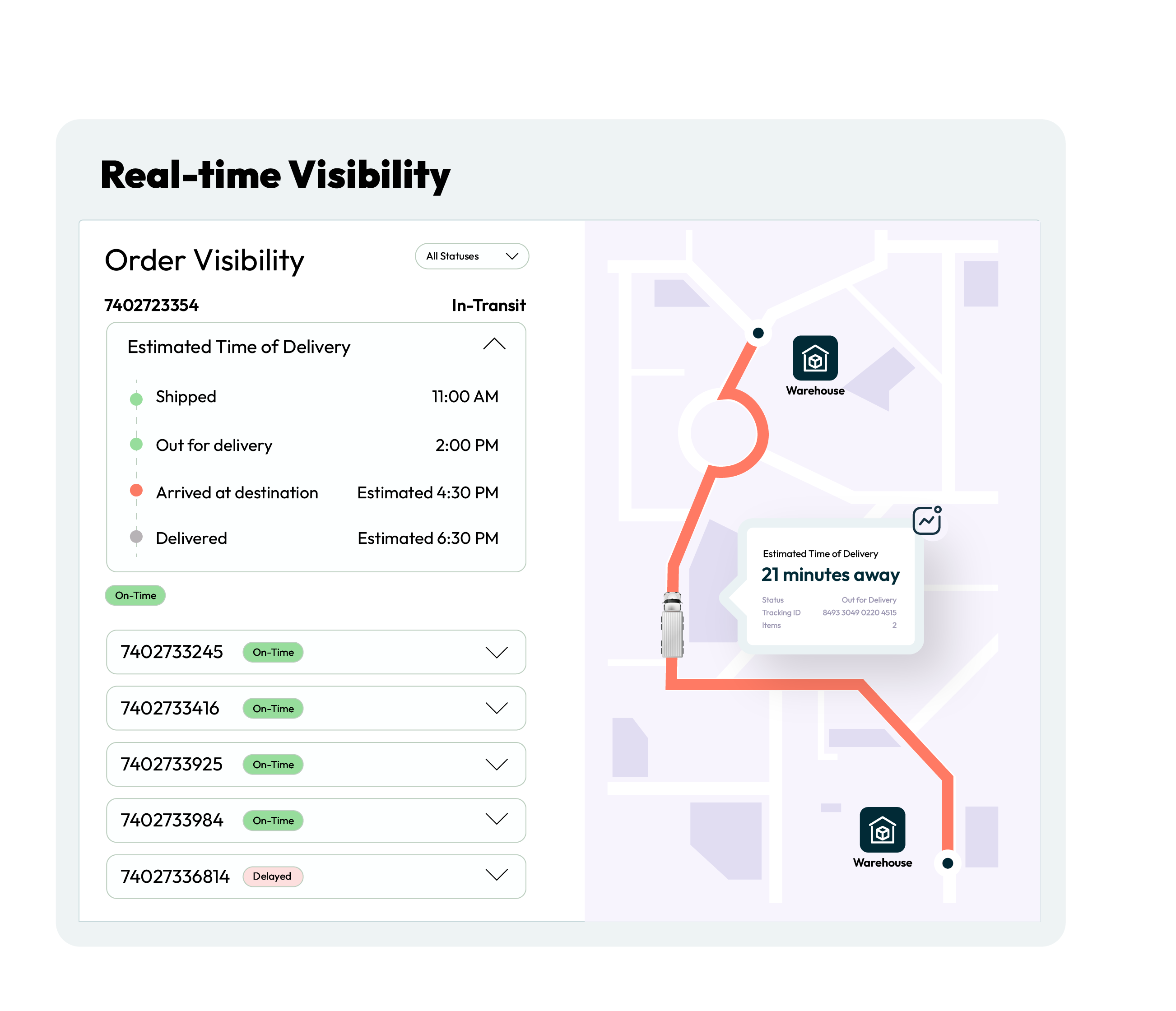
By linking telematics directly into the route planner, dispatchers see every vehicle’s live position, route adherence and stoppage time in a unified dashboard. Alerts highlight deviations, enabling immediate interventions rather than post shift firefighting.
- Unified View of Orders and Assets
Integration ensures that orders, drivers and vehicles are no longer siloed. Dispatchers can evaluate loads by zone, capacity and SLA in one platform, eliminating guesswork. For enterprises handling thousands of daily orders, this unified visibility is essential to managing bottlenecks effectively.
- Predictive ETAs and Exception Management
AI driven delivery route planners use traffic feeds, driver behaviour and historical data to calculate predictive ETAs. These ETAs are not fixed; they continuously adjust as conditions change. Exception alerts help allocators identify disruptions like breakdowns or no entry zones, allowing quick rerouting and customer updates.
How Integration Boosts Fleet Performance
Integrating a delivery route planner with telematics, order and asset systems transforms fragmented operations into a single, real time view of fleet activity.
Optimized Resource Allocation
When systems integrate, dispatchers no longer rely on manual allocation. Orders are automatically assigned to the best suited driver and vehicle based on constraints like skill requirements, volume or regulatory compliance. This ensures balanced workloads and improved utilisation.
Improved First attempt Delivery Success
Accurate ETAs and proactive customer notifications reduce failed deliveries. With better alignment between drivers and customer windows, fleets achieve higher first attempt success rates, lowering costly reverse logistics.
Reduced Costs and Fuel Efficiency
Integrated route planners minimize empty miles and unnecessary detours. One leading courier achieved up to 40% route reduction with FarEye’s pre planning capabilities. For fleets, this translates into lower fuel spend and reduced operational overhead.
Driver Productivity and Retention
Drivers are given clear, optimized routes with realistic service times. AI enhanced modules such as FarEye’s SMART Service Times predict stop durations at the micro level, reducing stress on drivers and improving satisfaction. Balanced workloads support retention in a market where driver shortages remain a pressing issue.
Technology Stack That Powers Integration
A robust technology stack underpins integration, combining connectivity, sensors and intelligence to make delivery route planners more adaptive and powerful.
- APIs and Enterprise Connectivity
APIs allow seamless integration between the route planner and OMS, WMS, CRM or ERP systems. This ensures dispatchers are not switching between platforms but making decisions within one cohesive view.
- Telematics, IoT and Compliance Tools
Integration with IoT sensors enables tracking of temperature sensitive cargo, EV charging stations or even road restrictions. Compliance with DOT regulations and hours of service (HOS) rules is automated, reducing manual oversight.
- AI and Machine Learning
FarEye’s AI powered routing continuously learns from data. ML algorithms improve order sequencing, predict delays and recommend optimizations for future shifts. This evolution makes the delivery route planner smarter over time, not just reactive.
Business Impact of Integrated Route Planners
The value of integration is best measured through hard metrics. Fleets using AI led planners report:
- Reduced planning time: Truck routing time cut from 5 hours to 30 minutes, a 90% reduction.
- Higher route efficiency: 14% improvement in generated routes and a significant reduction in driving hours.
- Capacity utilization: Pharma fleets improved utilization by 30% with sensor integrated route planning.
- Cost savings: Furniture retailers achieved $80M in delivery savings over five years through managed routing.
Such results reinforce integration not as an optional enhancement but as a strategic imperative.
Why Integration is the Future of Fleet Efficiency
For dispatchers and allocators, routing is no longer a task confined to planning boards. Integrated delivery route planners have become the nerve centre of fleet visibility and performance, ensuring every mile, vehicle and driver contributes to service excellence.
With AI driven modules, predictive ETAs and seamless connectivity, FarEye offers the intelligence and scalability enterprises need to manage the rising complexity of delivery operations.
In an environment where margins are tight and customer expectations are unforgiving, the ability to integrate, adapt and optimize every delivery route is the ultimate competitive advantage. Fleets that embrace this transformation will not only cut costs but also win customer loyalty, driver trust and market leadership.
Source:
https://www.ccjdigital.com/business/article/15712658/ata-forecasts-growth-after-two-years-of-decline