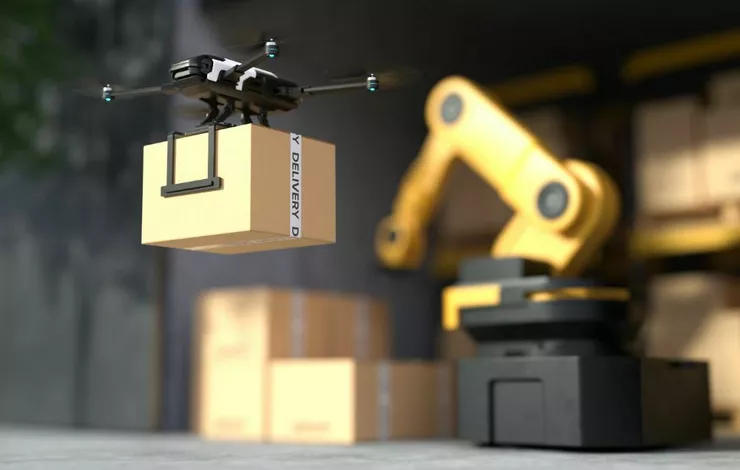
- 3PL cloud software unifies orders, inventory, transportation, and tracking into one real-time platform, replacing fragmented tools and manual firefighting.
- When choosing a platform, prioritize cloud-native architecture, deep carrier integrations, AI-powered automation, and low-code configurability.
- FarEye, Descartes, and DispatchTrack lead the enterprise segment. FarEye stands out with 1,500+ carrier integrations, 1 billion+ annual deliveries, and G2 2026 Best Software Award (#1 in Last Mile Delivery).
- The core workflow runs in six stages: order intake, warehouse management, transportation planning, real-time dispatch and tracking, billing reconciliation, and analytics.
- The five primary benefits are: real-time visibility, lower overhead, faster fulfillment, elastic scalability, and proactive customer communication that cuts WISMO calls.
- For enterprise 3PLs with multi-carrier complexity, high volumes, or geographic expansion plans, a platform like FarEye provides the control and intelligence to scale without breaking existing operations.
Growth is supposed to be a good problem until your systems cannot keep up.
More clients mean more SKUs, more carriers, more delivery promises, and more exceptions to manage. Without the right tools, scale does not just add volume; it exposes every weakness in your operation.
According to PwC's 2025 Digital Trends in Operations Survey, 92% of operations and supply chain leaders say their technology investments have not fully delivered expected results, mainly because of integration complexity and data issues.
In parallel, the global 3PL market is projected to reach $1.8 trillion by 2028, growing at a CAGR of 8.5%, according to Precedence Research. Yet most logistics teams still lose shipment visibility the moment an order leaves the warehouse.
In other words, many logistics teams have software, but it does not work together well enough to support real-world execution.
Cloud-based 3PL software is built for this exact moment. It unifies orders, inventory, routing, and tracking into one real-time platform that scales as fast as your operation does. Instead of firefighting, logistics teams get control and the ability to grow without breaking things. Learn how SaaS logistics platforms enable scalable, automated operations.
In this guide, we break down the 7 best cloud-based 3PL software platforms that actually address these operational pain points and scale without adding more complexity to an already demanding operation.
A Quick Overview of the Top 3PL Cloud Software
Before diving deep, here is a quick snapshot of the top cloud-based 3PL software platforms leading the logistics and fulfillment industry today.
- FarEye - Cloud platform for automated, real-time delivery and 3PL operations
- Descartes - Cloud logistics suite for routing, transport, and carrier management
- DispatchTrack - Real-time delivery routing and last-mile optimization tool
- Aptean - Cloud 3PL and warehouse management system for multi-client operations
- LogiNext - AI-driven logistics automation and real-time tracking platform
- Bringg - Delivery orchestration software for carrier integration and fulfillment
- Wise Systems - AI-powered routing and dispatch automation platform
- FarEye - Best for end-to-end 3PL delivery automation
- Descartes - Best for global transportation and carrier management
- DispatchTrack - Best for last-mile delivery optimization
At-a-Glance Comparison: Top 3PL Cloud Software
Use this table to compare all seven platforms before reading the full write-ups below.
| Platform | Best For | G2 Rating | Key Strength |
|---|---|---|---|
| FarEye | End-to-end 3PL delivery automation | 4.8/5 | 1,500+ carrier integrations, AI routing, control tower |
| Descartes | Global transport and carrier management | 4.4/5 | Cross-border EDI/API network, customs integration |
| DispatchTrack | Last-mile delivery optimization | 4.5/5 | Real-time ETAs, driver tracking, customer alerts |
| Aptean | Multi-client warehouse management | 4.0/5 | WMS accuracy, dock scheduling, RFID scanning |
| LogiNext | High-volume automated dispatch | 4.4/5 | AI-powered route planning, real-time monitoring |
| Bringg | Delivery orchestration, carrier stitching | 4.6/5 | Flexible store/fleet/carrier orchestration |
| Wise Systems | Recurring routes, field service fleets | 4.0/5 | Continuous ML-based optimization engine |
Why Trust Us?
Our research team evaluates 3PL and logistics software using a transparent, data-backed methodology designed to help businesses make confident decisions. Every recommendation is based on independent testing, user feedback, and industry relevance.
- Tools considered: 32
- Tools reviewed in-depth: 18
- Top tools selected: 7
How We Chose the Best 3PL Cloud Software
To curate this list, we looked closely at what matters most to 3PL providers, eCommerce businesses, warehouse managers, and freight coordinators who rely on real-time visibility and automated workflows every single day.
Built for Real 3PL Challenges
We looked for solutions designed to handle daily operational pressure. Platforms had to provide true real-time visibility and support fast decision-making across warehouses, carriers, and last-mile delivery.
Core Evaluation Criteria
- Cloud-native architecture that scales easily without heavy IT dependency
- Integration strength with WMS, TMS, ERPs, and carrier networks
- Automation and intelligence that reduce manual planning and firefighting
- Reliability at scale, especially during peak volumes and growth phases
Ease of Use and Adaptability
Beyond technology, we assessed usability. The strongest platforms empower operations teams to configure workflows, respond to disruptions, and adapt processes without constant custom development.
Top 7 Cloud-Based Third-Party Logistics (3PL) Software
Here is a closer look at the seven cloud-based 3PL platforms that stood out in our analysis.
1. FarEye
FarEye is a cloud-based logistics orchestration platform that helps you manage and optimize the entire order-to-delivery cycle. If you are running a 3PL operation, coordinating multiple carriers, or handling high delivery volumes, the platform gives you tools to simplify routing, automate repetitive tasks, and keep everyone, from drivers to customers, in the loop.
FarEye focuses on last-mile excellence: dynamic route planning, carrier allocation, EV routing for sustainability, and multimodal tracking that reduces WISMO calls and missed deliveries. See how FarEye serves enterprise last-mile logistics teams.
The platform's dashboards display shipment status at every stage, and its APIs connect with carrier systems, WMS/ERP, and eCommerce platforms to keep data synced and actions automated.
In short, FarEye helps your business deliver more reliably, efficiently, and sustainably.
Key Features
- AI-powered route optimization across owned fleets and 3PL carriers
- Real-time multimodal shipment tracking and proactive ETA updates
- Automated carrier allocation based on cost, SLA, and serviceability rules
- Low-code workflow builder for configuring multi-client operations
- Control tower with live exception management and SLA breach alerts
- EV routing module for sustainable last-mile fleet operations
Ratings
G2: 4.8/5 - G2 2026 Best Software Award, #1 in Last Mile Delivery, 249 verified reviews. Capterra: 4.6/5.
2. Descartes
Descartes is a cloud-based logistics platform designed for supply chains that extend across borders and transportation networks. Instead of relying on separate tools for routing, documentation, and visibility, Descartes consolidates these capabilities into a single cloud environment.
Through a broad API and EDI network, the platform stays connected to carriers, customs agencies, ERPs, and warehouse systems, helping you maintain consistent data and control across global operations.
Key Features
- Global EDI and API carrier connectivity
- Route optimization and fleet dispatch
- Customs documentation and trade compliance management
- TMS with multi-modal freight execution
- Real-time shipment visibility across borders
Ratings
G2: 4.4/5
3. DispatchTrack
DispatchTrack helps teams plan optimized routes, track drivers in real time, and keep customers informed throughout the delivery process. It gives operations teams real-time visibility into what is happening on the ground, allowing them to react quickly to delays and maintain accurate ETAs.
With integrations across ERPs, POS systems, carrier tools, and eCommerce platforms, delivery data stays synchronized from route planning through final drop-off.
Key Features
- AI-powered route optimization with time-window constraints
- Real-time driver tracking and live ETA updates
- Proactive customer notifications via SMS and email
- Proof of delivery capture: photo, signature, barcode
- Integration with ERP, POS, and eCommerce platforms
Ratings
G2: 4.5/5
4. Aptean
For organizations managing inventory accuracy, multi-client fulfillment, dock scheduling, and high-volume picking, Aptean's cloud-based WMS brings structure and control to daily workflows. It helps warehouses streamline processes, maintain accurate stock levels, and scale operations without chaos.
3PLs, distributors, and growing fulfillment centers rely on Aptean to manage the countless small decisions that impact accuracy, cost, and customer satisfaction. The result is a system that reduces manual effort, minimizes errors, and helps teams operate more efficiently.
Key Features
- Real-time inventory tracking by SKU, lot, and batch
- Wave, batch, and zone picking workflows
- Barcode and RFID scanning for picking accuracy
- Dock scheduling and multi-client billing
- Cloud-hosted on Microsoft Azure with 99.9% uptime SLA
Ratings
G2: 4.0/5
5. LogiNext
LogiNext uses automation and AI, making it an ideal fit for companies that want their delivery operations to move faster and smarter. If you are dealing with high order volumes, tight delivery windows, or a mix of scheduled and on-demand deliveries, the platform helps you move away from manual planning and toward data-driven execution.
For eCommerce brands, courier networks, and fast-moving delivery operations, LogiNext provides the visibility and automation needed to scale without adding proportional operational overhead.
Key Features
- Algorithm-based route planning and dynamic dispatch
- Real-time fleet monitoring with heatmaps and dashboards
- Delivery scheduling for static, dynamic, and hybrid models
- First-mile, mid-mile, and last-mile coverage
- ERP, WMS, and carrier system integrations
Ratings
G2: 4.4/5
6. Bringg
Bringg is a cloud-based delivery orchestration platform that focuses on helping businesses stitch together all the moving parts of fulfillment: carriers, drivers, orders, stores, warehouses, and customer touchpoints.
Rather than forcing deliveries into a single rigid workflow, Bringg lets you orchestrate how orders flow between stores, warehouses, carriers, and customers. It integrates with existing eCommerce platforms, ERPs, WMS tools, and external fleets, allowing you to automate routing, dispatch, and tracking without replacing your core systems.
Key Features
- Centralized delivery management across owned and 3PL fleets
- Real-time tracking and customer notification engine
- 250+ pre-built carrier integrations
- Self-scheduling to reduce dispatcher workload
- Omnichannel orchestration from store, warehouse, or DC
Ratings
G2: 4.6/5
7. Wise Systems
Instead of manually building routes or constantly adjusting plans throughout the day, Wise Systems automates most of the heavy lifting, from sequencing stops to updating ETAs in real time. It is popular with fleets that handle recurring routes, scheduled deliveries, or field service operations that need reliability and predictability day after day.
What makes Wise Systems stand out is its continuous optimization engine. It learns from historical delivery patterns, traffic trends, and driver performance to make smarter routing decisions over time. And when conditions change, it instantly recalculates routes to keep your delivery plan on track without requiring constant dispatcher intervention.
Key Features
- Autonomous routing and dispatching powered by machine learning
- Strategic Planner for territory design and route modelling
- Real-time ETA recalculation during execution
- Driver mobile app with live progress tracking
- Historical pattern analysis for continuous route improvement
Ratings
G2: 4.0/5
Key Features of Cloud-Based 3PL Software
Modern 3PL operations depend on software that can move as fast as their supply chains. The features below highlight how these platforms streamline execution and improve decision-making across the entire logistics lifecycle.
Order Management and Integrations
Order management is the foundation of cloud-based 3PL software. Orders flow automatically from ecommerce platforms, ERPs, marketplaces, and retail systems through APIs or EDI connections. This keeps order data consistent across teams.
Warehouse Management System (WMS)
The WMS manages all warehouse activities in real time. Inventory is tracked across multiple locations and clients, while picking, packing, and labeling workflows are optimized for speed and accuracy. Barcode and RFID scanning ensure the right products are shipped every time, even during high-volume periods.
Transportation Management System (TMS)
The TMS controls how goods move once orders are packed. It handles carrier selection, route planning, rate comparison, and load optimization. Explore how carrier TMS software improves multi-carrier execution across enterprise networks.
Cloud Scalability and Security
Because the platform is cloud-based, it scales easily with business growth and seasonal demand. New customers, warehouses, and users can be onboarded quickly without heavy IT overhead. Security, backups, and software updates are handled continuously to ensure reliability and compliance.
Real-Time Tracking and Visibility
Cloud-based 3PL platforms provide live visibility from dispatch to final delivery. ETAs update automatically, delivery exceptions are flagged early, and proof of delivery is captured digitally. See how logistics visibility software reduces exceptions across carrier networks.
Billing, Invoicing, and Contract Management
Billing is directly tied to operational data. The system applies customer-specific rate cards, calculates accessorial charges, and generates accurate invoices as soon as deliveries are completed. This reduces billing disputes and helps 3PLs maintain healthy margins.
Analytics and Performance Reporting
The software tracks on-time delivery rates, warehouse productivity, transportation costs, and SLA compliance. These insights allow 3PLs to improve efficiency, demonstrate performance to customers, and make data-backed decisions.
Multi-Client and Role-Based Access
Cloud-based 3PL software is built for multi-tenant operations. Each client has secure, separated data access, while internal teams see only what is relevant to their role. Customer portals allow clients to place orders, track shipments, and view reports independently.
Benefits of Using 3PL Cloud Software
3PL cloud software helps logistics teams streamline operations, automate fulfillment, improve real-time visibility, reduce delivery costs, and scale faster with secure, cloud-based infrastructure. It strengthens efficiency, accuracy, and customer experience across the entire supply chain.
Real-Time Visibility and Better Control
One of the biggest advantages of cloud-based 3PL software is the ability to see everything as it is happening: inventory updates, shipment progress, delivery status, and warehouse activity. This real-time visibility helps teams make quicker decisions, prevent delays, and keep both clients and customers informed without constant back-and-forth communication.
Reduced Costs and Less Operational Overhead
Because everything runs on the cloud, businesses do not have to worry about servers, hardware, or on-premise maintenance. The system updates automatically, scales as needed, and helps reduce manual work through automation, all of which contribute to lower operating costs and more streamlined logistics workflows.
Faster, More Accurate Fulfillment
Cloud-based 3PL tools automate many time-consuming tasks such as order allocation, routing, picking, packing, and dispatching. This reduces human error and speeds up fulfillment, helping logistics teams stay consistent even during peak seasons. See how last-mile automation software improves delivery outcomes.
Scalability for Growing Logistics Needs
Whether a 3PL manages a single warehouse or multiple sites across different regions, cloud infrastructure makes scaling much easier. As the number of clients, orders, or delivery routes grows, the system adapts automatically, so there is no downtime, no system overload, and no expensive IT upgrades.
Better Customer Experience and Clear Communication
Cloud software keeps everyone in the loop. Clients get real-time tracking, customers receive proactive updates and accurate ETAs, and support teams no longer deal with endless WISMO calls. When operations are transparent and predictable, customer satisfaction naturally improves.
FarEye: Your Go-To Cloud-Based 3PL Software
FarEye is built for logistics teams that want a smarter, more connected way to run delivery operations. Instead of juggling multiple tools for routing, dispatch, tracking, and customer updates, FarEye brings everything into one cloud-based platform that is easy to scale and simple for teams to use. It is designed for modern 3PLs that need real-time visibility, flexible workflows, and reliable automation to keep deliveries running smoothly.
You can customize workflows with its low-code builder, manage multi-client operations without complexity, and use AI-powered routing to cut miles and improve on-time performance. Explore FarEye's 3PL last-mile delivery capabilities and see how 3PL integration platforms power last-mile delivery at scale.
It also offers real-time tracking, dynamic ETAs, automated carrier allocation, and a powerful control tower that helps teams fix issues before they become delays.
Here is what you get with FarEye:
- AI-driven routing and dispatch for faster, more accurate deliveries
- Real-time visibility across fleets, orders, and exceptions
- 1,500+ multi-carrier integrations with automated allocation
- Customizable workflows tailored to each client
- Scalable cloud infrastructure built for high-volume enterprise logistics
Ready to simplify your delivery operations? Book a quick demo and see how FarEye fits your 3PL workflow.
FAQs
What is 3PL cloud software?
3PL cloud software is a centralized, web-based platform that enables third-party logistics providers to manage warehousing, transportation, and fulfillment operations without relying on expensive on-premise systems. Because everything runs in the cloud, teams can access real-time inventory, orders, and delivery data from anywhere, making it easier to scale, automate tasks, and keep customers updated.
What is the best 3PL cloud software for enterprise logistics?
For enterprise 3PL operations managing high delivery volumes, multiple carriers, and multi-geography execution, FarEye is the leading choice. It offers AI-powered routing, 1,500+ carrier integrations, and a control tower purpose-built for scale. Explore FarEye's enterprise last-mile delivery platform.
How does 3PL software integrate with Shopify or Amazon?
Most cloud-based 3PL platforms offer plug-and-play integrations or APIs that sync orders, inventory, and tracking updates directly with Shopify, Amazon, and other marketplaces. Once connected, orders flow in automatically, labels are generated, and tracking updates are sent back in real time.
Is 3PL cloud software scalable for growing logistics companies?
Yes, scalability is one of the biggest advantages of 3PL cloud software. As your order volume, fleet size, or client base grows, the system automatically adapts without requiring new hardware or complex upgrades.
How secure is a cloud-based 3PL system?
Modern 3PL cloud platforms use data encryption, role-based access controls, secure APIs, and distributed cloud architecture. This keeps client data, shipment details, and operational workflows protected at all times.
What features does 3PL cloud software include?
Core features typically include real-time tracking, automated routing, warehouse management, order management, carrier integrations, analytics dashboards, and scalable cloud infrastructure. Most platforms also offer customer communication tools and digital proof of delivery.
Does cloud-based 3PL software offer real-time inventory tracking?
Yes. Real-time inventory tracking is a standard feature of modern 3PL platforms. As items move through receiving, picking, packing, and shipping, the system updates instantly so teams always know what is in stock and where it is located.
What is the difference between 3PL software and a TMS?
A transportation management system (TMS) focuses specifically on planning, executing, and optimizing the movement of goods. 3PL cloud software is broader: it includes WMS, TMS, carrier management, billing, and customer experience tools in one platform. Enterprise 3PLs typically need both, or a platform like FarEye that combines all these capabilities natively.
Ratings from G2 and Capterra as of 2026. Figures are subject to change — verify current numbers before publishing updates.